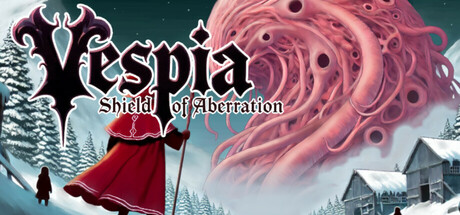
A tower-defense game where you combine spells to modify the effects of your projectiles. A tower is defined by how you choose to apply modifications to it - create a shotgun wizard by combining multi-casts, create a swarm of black-holes, and absolutely break the game with your insane combinations!
Modeled estimate, not a reported figure. How we estimate →
Media

About
Vespia: Shield of Aberration is a tower-defense game where you combine spells to modify the effects of your projectiles. In this game, it is not the tower that defines its magic power, but how you choose to apply modifications to it. Create a shotgun wizard by combining multi-casts, create shots that explode into a burst of black holes, and absolutely break the game with your insane combinations!
In Vespia, you will be tasked with protecting the city for 20 days before a powerful prime anomaly appears. During this time you will earn experience, upgrade your characters and unlock new spells - slack off and the increasing amount and types of enemies will be bound to overrun you.
Between each day, you will have the option to unlock special modifier effects which add a little bit of interest to your run; however, the more powerful the benefits, the more powerful the consequences.
Your journey cannot be completed alone, each new student joining your party will bring something new to the table with unique abilities, spells and upgrade trees.
Each new character that you unlock has:
A unique skill tree for that character.
An upgradable ability card active while you are using that character.
Character-specific cards to enhance your deck.
During battle, each student can be given modifier cards that bring them closer to mastering the anomalous and becoming an unstoppable force.
Spells interact with other spells, creating an expansive range of combinations.
Modifier spells modify the fired projectiles with effects like swift-cast and freeze-shot.
Cast spells change how your spells are triggered with effects like multi-shot and burst.
Projectile spells spawn projectiles that can damage anomalous threats.
Between each battle, perform research to gain new cards which unlock an exponential number of formidable combinations.
New cards unlock powerful and interesting new spells.
Cards are designed with interesting effects in mind, some may upgrade your characters, others may grant some great boon at the cost of sacrificing something else.
Each battle requires a different set of skills. Each card provides something unique, from cards which enhance a student's powers to ones that sacrifice or enhance the cards in your deck.

As the days progress and the intensity of their attacks intensify, the world beings to distort and the threats become greater. You feel like something is waiting for you...
Stats
All-time low is the lowest price we've recorded for this game since we started tracking it.
Languages: English
Reviews
Fun tower-defense with noitaesk spell modifications and game break potential
Vespia is a really clever take on tower defense. Instead of dropping static towers, you’re building spell combos that evolve over time - projectiles that split, freeze, burst into black holes, etc. It’s super satisfying when something just clicks and you melt a whole wave with one chain reaction. There’s a 20-day structure that keeps things focused, and the pacing feels good. You unlock new students, each with their own skill trees and spell cards, and it makes each run feel different. I’ve already found a few combos that feel completely broken - in a fun way. It’s still a bit rough around the edges, but the core gameplay loop is solid and really rewarding if you like experimenting with builds. Definitely worth picking up if you like roguelikes, deckbuilders, or just want to mess around with some wild spell mechanics!
It's fun and a good game for the price. Has a handful of annoying (but not game-breaking by any means) bugs. Once you learn the core mechanics it is very easy to get game-breaking runs. This will be fun for some people but others might find it too easy.
This is a really neat tower defense game with an emphasis on crafting your own spells by chaining effects together for your "towers". Do you want to cast a fireball that explodes before sending ten freezing lasers in random directions? I know I do.
Tragically boring. As near as I can tell, you can only have one tower, in the form of a mage with, and eventually spirits. There doesn't seem to be much between these, in the last level I played, I was supposed to survive seven wave, with almost no effort I survived twenty five, and only quit because I got bored, the enemy still wasn't getting any further that maybe thirty percent across the map. Each of your towers gets five possible slots, though you start with only two slots open. You get five cards per round, and they are so often the exact same five they should be powers instead of card. Every wave you get one tower upgrade, and at the start of the game on swift action, one freeze, one bolt and one fireball. You can't combine them in any way, or save them up. You can swap these for others as your studies progress. I have unlocked a second mage, but never tried him, you only seem to be able to put one in play, and the game is getting more risky so I feel like I need to use my most powerful one. There doesn't seem to be any info on the creatures, so I don't see a reason why a void mage would be better than a fire mage or a dream mage. Once a wave start, there is only thing you can do is play the one fireball spell, if you need to. That's it. You do get to go into the store and improve stats between waves. Also your mages have a little tech tree that makes there more powerful as they level. I have payed about seven levels, and there have only been two maps, neither of which was very interesting. Put it all together, and you have a less than interesting offering. Three thumbs down. ADDENDUM: Also broken, had over 4000 to spend, the card wouldn't let me buy anything, 2000 or 1000 card. Also no explanation of Lux. Uninstalling
Vespia: Shield of Aberration, developed and published by Hourglass Games, is a strategy-focused indie title that blends elements of tower defense, deck-building, and magical experimentation into a single tactical experience. Set in a fantasy world threatened by mysterious distortions known as aberrations, the game places players in the role of a defender responsible for protecting a city from waves of increasingly dangerous creatures emerging from these anomalies. While the core objective resembles that of traditional tower defense games—prevent enemies from breaching the defenses—the systems that support this objective introduce a much more flexible and experimental approach to strategy. At its heart, the game still revolves around defending a location against continuous waves of enemies. However, instead of relying solely on static defensive towers placed along predetermined paths, Vespia: Shield of Aberration introduces a system where magical spells and abilities form the primary tools of defense. Players deploy magical attacks and combine them with modifiers that dramatically change how those attacks behave. This approach allows players to construct highly customized defensive strategies, transforming simple spells into complex combinations that can freeze enemies, multiply projectiles, or create devastating chain reactions across the battlefield. One of the most distinctive aspects of the gameplay is its card-based system. Throughout the game, players collect and equip cards that represent different magical effects, abilities, or modifiers. These cards function as building blocks for the player’s strategy, allowing spells to behave in unusual and creative ways. For example, a basic attack spell might be modified to fire multiple projectiles, explode on impact, or even generate gravitational effects that pull enemies together. Because many cards interact with each other in unexpected ways, the game encourages experimentation and creative problem-solving. The deck-building component adds significant depth to the strategic layer of the game. Each run allows players to gradually assemble a collection of cards that define how their defensive setup operates. Choosing which cards to include in a deck becomes a critical decision, as different combinations can drastically alter the effectiveness of certain strategies. Some players may prefer aggressive builds that overwhelm enemies with rapid attacks, while others might construct slower but more powerful combinations that rely on precise timing and control effects. In addition to the card mechanics, the game introduces a cast of characters who participate directly in the defense of the city. These characters act as magical specialists or students who bring their own abilities and talents to the battlefield. Each character has a unique skill tree that can be developed over time, unlocking new abilities and strengthening their role in combat. Because different characters excel at different types of magic, players must carefully decide which characters to deploy and how their abilities will interact with the card-based spell system. The overall progression of the game unfolds over a series of in-game days leading up to a final confrontation with a powerful anomaly. During this time, players must defend the city while researching new magical techniques and unlocking additional cards that enhance their capabilities. As the days pass, enemy waves become more challenging, introducing stronger creatures and more complex attack patterns. This escalating difficulty encourages players to refine their strategies and adapt their spell combinations to meet new threats. Between battles, players are given opportunities to conduct research that expands the available card pool. These research choices determine which new abilities become available for future battles. Some cards offer powerful advantages but also introduce certain limitations or trade-offs, forcing players to balance risk and reward when building their decks. This system creates a strong sense of progression as players gradually develop more sophisticated strategies over the course of the campaign. Visually, Vespia: Shield of Aberration adopts a stylized fantasy aesthetic that blends pixel-inspired visuals with atmospheric environments. The battlefield is presented from a top-down perspective that makes it easy to observe enemy movements and track the effects of spells. The design of the enemies reflects the mysterious nature of the aberrations, with creatures appearing warped or unnatural as they emerge from the anomalies threatening the world. While the graphics remain relatively simple, they effectively communicate the magical chaos unfolding during combat. The sound design supports the mystical tone of the game with ambient music and magical sound effects that accompany each spell cast during battle. Explosive bursts of energy, freezing attacks, and other supernatural effects are reinforced by distinct audio cues that help players understand the impact of their actions. The soundtrack maintains a dark fantasy atmosphere that complements the theme of defending against unknown supernatural threats. One of the most rewarding aspects of the game is the sense of discovery that comes from experimenting with different spell combinations. Because the interaction between cards can produce unexpected results, players often find themselves testing new strategies to see how various effects interact with one another. This experimentation gives the game a strong replay value, as each playthrough can unfold differently depending on the cards and characters chosen. However, the game’s relatively small scale also introduces some limitations. Compared to larger strategy titles, the number of characters, environments, and enemy types is somewhat limited. As players spend more time with the game, they may begin to recognize recurring patterns in enemy waves or identify particularly effective strategies that dominate most encounters. Additionally, as an indie project, the presentation and interface occasionally reflect the modest development resources behind it. Despite these shortcomings, Vespia: Shield of Aberration stands out for its creative fusion of mechanics. By combining tower defense gameplay with deck-building strategy and spell modification systems, the game offers a unique approach to defensive strategy that rewards experimentation and thoughtful planning. The ability to design unusual spell combinations adds an element of creativity that keeps the gameplay fresh even after multiple sessions. Overall, Vespia: Shield of Aberration delivers an inventive and engaging strategy experience that successfully blends several genres into a cohesive whole. Its combination of card-based mechanics, character progression, and magical experimentation creates a strategic sandbox where players can constantly refine and reinvent their defensive strategies. While its scope remains relatively modest compared to larger strategy titles, the depth of its systems and the freedom it offers players make it a compelling experience for fans of tower defense and deck-building games alike. Rating: 7/10
Related
Related
Trends
Concurrent players on Steam, sampled daily since tracking started.
Related
| Sister’s Secrecy: Arcanum Bloodlines - Premium Edition | $1.1K | 80 | 68% | $0.83 |
| Chronicles of Mystery - The Tree of Life | $1.1K | 71 | 75% | $0.99 |
| 死掉的女儿(The Dead Daughter) | $1.1K | 64 | 88% | $0.99 |
| The Jiang Shi 2 :Curse of Soul | $1.1K | 79 | 95% | $0.59 |
| Dragon Blast | $1.1K | 64 | 61% | $0.89 |
| Yurikago | $1.1K | 86 | 93% | $0.99 |