Play online or offline vs friends or AI as ancient god and express your anger or delight as you gain emotion points. Ur Game is a re-creation of The Royal Game of Ur, ancient game that is now older than 4500 years.
Modeled estimate, not a reported figure. How we estimate →
Media

About
Genres
Stats
All-time low is the lowest price we've recorded for this game since we started tracking it.
Languages: English*, German*, Czech*, Slovak**languages with full audio support
Engagement
Hours played at review time, across 38 reviews with recorded playtime.
Reviews
Ta raro pero ta entretenido, ponele
Great game
The option "Expert AI" is nothing to do with AI, it is just rolling the dice in the favor of the machine.
It's a nice game that I like to play from time to time when I just want to chill... would love to see more cosmetics or more Steam achievements for it.
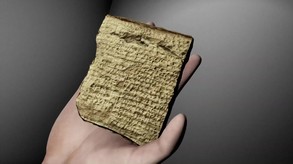
There are games you play for fun, games you play for mastery, games you play to keep your brain at its peak and then there are games you play out of respect. The Royal Game of Ur on Steam belongs firmly in the last category — and if you truly call yourself a board gamer, dice gamer, or lover of tabletop history, then owning Ur in some form isn’t optional. It’s a rite of passage. An act of homage to the ancestors who sat around fires and palace floors, rolling dice and racing tokens more than 4,500 years ago, in beautiful lapis lazuli boards. This Steam version doesn’t just digitally adapt a game — it preserves a legacy. The Royal Game of Ur was discovered in the 1920s by archaeologist Sir Leonard Woolley during excavations at the Royal Cemetery of Ur, in modern-day Iraq. Among the treasures of ancient Mesopotamia were beautifully inlaid boards — shells, lapis lazuli, and geometric designs — clearly marked with a path and rosette symbols. For decades, the rules were a mystery. Then came the breakthrough: a Babylonian clay tablet, deciphered in the 1980s by scholar Irving Finkel, which described gameplay, movement, and even omens associated with the board. Suddenly, humanity didn’t just own the board — we understood how it was played. The Steam version of Ur leans into this history with reverence. It doesn’t hide its academic roots — it celebrates them. At its heart, Ur is a race game — deceptively simple and endlessly elegant. The way it wowrks is simple Each player has a set of pieces that must race along a shared path. Movement is determined by tetrahedral dice (binary dice with marked corners). Rolls decide how far a piece can move. Landing on certain rosette spaces grants extra turns and one of them safety from being knocked off the board. You can knock opponents back by landing on their pieces — except on the protected rosetta. First player to bear off all pieces (with a precise roll) wins. That’s it. And yet, from these few rules emerges risk management, tempo control, tactical aggression, strategic patience and comebacks that feel miraculous. This is pure game design, stripped to its bones. No fluff. No excess. Just interaction, chance, and choice — the holy trinity of tabletop entertainment. The brilliance of Ur lies in its simplicity with consequence. This game proves that you don’t need complexity to create tension, you don’t need theme overload to create drama and you don’t need hundreds of components to create meaning. Modern designers could learn volumes from Ur. It’s inspiring because it reminds us that games were always about people, about shared uncertainty, laughter, groans, and triumphs — long before rulebooks were glossy and boxes weighed ten kilos. Playing Ur feels like touching the source code of board gaming. The Steam adaptation deserves serious praise for how thoughtfully it handles this ancient artifact: a clean, readable digital board that mirrors archaeological finds, authentic dice mechanics, smooth animations that keep the pace brisk and clear rules presentation without over-modernizing the experience. But the standout feature is the developer-created video explanations. The devs go above and beyond by explaining the history of the game, showing images of the actual tablets and boards discovered, walking players through how scholars reconstructed the rules, treating the game as a cultural treasure, not just a product. This is how historical games should be handled — with care, scholarship, and genuine love. Huge credit must be given to the developers for not only delivering a playable version of Ur, but for acting as curators of gaming history. Including videos and archaeological context transforms the experience from “a quick board game” into something almost museum-like — yet still fun, competitive, and engaging. It’s rare to see a Steam game that teaches while it entertains, without ever feeling preachy. Very well done, in all its simplicity.
fun game
The best bang for your buck out there. Hands down. You need to have friends though. Best tabletop game I ever played. Make physical copies. Play with your friends.
Good for a few minutes. I wish there was more to it though. Single player experience is not so great. This is definitely a cool, functional conversion though. I wouldn't recommend it unless on heavy sale.
Related
Related
Trends
Concurrent players on Steam, sampled daily since tracking started.
Audience
Estimated from the language of this game's reviews — a proxy for where players are, not official Steam demographics.
Related
| CometStriker DX | $6.4K | 64 | 98% | $4.94 |
| Stocksynd House | $6.4K | 57 | 84% | $7.99 |
| MY DIRECT DAMAG 7 TRILLION | $6.4K | 94 | 72% | $2.99 |
| Cozy Liora | $6.4K | 87 | 95% | $1.99 |
| Backrooms: Last Room - Infinite Depths | $6.4K | 103 | 69% | $3.99 |
| DVD Survivors | $6.4K | 52 | 100% | $4.99 |