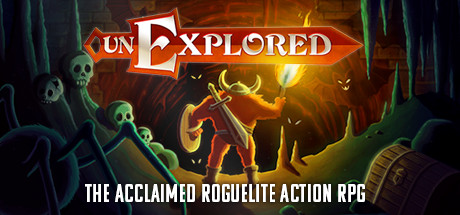
The ROGUELITE that feels like a ROGUELIKE. Praised for its fantastically generated dungeons, real-time combat and surprising amount of content and depth. One of the BEST GAMES OF THE YEAR according to PC Gamer and VICE Waypoint.
Modeled estimate, not a reported figure. How we estimate →
About
Unexplored is the roguelite that feels like a roguelike. An accessible yet challenging action rpg, praised for its fantastic level generator, real-time combat and a surprising amount of content and depth. Plus: free dlc which adds even more variety!
Explore dangerous dungeons, solve mysterious puzzles and engage hundreds of foes, big and small, in intense melee combat.

Easy to Play, Easy to Die
Fantastic Generated Dungeons (using brand new tech)
Real Emergent Gameplay with many Tactical Options
Intense, Real-time, Dual Wielding Melee Combat
Stealth Mechanics (dungeon crawling like a real rogue…)
Over 50 dangerous bosses
Challenging, generated puzzles
Adaptive, original soundtrack

Misery, one of Unexplored’s Early Access players, thought our description didn’t do the game justice. So, we asked: “What do you feel makes the game stand out?”
We really liked what Misery wrote, so here’s a summary:
1. the Dungeon Generation
2. It uses a ton of traditional roguelike concepts, but in non-annoying ways
The fact that the game FEELS like a traditional one while still being real-time is a pretty major thing as far as I see it.
3. The combat is pretty fun, yeah
Lots going on there, particularly once things like potions and staves or whatever are thrown into the mix. Feels more tactical than the usual "shoot everything" sort.
4. Pausing the game
Being able to pause the game and deal with your inventory, use items, and examine things, without actually leaving the game screen, that's a big one. It all really opens up a lot of options for tactical play.
5. The Puzzles
[The puzzles] feel like the sorts that the old Zelda games used to use. That same satisfaction from that is here overall.
6. The hub floors
Ended up being a great feature.
7. The huge variety of enemies
Not just bosses, but monsters and traps and all sorts of stuff. I've been constantly impressed by this. Even after so much time with the game there's still plenty I haven't even seen yet.
8. And of course the whole "lock and key" concept.

The goal of Unexplored is to find the dragon in the depths of the dungeon of doom, slay it to claim the Amulet of Yendor and bring it back to the surface. Every run, the game will create an intricate map of dungeons, hinting at foes to come and solutions for puzzles you’ll face.
During your adventure through the dungeons, you’ll regularly face off with one of over fifty possible bosses. These range from the Queen Ant, to the Balrog and, yes, several menacing Dragons. Some of these bosses can only be slain with the right weapons, so make sure not to miss those on the previous levels.
In the spirit of roguelikes, the game does not tell you which potions will save you, and which will kill you. You’ll have to find out yourself either by taking risk or using the right Magic Scrolls. Same story for the Enchanted Weapons: are they blessed with divine powers or cursed with deadly spells?
Pitted throughout the dungeons you’ll encounter strange statues. Some of these are part of puzzles and solving those may reap great rewards. So, you may want to pick up and read the books you’ll see lying around. They may feature hints on how to solve a puzzle, even one a few levels deeper.
You’ll be able to equip two items and wield them both. In the darkest deeps you might want to hold a burning torch beside your axe. Bats tend to be killed easily from a distance by throwing daggers at them, so why not equip them in both slots? Or wield a whip, no better, the Flaming Whip you just plucked from that Balrog you managed to finally kill. Or… perhaps it’s best you start with a shield. A big, enchanted shield. Yes.
Your starting armor may not seem like much, but that’s only because… well, because it IS not that much. It will keep you safe from the bites of bats, but don’t try your luck with an Orc. Beat the right foes to collect their leather breastplates or chainmail. Or… equip the right cloak on go stealth…
Yes, that is an option. You can go unnoticed for a long time and execute surprise attacks for added damage. Like everything in Unexplored, it’s up to you to weigh the rewards versus the risk. Because a surprise attack on a Necromancer may sound like a terrific idea, but it’ll probably survive your first strike, leaving you quite vulnerable in your cloak of cloth.

Unexplored features several kinds of progression for you and your character. The most important is simple: experience. Expect to die a lot in the beginning, whilst learning exactly how to play the game. But you will learn and before you know, you reach a deeper level every run. However, there’s more than just experience. Within each run, you’ll find Potions of Strength, drink those and your power increases for as long as your stays alive. A Potion of Life not only completely heals your hero, it increases the amount of Hit Points. Upgrading your equipment by combining it with certain magic items on an anvil will grant you perks for the time being. Offer to the Gods, and you may receive another upgrade.
However, if you die, your powers die with you. Unexplored is a game featuring perma-death.
Nevertheless, some upgrades are permanent. When you unlock achievements, you unlock equipment and items you can purchase before you start a new run. You pay for these items with the other permanent feature: gold. Your hero will inherit all the gold your previous one owned. So it is always an absolutely fabulous idea to try an open as many chests as possible, you might get rich trying.
Or, just spend it all during your run when you meet one of the vendors. Yes, you heard that correctly: during the game you will be able to spend your gold on new equipment and potions. Obviously, if you subsequently fail, all that gold is lost. Like in forever.
The deeper you go, the more dangerous the dungeons will be. So, make sure to pick up the right equipment, potions and scrolls along the way. You can even craft better items and mix healthy or plain deadly drinks.

Part of Unexplored’s allure is the way it generates the dungeons. Not just the levels themselves (see this video about Cyclic Dungeon Generation), but all the dungeons in their entirety. The game knows what you’ll face on the deepest levels even before you start wandering the first one. So, it will provide you with hints, keys and notes about what to expect down the line. Best keep an eye out for those.
No, of course not. Unexplored is a game filled with content, with lava and water, plants and trees (flammable trees that is), with hidden doors and locked doors (use lockpicks!), with small bosses and big bosses and with so much more. But we won’t spoil everything here. It’s up to you to find out! So, go have yourself an adventure! You’ll love it!
***************************************
Unexplored has a fantastic community of players helping each other out. They have been an integral part of the development of this game. So, if you're really stuck, let us know in the Steam forum, and we, or one of the other players, will try and help you out.
Genres
Stats
All-time low is the lowest price we've recorded for this game since we started tracking it.
Languages: English
Engagement
Reviews
Themes across 44 recent reviews and how positive each mention is. A keyword signal, not full sentiment analysis.
Reviews
Great procedural generation, vast amount of items.
Fantastic solo adventure game. Always different but still the same. One of my favorites.
THE most rogue like rogue-lite
Media

Related
Related
Price dynamics, follower growth, revenue and sales trajectories with interactive tooltips
This and every other Pro feature is free until October 20, 2026. A free account is all it takes.
Hours played at review time, across 44 reviews with recorded playtime.
positive critical· bar length = how often the theme comes up
Unexplored is a remarkably thoughtful action roguelite that captures much of the mystery, danger, and unpredictability associated with traditional roguelikes while presenting everything through real-time top-down gameplay. Developed and published by Ludomotion, it focuses on descending through a dangerous dungeon, defeating the dragon guarding the Amulet of Yendor, and then attempting the equally important journey back to the surface. The premise is deliberately straightforward, but the systems surrounding that objective turn each expedition into an unpredictable adventure where knowledge, preparation, improvisation, and calculated risk are often more important than raw combat ability. Its procedural dungeon generation is easily one of its defining strengths. Rather than simply arranging random rooms and filling them with enemies, the game tries to construct interconnected scenarios across multiple floors. The dungeon can establish future encounters before the player reaches them, allowing earlier areas to contain clues, keys, books, weapons, or information that becomes important later. A seemingly insignificant discovery can therefore gain considerable value several floors afterward. This foreshadowing makes the dungeon feel surprisingly deliberate for a procedurally generated environment and encourages players to pay attention to their surroundings rather than rushing toward the next staircase. Exploration consequently becomes more involved than clearing rooms. Hidden passages, locked doors, statues, traps, environmental hazards, merchants, books, treasure, and unusual objects constantly encourage investigation. Generated puzzles are particularly effective because clues can appear well before the puzzle itself. Remembering something discovered earlier can be just as useful as possessing a powerful weapon. Environmental elements such as water, lava, vegetation, and flammable objects add further opportunities for unexpected interactions. The result is a dungeon crawler where curiosity is frequently rewarded, although permanent death ensures that careless experimentation can also have serious consequences. Combat takes place in real time and revolves around a versatile dual-wielding system. Two objects can be equipped simultaneously, enabling practical combinations such as sword and shield, axe and torch, or paired throwing weapons. Equipment choices matter because different creatures and situations favor different approaches. With more than fifty possible bosses, players cannot assume that one preferred weapon will solve every problem. Certain major enemies can require suitable equipment or preparation, making discoveries on previous floors potentially critical. Combat therefore combines reflexes with inventory management, positioning, resource conservation, and awareness of what lies ahead. The ability to pause and manage items adds another tactical dimension. Potions, scrolls, magical equipment, staves, armor, and other tools can substantially change how an encounter unfolds, and having time to examine available options keeps the real-time system from becoming mindless button mashing. Stealth provides another possibility, allowing characters to remain unnoticed and perform stronger surprise attacks. It is intentionally risky, however, since lightweight equipment that improves stealth may provide little protection if the opening attack fails. This balance between opportunity and danger runs throughout the experience. Traditional roguelike uncertainty is particularly noticeable in the item system. Potions do not automatically reveal whether they are beneficial or dangerous, forcing players to identify them through experimentation or appropriate magical knowledge. Enchanted equipment can similarly contain useful or harmful properties. Crafting and mixing broaden these possibilities by allowing equipment improvements and the creation of different concoctions. These mechanics ensure that discovering an object is only the beginning; understanding how and when to use it becomes another part of progression. Permanent death gives every decision weight. Strength improvements, increased health, upgraded equipment, divine benefits, and other advantages acquired during an expedition disappear when that character dies. However, the overall structure includes limited persistent progression. Achievements can unlock equipment and items for future runs, while gold can carry forward and be used when preparing another adventurer. Gold spent during an unsuccessful expedition is gone, creating meaningful decisions about whether resources should be saved or invested in immediate survival. This approach maintains the tension of a traditional roguelike without making every failed attempt completely meaningless. The greatest form of progression is ultimately player knowledge. Early expeditions can end abruptly because unfamiliar monsters, traps, unidentified items, or poorly understood mechanics punish mistakes severely. Over time, patterns become recognizable. Players learn which battles should be avoided, which objects deserve attention, how equipment combinations complement each other, and when conserving a valuable resource is wiser than using it immediately. Reaching deeper areas becomes satisfying because improvement reflects both better equipment and a genuine understanding of the dungeon's rules. Its presentation is comparatively modest, relying on clean top-down 2D visuals instead of elaborate graphical spectacle. That simplicity works reasonably well because environmental readability and positioning are essential. Enemies, hazards, objects, and pathways remain easy to distinguish during exploration and combat. The adaptive original soundtrack contributes additional atmosphere and responds effectively to the changing circumstances of an expedition. The audiovisual presentation may not impress players seeking cinematic production values, but it supports the mechanics without distracting from them. The main drawbacks largely originate from the same design decisions that create its appeal. Permanent death can make a lengthy failed expedition frustrating, while unidentified items occasionally punish experimentation rather harshly. Combat can initially appear less fluid or immediately exciting than more arcade-oriented action roguelites. Procedural generation also means individual runs can vary in pacing and quality. Players looking for constant permanent stat upgrades may struggle with a progression model that places considerably greater emphasis on learning through failure. Steam Deck compatibility deserves some qualification. The Steam store page does not currently display an official Deck Verified or Playable rating for the game. It does list SteamOS and Linux support, and available Steam metadata indicates partial controller support. That makes handheld play plausible, but it should not be treated as officially Steam Deck Verified. Players may need to adjust controls or configurations depending on their setup, so this is better regarded as potentially workable on Steam Deck rather than guaranteed to provide a completely seamless console-style experience. Despite its relatively understated appearance, this is a surprisingly deep dungeon crawler. Procedural generation, puzzles, stealth, dual-wielding combat, crafting, unidentified items, environmental interaction, bosses, permanent death, and persistent unlocks combine into something more cohesive than a collection of roguelite mechanics. Its greatest accomplishment is making randomly generated adventures feel interconnected, with discoveries on one floor potentially influencing events much later. For players who enjoy exploration and learning complicated systems through repeated attempts, it offers an unusually rewarding interpretation of real-time roguelike design. Rating: 8/10
Was ist das Ziel des Spiels? Hab ich nicht verstanden. Muss man einfach in jedem Level die Leiter runter? Aber warum? Es gibt keine besseren Waffen oder sonst eine Verbesserung.
One of the best roguelite/roguelikes out there. All achievements/unlocks work.
More enjoyable than most Dungeon Crawlers, really very good and highly replayable.
https://youtu.be/MB6VHLcmcvA Proc-gen success based on luck rarely feels rewarding no matter which way the dice land.
the adventures of Gwyldor was not a good dame
its the only (somewhat) traditional roguelike I even finished, it's really good. super addictive.
Selling now
See how fast this game is selling right now — estimated copies and revenue per day from recent review growth.
Players by region
Where this game's players are, estimated from review languages.
Related
| Game | Estimated lifetime revenue | Reviews | Review score | Price |
|---|---|---|---|---|
| $6.4M | 62.9K | 95% | $4.99 | |
| $6.4K | 37 | 76% | $8.99 | |
| $165.2K | 478 | 70% | $14.99 | |
| $27.2K | 287 | 93% | $4.99 | |
| $5.5K | 20 | 80% | $9.99 | |
| $3K | 21 | 95% | $5.99 |
Related
| Game | Estimated lifetime revenue | Reviews | Review score | Price |
|---|---|---|---|---|
| $152.1K | 669 | 91% | $4.19 | |
| $152.1K | 412 | 69% | $14.99 | |
| $152.2K | 210 | 86% | $17.99 | |
| $152K | 293 | 89% | $19.99 | |
| $152.2K | 342 | 84% | $19.99 | |
| $152.2K | 1.6K | 67% | $4.99 |