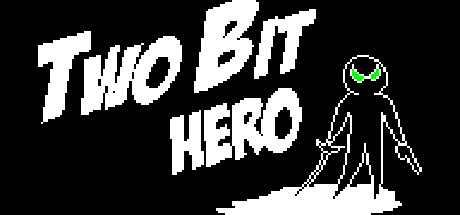
A classic retro metroidvania - retroidvania if you will - with (mostly) black and white graphics. Handcrafted, fast-paced action with multiple endings.
Modeled estimate, not a reported figure. How we estimate →
Media

About
Stats
All-time low is the lowest price we've recorded for this game since we started tracking it.
Languages: English
Reviews
Decent metroidvania. You might get frustrated at the map design, but it is intentional and there is a thing in the game, that can make the navigation much easier. Boss battles are not great.
Here's a Totally Objective Review of the Game: https://youtu.be/tjR7QMLAlmw (10/10)
This game could be an excellent, simple metroidvania, but the controls are locked and cannot be changed. For that reason alone, I am forced to give this game a negative review.
現バージョンだと色々説明不足というか、次のステージ進むためのアイテムとかキーを示す要素を作ったりメトロバニア系ならミニマップがあってもいいと思いますけど、ともあれ疲れてる時にプレイすると余計疲れるゲームでした。
Two Bit Hero is a retro-inspired metroidvania that mixes classic platforming, exploration-heavy progression, and reality-shifting mechanics into a surprisingly charming indie adventure. Developed by ERMedia and published by Plug In Digital, the game follows a lesser-known superhero trapped inside a massive skyscraper overtaken by strange dimensional distortions and dangerous enemies. What initially appears to be a simple old-school platformer gradually reveals itself as a creative exploration-focused experience built around navigating alternate realities, uncovering hidden pathways, and slowly mastering the building’s interconnected structure. One of the game’s most immediately striking features is its visual presentation. Instead of relying on colorful pixel art or modern retro aesthetics, Two Bit Hero adopts a mostly monochrome art style with carefully used accent colors that give the world a unique identity. The black-and-white environments resemble older handheld games and minimalist arcade titles, creating a nostalgic atmosphere that feels intentionally stripped back and focused. Even with its simple visuals, the game manages to create environments that feel atmospheric and memorable, especially as the skyscraper slowly transforms into a surreal maze filled with glitches and alternate realities. The gameplay follows the traditional structure of a metroidvania. Players explore interconnected environments, unlock traversal abilities, defeat enemies, and return to earlier areas to uncover previously inaccessible sections. Movement feels responsive, and progression is tied heavily to gaining new powers that gradually expand exploration options. Double jumps, enhanced movement abilities, and reality-shifting mechanics all contribute to the satisfying sense of steadily becoming more capable as the world opens up. The game clearly understands the appeal of gradual discovery and carefully layered progression that defines the genre. What truly makes Two Bit Hero stand out is its dimension-switching mechanic. Throughout the adventure, players encounter glitches that allow movement between alternate versions of the same environment. These parallel realities often contain different obstacles, enemy placements, and traversal opportunities, forcing players to constantly think about how both versions of the world interact with one another. Progression frequently depends on switching dimensions at the right moment to bypass hazards or uncover hidden routes. This mechanic adds a puzzle-like quality to exploration that keeps the game feeling more creative than many smaller metroidvania titles. Exploration is easily the strongest part of the experience. The skyscraper is designed as a large interconnected maze filled with hidden upgrades, secret passages, and environmental shortcuts that reward curiosity. As new abilities are unlocked, previously inaccessible areas become reachable, encouraging constant backtracking and experimentation. The level design feels carefully constructed to support exploration, and discovering hidden paths or solving traversal puzzles creates a satisfying sense of progression throughout the adventure. Combat is relatively simple but functional. Players use melee attacks and ranged abilities to defeat enemies scattered throughout the building. The fighting mechanics focus more on movement and timing than deep combo systems or highly technical gameplay. While combat never becomes especially complex, it remains enjoyable because the controls feel responsive and enemy encounters are paced well enough to keep exploration engaging. Boss battles provide some of the game’s more memorable moments by forcing players to combine movement skills, timing, and environmental awareness during larger confrontations. The soundtrack complements the retro aesthetic extremely well. Chiptune-inspired music reinforces the nostalgic atmosphere while giving exploration and combat additional energy. The audio design feels heavily influenced by older console and handheld platformers without sounding overly derivative. Combined with the monochrome visuals, the soundtrack gives the game a strong retro identity that remains consistent from beginning to end. Another enjoyable aspect of the game is its lighthearted personality. The premise of playing a relatively unimportant “two-bit” superhero in a world already filled with more powerful heroes gives the adventure a self-aware tone that occasionally pokes fun at superhero clichés and retro game conventions. The humor is subtle enough that it never overwhelms the atmosphere, but it adds charm and personality to the overall experience. However, the game’s old-school design philosophy can also become frustrating at times. Progression occasionally feels unclear, especially when players are forced to revisit earlier sections searching for missed pathways or hidden abilities. The lack of strong guidance means some sections depend heavily on exploration and memory rather than clear direction. Players unfamiliar with traditional metroidvania structure may occasionally become lost or unsure about how to proceed. Combat also lacks the depth found in stronger entries within the genre. Although the movement and exploration systems evolve nicely over time, the fighting mechanics remain fairly basic throughout most of the experience. Enemy encounters eventually become repetitive because the combat itself changes very little as the adventure progresses. Players looking for highly technical action systems or more advanced combat variety may find the battles somewhat simplistic compared to larger metroidvania titles. The minimalist visual style, while distinctive, may also divide players. Some will appreciate the nostalgic monochrome presentation and atmospheric simplicity, while others may find the environments visually repetitive after longer play sessions. Certain areas can occasionally blend together because of the limited color palette and similar environmental themes. Despite these flaws, Two Bit Hero succeeds because of its creative dimension-shifting mechanics and strong commitment to classic metroidvania design. The game understands the satisfaction that comes from exploration, discovery, and gradually mastering a complex interconnected world. Even when navigation becomes confusing or combat repetition sets in, the exploration systems and atmospheric presentation continue to keep the adventure engaging. What ultimately makes the game memorable is how confidently it embraces old-school game design while still introducing enough original ideas to establish its own identity. It does not attempt to become an overly cinematic or heavily guided experience. Instead, it focuses entirely on rewarding exploration, experimentation, and persistence. The combination of retro aesthetics, glitch-based mechanics, and interconnected level design creates a world that feels consistently intriguing to explore. For players who enjoy classic metroidvanias and retro platformers built around exploration and discovery, Two Bit Hero offers a rewarding indie adventure with plenty of charm and creativity. While its combat simplicity and occasional navigation frustrations prevent it from reaching the highest level of the genre, the game’s unique atmosphere and clever reality-switching mechanics make it a memorable experience for fans of old-school exploration-focused platformers. Rating: 6/10
รีวิว Two Bit Hero เกมต่อสู้แนว Metroidvania สั้นๆ 4-5 ชั่วโมง ที่เราจะได้เล่นเป็นผู้กล้าสีขาวดำใช้ดาบกับปืนในการกำจัดศัตรูในปราสาทขนาดใหญ่ที่มีอยู่หลายห้อง แถมแยกออกเป็นจักรวาลสีขาวกับจักรวาลสีดำในปราสาทเดียวกัน ที่เราจะต้องวาร์ปสลับไปมาในที่ๆมีจุดวาร์ป บางห้องมีไอเทมอัปเกรดอาวุธซ่อนเอาไว้ บางห้องก็มีบอสให้สู้ภายในระหว่าง 2 จักรวาล ตอนจบมีหลายแบบ ขึ้นอยู่กับว่าเราจะตามหาเอเลี่ยนสีเขียวเจอครบกี่ตัว ส่วนตัวผมมองว่าสนุกมาก กระโดดฟันศัตรูยับตลอดทั้งเกม เจอบอสนี่ยิงแหลก ตัวเกมสามารถปรับระดับความยากได้สำหรับมือใหม่กับคนที่เก่งอยู่แล้ว ซึ่งจะเล่นแบบไหนก็ได้แล้วแต่ เพราะไม่ส่งผลกับตอนจบ โดยรวมสนุกแบบ Metroidvania มาตรฐาน
This one is one I'm on the fence with. I feel like it's not bad, but I ended up getting bored and frustrated. I would love there to be a neutral option on Steam, but 20+ years later and there's still not, so I gotta go with a no. Pros - The controls are immediately responsive. This is a big plus in my book, seeing as most games nowadays have issues (especially when scraping the bottom of the barrel). I didn't have any lag or missed inputs in game. Also, if you don't like the layout, there's so many ways to fix that. Even steam has it's own integrated button mapping system you can configure for each individual game, so I don't see why a layout that isn't perfect is an issue. - The exploration with unlocking abilities and upgrades to get to new areas started off well in this game. There's no hand holding, so just running around finding stuff was pretty fun to begin with. - The music and sounds fit the game well. Each area has it's own music, and they're all decent tracks. Cons - Either I missed it, and have been playing blindly for an hour, or there's no in game map. If I missed it, this is just as bad because there should be enough guidance in game to get you to your main point of navigation. This is a disaster when it comes to Metroidvanias, and will be the reason I quit this game (if I even pick it back up). You have two different dimensions laid out the same, plus you're backtracking after getting abilities to go to new areas. It's a lot of travel in similar areas and constantly go back and forth in the same rooms in order to progress without a map. - The bosses... They're a joke, right? They're one simple pattern each. At least they change, but they're still very bland and easy to kill/avoid. - The lack of navigation caused me to be running in circles to find the places I haven't been to, and this made the gameplay dull, tedious... boring. I'm here to enjoy playing a game, not to feel like I'm doing chores. Sweep this area, look for the new entrance, sweep the next area... get an ability. Go back to the start and start over... It's monotonous. The layout doesn't do you any favors when there's 10 ways to go, but 9 of them dead end from an ability or dimensional block multiple rooms later, and the blockades all look kinda similar to begin with so you can't even keep it in mind for later when you do get what you need. To add on top of that, the ways intersect with each other on multiple paths, so if you go one way, then go back and go the second way, you could very well end up going to the exact same dead end over and over even though you're checking different routes. - I went through at least 10 different areas (The ones that have names in symbols which reminded me of why I hated Tunic) and I fought 5 different enemy types. I get this game is meant to be a smaller format, but the lack of variety was not helping how bland it felt. I'm sure throughout the entire game, there's a few more enemy types, but there's still so few when you're going though a map this big. - Spikes (My mortal enemy) are 1 hit deaths. I was going down through fall through ledges, and there were spikes below me, but I couldn't see them, so when I went down, I went from 45 (full) health to 0. This set me back 3 areas which is where I found the last save point. It was about 10 minutes of gameplay, one boss, and 30ish rooms that I just didn't want to do again because it became so boring and repetitive already that redoing it felt like it would be miserable. All in all if you aren't bothered by repetition and feeling lost until you find the one correct path in 20+ options having to circle two different dimensions of the same map to find them, you could possibly like this game. I bought it on sale, and I'd say with an hour of enjoyment that steadily turned into torture, that it wasn't worth it for me. If a map gets implemented, I'd retry it, and it could be a major change in my opinion.
broken controls. cant even jump properly.
Background full white from the beggining of the game, and also when I died, I couldn't restart and I was only able to shoot while dead. Please just do an overall in the game, because this type of bugs just demonstrate lack of time to work on the game.
Related
Related
Trends
Concurrent players on Steam, sampled daily since tracking started.
Related
| Glasses and Girls | $315.6 | 51 | 82% | $0.99 |
| Food and Girls | $315.6 | 51 | 86% | $0.99 |
| Dances and Girls | $322 | 52 | 83% | $0.99 |
| Carnival and Girls | $334.4 | 53 | 85% | $0.99 |
| Anime Sunset Ride | $334.4 | 54 | 67% | $0.49 |
| Cosmic Journey PC Live Wallpaper | $336.3 | 52 | 71% | $0.49 |