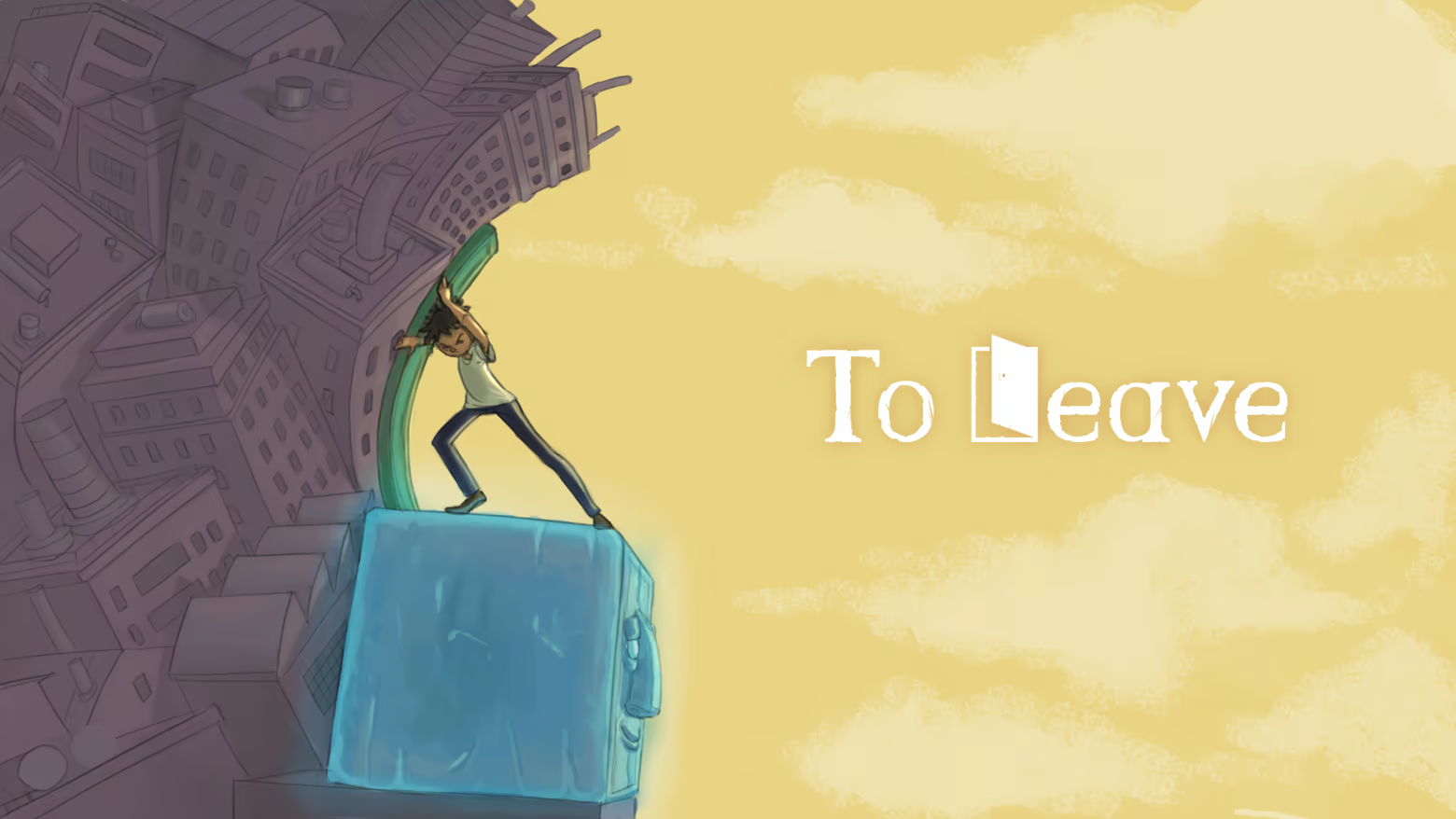
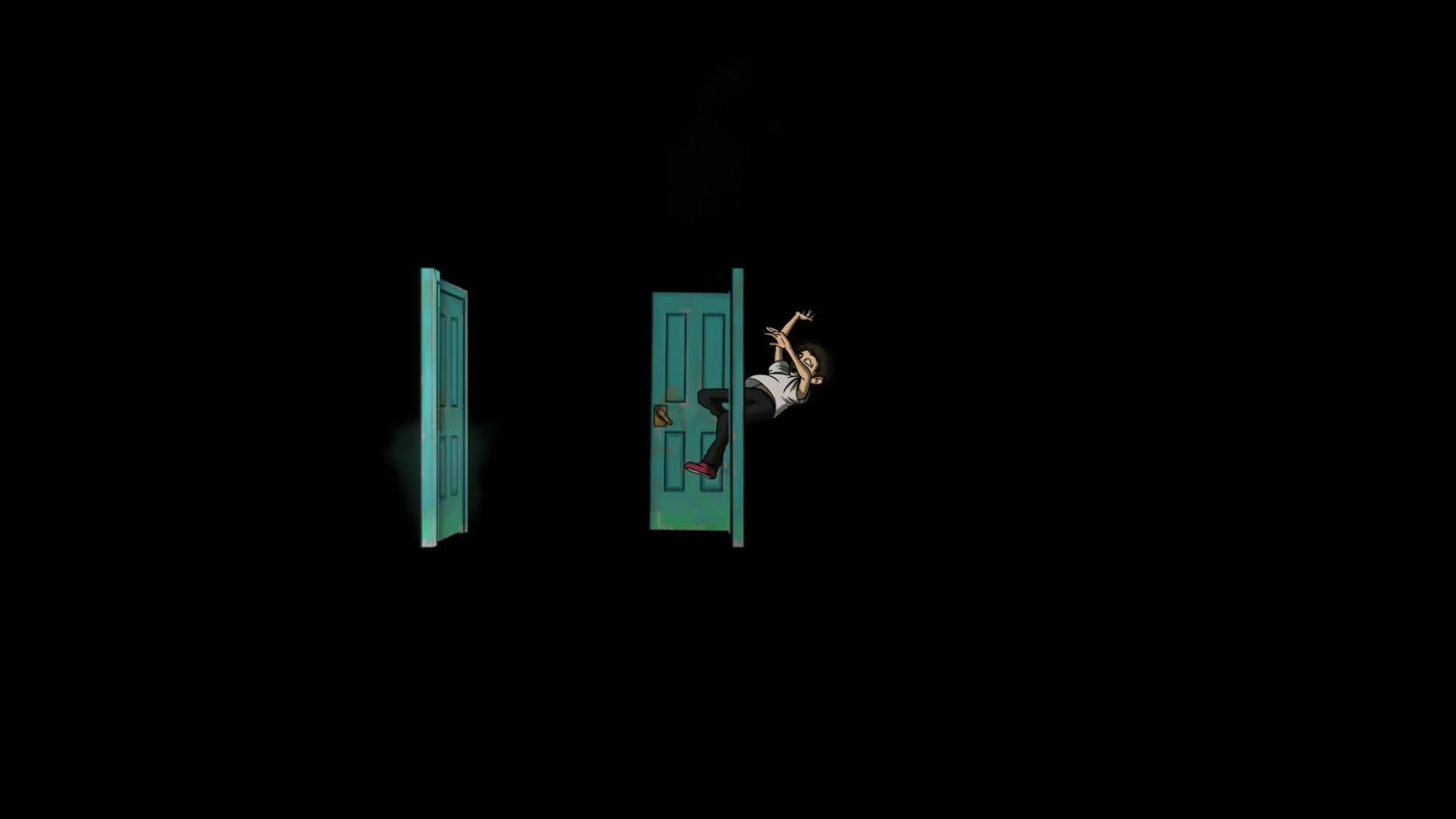
Harm – a manic-depressive young man in possession of a magical, flying door – seeks to use an ancient, derelict technology to harvest the souls of his homeworld and send everyone (including himself) to heaven.
Modeled estimate, not a reported figure. How we estimate →
About

Stats
All-time low is the lowest price we've recorded for this game since we started tracking it.
Languages: English, Spanish - Spain
Engagement
Hours played at review time, across 40 reviews with recorded playtime.
Reviews
Themes across 40 recent reviews and how positive each mention is. A keyword signal, not full sentiment analysis.
positive critical· bar length = how often the theme comes up
Reviews
This was unexpectadly one of the hardest games I have ever played, but i guess that was kind of the point... To symbolize living with depression I think. It gets frusterating, but it's worth a playthrough if you enjoy a challenge, and its an absolutely gorgeous game! Steam's 7/10 rating is accurate.
The achievement of this game is its elegance. With extremely simple gameplay they manage to create an immersive, highly challenging and entertaining experience with a story dealing with an incredibly profound issue. I highly recommend it. Edit: I very very strongly recommend reading all the journal entries as soon as they're available. The context it provides and the backstory are amazing and very engaging, taking the experience to a whole other level. It is not a short read, but it is well worth it.
It's a very very bad game. I don't know why I buy it, because I can tell many faults about this game. 1 the story is no sense, nobody care the story because the mails are full of ♥♥♥♥♥♥♥♥ 2 the ending is odd, the whole game doesn't even tell a whole story 3 too many frustrating, no sense of achievement thought I already complete the game. 4 not any hint in the game, very terrible control 5 ugly art and graphic 6 lot of bugs, for example , you can select any chapter which is after content 13 7 too long beginning and you cannot skip it. ♥♥♥♥ it I don't know who give so many good comments, but this game doesn't deserve it.
Su jugabilidad tiene un alto grado lúdico, además muestra una narrativa visual vinculada a una problemática tan común en nuestro entorno diario, pero al mismo tiempo, muy descuidada por la sociedad actual, por lo tanto al mostrar un personaje con síntomas de depresión y en su grito desesperado de no saber que hacer , el juego muestra una salida como una puerta que se abre a un mundo lleno de soluciones y alternativas, con el fin de mitigar ese dolor, angustia y miedo, que el personaje protagonista de este VG demuestra, Al final nos deja un gran aprendizaje y un vivido momento de aventura.
ufffff juegazo lo recomiendo 100%, es un juego muy difícil de pasar cada nivel es más complicado lo cual lo hace un desafío y visualmente es muy bueno
Muy interesante, los gráficos las animaciones,la trama. Eel juego es complejo desde el inicio, y hay que prestar mucha atención a los detalles :)
To Leave es el resultado de años de espera. Un juego que desde sus inicios ya me cautivaba la historia de Harm y como intentaba salir adelante a pesar de todas las circunstancias. El modo de juego es cautivador, te atrapa y motiva a seguir avanzando a pesar de ser sumamente difícil. Importante es la cantidad de simbolismos que hay durante todo el juego, todo comunica y todo tarde o temprano te ayudará. Y si.... es SUMAMENTE ADICTIVO.
Si te gusta abrir puertas este es tu juego con una buena banda sonora y una gran dificultad facil de aprender pero dificil de dominar
Great game!! Innovative both in gameplay and storytelling
To Leave, developed and published by Freaky Creations, is an emotionally charged puzzle-platformer that sets itself apart through its willingness to confront difficult themes while embedding them directly into its gameplay systems. Rather than offering a conventional adventure, it presents a symbolic journey through the mind of its protagonist, Harm, a character struggling with deeply personal and psychological burdens. From the very beginning, the game establishes a tone that is both introspective and unsettling, signaling that its focus lies more in emotional expression than traditional entertainment. The narrative unfolds in a fragmented and often abstract manner, following Harm as he navigates a series of surreal environments in pursuit of an unclear but deeply personal goal. The story avoids straightforward exposition, instead relying on symbolism, environmental storytelling, and scattered written reflections to convey meaning. This approach creates a sense of ambiguity that invites interpretation, encouraging players to piece together the significance of Harm’s journey rather than presenting it in a clearly defined structure. Themes of isolation, despair, and inner conflict are woven throughout, giving the experience a weight that lingers beyond the gameplay itself. Mechanically, the game centers on a unique movement system in which Harm travels using a floating door, a concept that immediately distinguishes it from other platformers. Movement is governed by physics-based controls that require careful timing and momentum management. Players must tap inputs rhythmically to maintain altitude while navigating obstacles, creating a constant sense of instability. This design is intentional, reflecting the character’s fragile emotional state and reinforcing the connection between gameplay and narrative. However, this same system can feel restrictive, particularly in more demanding sections where precision becomes essential. Difficulty plays a significant role in shaping the overall experience. Early stages introduce the mechanics gradually, allowing players to become familiar with the controls, but later sections increase the challenge dramatically. Obstacles become more complex, and the margin for error narrows considerably. This can lead to repeated failures, requiring patience and persistence to progress. For some players, this challenge enhances the sense of accomplishment, while for others, it may create frustration that disrupts the emotional pacing of the story. One of the game’s most compelling aspects is how closely its mechanics align with its themes. The challenges presented are not arbitrary; they often symbolize the internal struggles that Harm is facing. Certain hazards and environmental elements can be interpreted as manifestations of anxiety, pressure, or emotional weight, turning each obstacle into more than just a gameplay barrier. This integration of narrative and mechanics gives the game a strong sense of cohesion, making the player’s actions feel directly connected to the story being told. Visually, To Leave stands out through its vibrant and surreal art style. The environments are colorful and imaginative, creating a striking contrast with the darker themes at the heart of the narrative. This juxtaposition enhances the overall atmosphere, making the world feel both beautiful and disorienting. The soundtrack complements this visual design with a mix of ambient and emotionally driven compositions that reinforce the tone of each moment, adding depth to the experience without overwhelming it. Despite its artistic strengths, the game is not without its shortcomings. The combination of high difficulty and occasionally unrefined controls can make certain sections feel more punishing than intended. This can lead to moments where frustration overshadows the emotional impact of the narrative. Additionally, the abstract nature of the story may not resonate with all players, particularly those who prefer clearer storytelling or more direct character development. Ultimately, To Leave is a bold and deeply personal project that prioritizes expression over accessibility. It offers an experience that is as much about interpretation and reflection as it is about gameplay. While its mechanics and difficulty may limit its appeal, its commitment to exploring complex emotional themes through interactive design makes it a distinctive and memorable title. Rating: 7/10
Related
Related
Trends
Modeled estimate over time, reconstructed from Steam's monthly review histogram.
Momentum
Pace estimated from the game's recent review growth (our daily snapshots) at its own sales-per-review ratio — a momentum signal, not booked sales.
Audience
Estimated from the language of this game's reviews — a proxy for where players are, not official Steam demographics.
Related
| Howlville: The Dark Past | $9.8K | 58 | 72% | $9.99 |
| Stargazer | $9.8K | 86 | 72% | $4.99 |
| TankZone Battle | $9.8K | 86 | 76% | $4.99 |
| Fatehaven | $9.8K | 86 | 74% | $4.99 |
| Recursion Deluxe | $9.8K | 86 | 87% | $4.99 |
| King Lucas | $9.8K | 86 | 62% | $4.99 |
Related
| 7 Days to Die | $425.3M | 403.6K | 87% | $44.99 |
| Euro Truck Simulator 2 | $421.6M | 932.3K | 97% | $19.99 |
| Mount & Blade II: Bannerlord | $309.8M | 294K | 88% | $49.99 |
| Palworld | $279.6M | 447.5K | 94% | $20.99 |
| The Forest | $254.8M | 678.6K | 96% | $19.99 |
| Project Zomboid | $239.1M | 461K | 94% | $19.99 |