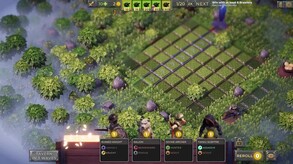
Tiny Tactics is a Tower Defense game with a heavy focus on mazing, with mechanics inspired by the Auto Chess genre.
Modeled estimate, not a reported figure. How we estimate →
About

Genres
Stats
All-time low is the lowest price we've recorded for this game since we started tracking it.
Languages: English**languages with full audio support
Engagement
Reviews
Themes across 46 recent reviews and how positive each mention is. A keyword signal, not full sentiment analysis.
Reviews
This is actually my favorite tower defense game. The variety and how the units interact is borderline genius. Would immediately preorder Tiny Tactics 2 if they started making it.
so many units and so many classes. but not fun at all. dull unit design makes it hard to recognize which one is which. and it is really confusing which unit I selected, and what they are doing. all those UI/UX fails only make my eyes sore.
Tiny Tactics is a strategy-focused tower defense game developed and published by Tiny Forge Gaming that attempts to refresh the classic tower defense formula by blending it with elements of auto-battlers and tactical maze construction. At first glance the game appears modest in scale, with simple visuals and a straightforward interface, but beneath that minimal presentation lies a surprisingly intricate system built around strategic placement, unit combinations, and the manipulation of enemy movement. Rather than relying purely on raw tower power or repetitive upgrade systems, Tiny Tactics encourages players to think carefully about positioning, path design, and how different units interact with one another. The core premise follows the familiar structure of defending against waves of incoming enemies, but Tiny Tactics introduces an important twist in how the battlefield functions. Instead of simply placing towers along a predetermined route, players have a large degree of control over the path enemies will take. By placing towers and structures in strategic positions, it becomes possible to reshape the route enemies must travel, forcing them to take longer paths through carefully designed mazes. This mechanic, often referred to as “mazing,” transforms each level into a spatial puzzle where the layout of defenses can significantly affect the outcome of each wave. A well-constructed maze can dramatically increase the amount of time enemies remain under fire, while poor placement can allow them to slip through defenses far too quickly. Gameplay unfolds through a series of increasingly challenging stages where waves of enemies march toward the player’s base. Each wave introduces new threats, forcing players to continually adjust their strategies. Early levels serve as a gentle introduction to the mechanics, allowing players to experiment with tower placement and basic path manipulation. As the campaign progresses, however, enemies become faster, more resilient, and sometimes capable of bypassing certain defenses altogether. This steady escalation in difficulty ensures that players must constantly refine their tactics rather than relying on a single solution for every stage. One of the most interesting systems in Tiny Tactics is the unit merging mechanic inspired by auto-chess games. Instead of upgrading towers through traditional upgrade trees, the game allows players to combine duplicate units to create stronger versions with improved capabilities. This merging system adds an extra layer of strategic decision making, as players must choose between spreading their resources across multiple towers or consolidating them into fewer but more powerful units. A highly upgraded tower can dominate certain sections of the maze, but relying too heavily on a small number of strong units may leave other areas vulnerable. The game features a large roster of towers and abilities, each with its own unique function on the battlefield. Some towers specialize in dealing direct damage, while others slow enemies, apply status effects, or provide supportive buffs to nearby units. These towers are often grouped into classes that generate additional bonuses when used together, encouraging players to experiment with different combinations to discover effective synergies. This system gives the game a strong sense of strategic variety, as different tower compositions can lead to entirely different defensive approaches. Enemy design also plays an important role in keeping the gameplay engaging. As players advance through the campaign, they encounter enemies with specialized behaviors that challenge their maze layouts. Some enemies move extremely quickly, requiring carefully timed damage output to eliminate them before they slip through defenses. Others possess high durability or special abilities that force players to rethink how their towers are positioned. The gradual introduction of these new enemy types prevents the gameplay from becoming stagnant and ensures that each level presents a fresh tactical challenge. The campaign mode contains dozens of stages set across different environments, each with unique layouts and terrain features. Certain maps introduce special tiles that enhance the effectiveness of towers placed on them, rewarding players who pay close attention to map design when constructing their mazes. In addition to the main campaign, the game includes additional challenge modes that push players to master its mechanics under more difficult conditions. These modes offer increased enemy difficulty and stricter strategic constraints, providing additional content for players who enjoy testing their tactical skills. Visually, Tiny Tactics adopts a colorful and minimalist style that prioritizes clarity over visual complexity. The bright graphics make it easy to identify towers, enemy units, and attack effects during hectic moments when multiple waves are active simultaneously. Although the art style is relatively simple, it serves the gameplay well by ensuring that players can quickly understand what is happening on the battlefield at all times. The clean interface also helps keep the focus on strategic decision making rather than unnecessary visual clutter. The sound design follows a similar philosophy of simplicity and functionality. The game features an energetic soundtrack that maintains a steady rhythm during gameplay, reinforcing the sense of progression as waves of enemies approach. Sound effects for attacks, abilities, and enemy movement provide useful feedback without becoming overwhelming. While the audio presentation is not particularly elaborate, it complements the fast-paced defensive gameplay and helps maintain the overall flow of each stage. One of the strongest aspects of Tiny Tactics is its replayability. Because tower combinations, enemy waves, and resource management can vary from one playthrough to another, players are encouraged to experiment with different strategies. The variety of available units and the flexibility of maze construction mean that there is rarely a single “correct” solution to a level. Instead, players can approach each stage in multiple ways, discovering new strategies as they become more familiar with the game’s mechanics. However, the game does have a few limitations that may affect some players’ enjoyment. The large number of towers and synergy systems can initially feel overwhelming, particularly for newcomers to strategy games with complex interactions. The tutorial provides a basic introduction, but much of the deeper strategy is learned through experimentation and trial and error. Additionally, because the core gameplay loop revolves around defending against waves of enemies, extended play sessions may begin to feel repetitive for players who prefer greater narrative or mechanical variety. In the end, Tiny Tactics proves that innovation in the tower defense genre does not always require massive production values. By focusing on clever mechanics and strategic flexibility, the game delivers a thoughtful and challenging experience that encourages experimentation and tactical creativity. Players who enjoy designing complex defensive layouts and discovering powerful unit combinations will likely find the game highly satisfying, while those looking for a more narrative-driven experience may find its focus purely mechanical. Nevertheless, as a strategic puzzle built around defense and resource management, Tiny Tactics succeeds in offering a rewarding and surprisingly deep gameplay experience. Rating: 8/10
Media

Related
Related
Price dynamics, follower growth, revenue and sales trajectories with interactive tooltips
This and every other Pro feature is free until October 20, 2026. A free account is all it takes.
Hours played at review time, across 46 reviews with recorded playtime.
positive critical· bar length = how often the theme comes up
I think the game is great, but in 2026 there are significantly better TD games out there that have continual updates and support from their devs. From what I can tell, this game or is more less dead as the last update was in 2023. I would suggest looking elsewhere.
Very nice TD. Some towers are very bad others very good, but overall you need to balance strategy to acomplish the quests. You can spend some time and have fun, for a cheap price this game is definitely a buy. Go with hard or nightmare otherwise it will be ridiculous easy and not worth the time. There is not a lot o maze building since the space is pretty "tailored" on each map, but yeah you can do some. Recommend this game for TD lovers.
初回起動時フルスクリーン 実質1ステージしかプレイできない バグ多い 初回に最大解像度でフルスクリーンにするの、マジで止めてほしい ルールの説明も殆ど無いし マップ2つ目(実質ステージ1)で詰ませるゲームだとは思わなかった リロールの仕様・同一クラスを固める仕様 説明が無いのと日本語非対応 起動時のSTARTボタンのアニメーションウザい ウィンドウサイズはドラッグでリサイズできるのに、セッティング開くか再起動すると強制的に戻される糞仕様 リサイズするとユニット説明の背景が消えたり、UIボタンのアイコンが消えるバグ ユニットプールがショップで隠れる。ショップは非表示できるけどカメラ引けばいいだけなのにカメラ動かせないし、ウィンドウサイズ変えるとバグるしUIの実装が糞 マップ周囲に木なんて置かなくていいから見やすい画面配置してほしい ✖ 90%offで買えた ○ 10%しかプレイできないゲームだった 残念です
Players by region
Where this game's players are, estimated from review languages.
Related
| Game | Estimated lifetime revenue | Reviews | Review score | Price |
|---|---|---|---|---|
| $26.4K | 104 | 92% | $8.99 | |
| $1.5K | 11 | 100% | $4.99 | |
| $435 | 4 | 100% | $4.99 | |
| $0 | 1.3K | 83% | Free | |
| $8.7M | 23.7K | 96% | $12.99 | |
| $2.8M | 3.9K | 97% | $16.99 |
Related
| Game | Estimated lifetime revenue | Reviews | Review score | Price |
|---|---|---|---|---|
| $223.2K | 625 | 88% | $14.99 | |
| $223.2K | 436 | 81% | $17.99 | |
| $223.4K | 390 | 98% | $13.99 | |
| $223.1K | 773 | 91% | $7.99 | |
| $223.4K | 512 | 81% | $19.99 | |
| $223.5K | 706 | 38% | $14.99 |