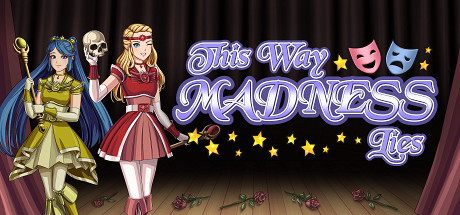
Shakespeare and Magical Girls, what could be better? Save the worlds of Shakespeare from the forces of Nightmare in this fast-paced turn-based JRPG comedy.
Modeled estimate, not a reported figure. How we estimate →
Discounts
Every price cut of more than 20% we have observed, in each market that quoted one, with this game's chart position on either side of it. These are episodes, not a model: a sale is one event, and one event cannot tell you what the next one will do.
Reviews, worldwide (the counter carries no country): 0/day in the week to Sep 14 → 0/day in the week after.
About
Genres
Sums Steam only; PlayStation, Nintendo publish no volume signal, so the true total is higher by an unknown amount.
| Store | Price | Audience | Score | Chart | Est. revenue |
|---|---|---|---|---|---|
SteamYou are here | $1.89−81% | 191reviews | 87% | — | $6.3K |
| $9.99 | 35ratings | 87% | — | not modelled | |
Engagement
Reviews
Themes across 41 recent reviews and how positive each mention is. A keyword signal, not full sentiment analysis.
Reviews
Have been following Zeboyd games for almost 15 years, having bought and played pretty much all of them (except for maybe the oldest ones). Never have I imagined the world needed a Sailor Moon – Shakespeare crossover, nor, even if I had, would I have thought it could be done, and yet here we are on both accounts! Thank you very much for continuing to make your quirky games full of light-hearted humour, colorful casts of characters and turn-based combat! PS: I belly-laughed on more than one occasion when reading the Olde vs. Zeboyd dialogue. Stuff's absolutely hilarious! PSS: My favs were Miranda, Beatrice and Viola PSSS: I don't kick puppies
TL;DR: Very mixed game, but ultimately I have no problem recommending it. If you're more gameplay-minded than story-focused, and if you like at least two of the major themes involved (magical girls, lovecraftian horror, Shakespeare), I absolutely think it's worth playing. Now to go on waaay longer. The best thing about the game is the battles, so I'm gonna speak about them. They're very streamlined, and they all revolve around resource-management, but in a way where you don't have to re-grind resources every time. Items that would be consumables are forever with you, but you are just limited to using one of each per battle. Likewise, skills and dual skills ("unites") are also spent for the battle once you use them. All characters have a rest action to recover use of their skills... however, if you take too long, the enemies have a natural ramp of damage the longer the fight takes. Even outside of battle, there's plenty to consider for it. You can only bring a certain number of skills to be used per battle, and up to 3 traits, which are passive effects for your characters. You can trigger a battle at any time with a button on the menu (you encounter them on the field too, but they don't respawn), and you heal up to full after every battle, which is convenient and helps there to be less downtime. Despite all of this, it's not a cakewalk, and what keeps me the most engaged is when the battles are hard anyway. I beat it on Challenging at first (second highest difficulty), and once past the first stage and up to the end of the game, there was no battle where I felt I could be careless. More than once I did one mistake, like use the wrong skill on Miranda thinking I'm out of hyper, or lack a character's disarm (usually Beatrice) before a particularly AoE attack, and that was enough to get me wiped and have to reset- which, when it happens, it just takes you to the start of the fight again, so even that's streamlined. But out of the times where I wiped, 9 times out of 10 it felt like my fault, with the odd one out being an ally getting randomly focused down by multiple enemies and messing up the whole action economy. But that's one of the few ways RNG can screw you up in this game, since dodging doesn't exist and ailments are not random either. Overall, I think the fights were great. That's not even touching how I like that different characters have specific gimmicks, like Miranda's completely changing her skill effects while hyper, or with Viola being able to be built as a skill combo master like no other. The other point I was going to make before getting to the cons is about the music: it's really good, in my opinion. All the battle tracks were remarkable, there's a couple of different voiced tracks through the game, and there's a brief song for magical girl transformations with different variations and instrumentations fitting the personality of each one. It's nothing particularly incredible, but I'll definitely remember some of these. Now, I do have a list of cons, and it's not short: - The game sacrifices atmosphere, plot, story and characters greatly in order to make the pace very quick, and focuses on making individual scenes fun or funny at the expense of... way too much, in my opinion. You can definitely care for these to some degree, I personally found some characters fun, but don't go in for the story. A lot of things are left unexplained, what is explained is done so way too quickly, stuff seems to happen sporadically for the memes, the 4th wall legitimately does not exist, and so on. This is probably the biggest 'con' this game has for what I imagine would be most potential players. - The game's critical path is basically all the content it has. No sidequests, no minigames, no super hard secret bosses, no lore-related journal entries, no dating sim element, etc. The closest it has to those is the occasional trivia questions about Shakespeare's works. - After playing the battles a good bit, I feel like the Traits system would be improved if they were only passives instead of stat blocks as well. Occasionally I see a combination of passives I'd love to use, but because they come attached to a specific array of stats and the ones you unlock later have bigger stats, sometimes I am forced to choose a passive I don't want for the numbers instead of the combination of passives I think will work well. There are even points where you can unlock a trait with the exact same passive as a previous one, but higher stats, rendering the old one completely useless, and that just felt bad to see. - You vastly don't have control of the party you can use except towards the end. Once you do get a feel for characters, it's a bit annoying that you can't use your favorites together for a long time. - Now to the realm of nitpicking, I'm not sure about the audio on the voices during battle... I found it endearing (got a lot of enjoyment out of Imogen's "Let's go!", and annoyed a friend to hell and back with Beatrice's "Shocking, I know" one-liner), but for some reason it doesn't sound clear. It's not crunched, I don't think, but it feels like it could have been normalized a bit better. Like, the way Miranda's voice peaks with her "Oh, what's this!?" line was jarring the first time I heard it. ... And that's about it. Despite having more con points than pro points, I'd still recommend it, because it was worth its price 3 times over for me, for how fun, even if very vanilla, the battles are, It's the type of game I'd probably want to speedrun if I was inclined to do that sort of thing.
Media

Related
Related
Price dynamics, follower growth, revenue and sales trajectories with interactive tooltips
This and every other Pro feature is free until October 20, 2026. A free account is all it takes.
Reviews, worldwide (the counter carries no country): 0/day in the week to Jul 20 → 0/day in the week after.
For scale, across Steam · Top Sellers · Brazil over the last 30 days: the 26 chart moves that followed a price cut of more than 20% went a median of 7 places towards #1, and the 2,400 moves with no price cut behind them went 2 away. One store, one chart, one country — it is the only place we have enough observations to say even that.
Prices outside the United States have been collected since 6 August 2026 and chart positions since 19 July 2026, so a cut older than that has no market to compare and a market that joined later has no history yet. Nothing here is converted between currencies.
Stats
All-time low is the lowest price we've recorded for this game since we started tracking it.
Languages: English**languages with full audio support
| $9.99 |
| — |
| — |
| — |
| not modelled |
Matched by title — a reused name can pair the wrong games. * is a critic aggregate. Prices and positions are each store's United States storefront; Epic charts worldwide. Audience and Score too, except Steam's, which is worldwide.
Hours played at review time, across 41 reviews with recorded playtime.
positive critical· bar length = how often the theme comes up
[h1]Another short but sweet RPG from Zeboyd Games[/h1] I was initially skeptical of the Shakespearean setting / focus but the game won me over within 15 minutes. The dialogue is full of funny and clean humor. The music is really good with a few surprise vocals thrown in. The RPG mechanics are similar to other games by this studio.
This Way Madness Lies is a fun and compact RPG that takes some of Shakespeare's works, and uses them as a setting for a group of magical girls to fight monsters and nightmares. It is a fun setting, mixing some well know Shakesperian scenes and dialogue, with the crisis of monsters invading the realms the plays are set in. If you like Shakespeare, like turn based combat in your RPGs, and a party full of characters with a lot of abilities to mix and match, then this is for you.
This Way Madness Lies is a spirited and refreshingly inventive role-playing game that blends classical literature, anime-inspired magical girl fantasy, and retro RPG mechanics into a single cohesive experience. Developed and published by Zeboyd Digital Entertainment, the studio behind titles like Cosmic Star Heroine and Cthulhu Saves the World, this game represents the team’s distinctive approach to storytelling: humorous, heartfelt, and unabashedly unconventional. The concept is as wild as it sounds—players follow the Stratford-Upon-Avon High Drama Society, a group of high school theater enthusiasts who double as magical heroines, traveling through bizarre alternate dimensions inspired by the plays of William Shakespeare. It’s a world where Elizabethan verse collides with anime transformations, where Hamlet and Juliet share screen time with costumed warriors, and where the absurdity of the premise only enhances its charm. The narrative centers on Imogen, Paulina, Rosalind, Miranda, and their fellow drama club members as they leap between universes based on Shakespeare’s works, battling dark forces that twist the playwright’s worlds into chaos. Each dimension draws loosely from one of the Bard’s plays, allowing the game to reimagine familiar stories through the lens of magical adventure. One moment the heroines are navigating Verona’s streets, rescuing Romeo and Juliet from monstrous invaders, and the next they are stepping onto a cosmic stage inspired by The Tempest or A Midsummer Night’s Dream. The writing strikes a delicate balance between parody and homage. Zeboyd’s trademark humor pervades every scene, poking fun at Shakespearean conventions while also celebrating their timeless resonance. A clever feature lets players toggle between “Old English” and modern translations, giving purists and casual players alike the freedom to experience the story in the style they prefer. Beneath the jokes and theatrical exaggeration lies genuine affection for the source material, and the script’s wit keeps the tone lively from start to finish. Visually, the game embraces a vibrant pixel art style that recalls the 16-bit RPGs of the Super Nintendo era. Every scene bursts with color and theatrical detail, from the ornate backdrops of Elizabethan cities to the surreal dreamscapes of alternate Shakespearean realms. Character sprites are expressive and animated with care, and their magical transformations are rendered with delightful flourish. Each heroine has her own theme and transformation sequence, echoing the energy of classic anime shows like Sailor Moon but filtered through Zeboyd’s tongue-in-cheek lens. The environments are filled with visual humor—props, stage curtains, and dramatic lighting evoke the feeling of an ongoing performance. The music completes the aesthetic beautifully, combining orchestral and electronic influences to create a soundtrack that oscillates between heroic fanfare and whimsical theater melodies. It’s both playful and atmospheric, underscoring the mix of comedy and sincerity that defines the experience. Combat in This Way Madness Lies is fast-paced and strategic, eschewing traditional RPG resource systems in favor of dynamic cooldown mechanics. Instead of managing mana points or consumables, each ability can only be used once before the character must take a turn to “rest” and recharge. This encourages experimentation and aggressive tactics rather than cautious hoarding. Party members gain new skills as the story progresses, and each can equip special traits that modify their abilities, adding a layer of customization despite the game’s compact structure. The battle system rewards synergy: characters can perform “Unite” skills, combining their powers for devastating attacks or supportive effects. These moves charge gradually over time, forcing players to plan the best moments to unleash them. What sets the combat apart is its brisk pacing—battles are concise, animations are snappy, and after each victory, the party’s health and abilities are fully restored. This design choice eliminates grind and ensures that every encounter feels intentional and rewarding. The structure of the game is streamlined to match its theatrical theme. Each act unfolds like a play, with self-contained “worlds” that introduce a setting, a cast of characters, and a conflict to resolve before the troupe moves on to the next performance. This episodic pacing keeps the adventure engaging while avoiding unnecessary filler. The game can be completed in about six to eight hours, a deliberate decision that reflects Zeboyd’s philosophy of quality over quantity. The brevity works to its advantage—it allows the story to move briskly, the jokes to land without overstaying their welcome, and the pacing to stay sharp. For players accustomed to sprawling RPGs, the focus and efficiency here are refreshing. Difficulty settings can be adjusted at any time, catering to both casual players who want to enjoy the humor and veterans who crave more tactical depth. The writing remains one of the game’s greatest strengths. Every character has a distinct voice, and their camaraderie feels natural and warm. Their banter is sprinkled with meta-humor and cultural references, but it never feels cynical. The group dynamics evoke the spirit of friendship central to the magical girl genre—these are heroines who save worlds with courage, empathy, and wit. Yet beneath the comedy, there’s an undercurrent of sincerity. The game celebrates art, creativity, and the enduring relevance of stories. In its playful reworking of Shakespeare, it suggests that the emotional truths at the heart of those plays—love, jealousy, identity, and transformation—are as resonant today as they were centuries ago. That subtext gives the silliness depth, turning parody into a genuine love letter to both theater and storytelling. If the game has shortcomings, they lie mainly in its simplicity. The short runtime leaves little room for deep character arcs or complex subplots, and some players may find the lack of branching paths or equipment systems limiting. A few interface quirks, such as the absence of a “run away” option in battles or limited visibility of buffs and debuffs, occasionally interrupt the flow. Still, these are minor blemishes in an otherwise polished and cohesive experience. The combat is balanced well, the visuals are consistently charming, and the humor rarely falters. For a small indie project, the level of craftsmanship is impressive, and its commitment to its theatrical motif gives it a unique identity. This Way Madness Lies is a testament to how creativity and sincerity can elevate even the most unconventional ideas. It’s a game that dares to blend Shakespearean drama with magical-girl heroics and makes the combination feel natural. Every scene, every joke, and every battle radiates enthusiasm for storytelling in all its forms. It is not a grand epic, nor does it try to be; it’s a short, self-contained work that delights in its own eccentricity and invites players to laugh, reflect, and revel in its whimsy. For those who appreciate sharp writing, clever mechanics, and heartfelt humor, Zeboyd Digital’s latest creation stands as one of the most charming indie RPGs of its kind—a small but sparkling gem that reminds players that imagination, like theater, never goes out of style. Rating: 8/10
I like Shakespeare and I realise I like Zeboyd JRPG's. Lots of mechanics from Cosmic Star, enjoyed the story and the jokes, also quite earnest at points. Short not too taxing reasonably straightforward mechanics. Often on sale, not as good as Cosmic Star.
Excellent RPG, with an interesting premise. Zeboyd style humor never fails to entertain.
Got soft-locked cuz of save bug. Dev knows bout it and dont do nothin with it, lol. Pretty game with interesting concept, tho I aint got interested that much to replay it from scratch
Very nice battle system, very colorful rpg. Yes very nice game, just wanted to see what its like but the game ended up sucking me in for a good hour or 2, starts up very fast and focuses on strategic rpg gameplay with colorful graphics. So if you want interesting rpg gameplay right from the start, pick this up. The combat, art and sound all feel unique and hand crafted.
This Way Madness Lies is a game f'r the gorleths, gayeths, and theyeths. If thee needeth a Fantastic RPG yond respects thy tempus and hath thee laughing thy ass off constantly PRITHEE PLAYETH THINE GAME Also @ ZEBOYD DIGITAL ENTERTAINMENT....IF THEE GONNA ENDETH ON A CLIFFHANDER Thee GOTTA Giveth Us A SEQUEL!
Selling now
See how fast this game is selling right now — estimated copies and revenue per day from recent review growth.
Players by region
Where this game's players are, estimated from review languages.
Related
| Game | Estimated lifetime revenue | Reviews | Review score | Price |
|---|---|---|---|---|
| $56.8K | 1.1K | 89% | $2.84 | |
| $6.7K | 75 | 87% | $4.79 | |
| $2.1K | 95 | 29% | $0.99 | |
| $1.7K | 20 | 75% | $4.49 | |
| $715 | 38 | 84% | $0.99 | |
| $652 | 5 | 80% | $6.29 |
Related
| Game | Estimated lifetime revenue | Reviews | Review score | Price |
|---|---|---|---|---|
| $6.3K | 99 | 90% | $3.99 | |
| $6.3K | 123 | 68% | $2.09 | |
| $6.3K | 450 | 61% | $0.79 | |
| $6.3K | 59 | 69% | $6.99 | |
| $6.3K | 57 | 88% | $4.99 | |
| $6.3K | 66 | 76% | $2.99 |