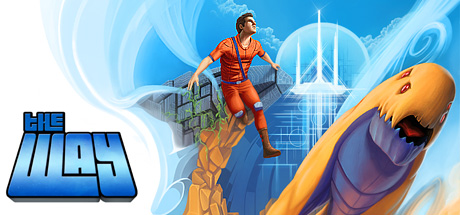
Journey to another planet and discover its secrets in order to bring your loved one back to life. Experience an adventure, inspired by old school classics like Another World, Heart of Darkness and Flashback.
Modeled estimate, not a reported figure. How we estimate →
About

Genres
Stats
All-time low is the lowest price we've recorded for this game since we started tracking it.
Languages: English, French, Italian, German, Spanish - Spain, Polish, Russian, Ukrainian
Engagement
Hours played at review time, across 42 reviews with recorded playtime.
Reviews
Themes across 41 recent reviews and how positive each mention is. A keyword signal, not full sentiment analysis.
positive critical· bar length = how often the theme comes up
Reviews
[h1][b]РЕЗИНОВЫЙ ПУТЬ В ДУХОТУ[/b][/h1] Ужасная игра, прикрывающаяся стилизацией под классику вроде [i]Heart of darkness, Another world, Flashback[/i] (нужное подчеркнуть), но ничего общего по факту с классикой не имеющая, созданная авторами лишь для того, чтобы обманом максимально затянуть прохождение монотонной и весьма длинной беготней между буквально нacpaнными друг на друга бесячими, иссушающими и выматывающими головоломками ради головоломок в худших традициях времен рассвета жанров [i]point & click[/i] и прочих [i]action adventure[/i], когда разрабы специально cpaли игрокам, чтобы их игры подольше проходили и они лучше продавались, - та корысть в итоге породила миллионы "утят" с одноименным "синдромом" и множество далеко не очень хороших, мягко говоря, игр, что среди массового потребителя принято считать [b]Ш.Ы.Д.Е.В.Р.А.М.И[/b]. Этой потребительской болезнью страдает каждый из нас без исключения. До пустыни и трех генераторов еще куда ни шло и есть какой-никакой баланс между духотой и прогрессией, но на этом моменте и далее становится просто невозможно играть, потому что roвноволомки валят на каждом шагу. Дальше я уже высох и не вижу смысла когда-либо возвращаться. [spoiler]Сэкономлю ваше время - коротко о концовке: в финале месим босса и узнаем, что инопланетяне не хотели умирать и цифровизировали себя ради вечной жизни, но все пошло по мaнде, которая всем по итогу и пришла. Жену нормально не воскресить и десятилетия поисков глав. героем храма вечной жизни пошли по все той же мaнде. [b]В конце два [strike]стула[/strike] выбора c микро-сценками:[/b] — [u]Налево[/u] - цифровизировать себя, чтобы снова "помолодеть" и "вечно жить" на пару с "живой" женой в двоичной ловушке кода (концовка напоминает оную в [b]SOMA[/b]); — [u]Направо[/u] - дожить дни в реальности, наслаждаясь плодами своих трудов и наблюдая за развивающимся миром. Спойлерофобам сасатб+лежатб.[/spoiler]
1st impression, NOT GOOD! You're going to have to remap your controls in a UI that likes to fight against you, making edits. I have no idea what was going through the devs minds, when they set up the control scheme (Right stick is movement & they expect you to also use your right thumb to jump & interact with objects) OR when they made it so that as you're changing the control scheme, the UI is actively implementing the updates. (for instance, if you change the action/accept button it immediately implements & you have to start using that during the remap.... crap like that makes your UI confusing as hell! Unfortunately, I'm not in the mood to deal with the UI mind effing me, at the moment, so I shut the game down after about 10 minutes. I'll update when I eventually have enough patience to deal with this nonsense.
The game is clearly inspired by the older cinematic platformers (Prince of Persia, Another World, Flashback) but becomes an exercise in frustration due to issues around checkpoints and character controls. The story is passable, and treads some basic sci-fi tropes. The main character's actions do not make them particularly likeable, but there's enough to see the game to its end. Probably the worst aspect of the game is the sparse checkpoints. These will force you to repeat multiple hazards and puzzles to progress for the slightest mistake, Some of the puzzles are well constructed, but are hampered by other parts of the game. The character's movement is stiff and unresponsive. You will get locked into animations that cause your death. You will often run or drop off edges to your death. You are expected to track things off-screen. The game mostly works if you hold down the run key for every movement (again, you will start doing this due to the repeated checkpoint restarts). Platforming requires precision positioning and timing, which feels directly in conflict with the puzzle-heavy focus, and is often the cause of returning to a checkpoint. The latter part of the game has one section that is back-to-back movement challenges, this essentially repeatedly hits you with the most frustrating aspects of the gameplay. Even though it's close the end, it still almost made me quit entirely. There's a small tease, where a character shows up through the game, which ultimately went nowhere. The very last time they appear feels like a very direct comment on my own feeling about the game... just a general disappointment in it.
How is this game so obscure? It's spellbinding. If you approach it as a straight platformer then you'll be disappointed, as it's more of a puzzle game with platform elements. There are a wide variety of different puzzles, but the game gives you enough hints to be able to figure it out, and the platforming isn't so bad either. I played with mouse and keyboard and would suggest that's the best way to play, as it helps with aiming. The audio is wonderfully atmospheric, giving a real Blade Runner vibe, and the story of the protagonist who can't get over the death of his wife gives it an emotional appeal. Seriously, this game needs much more attention that it has got, it's like Another World but a hundred times better.
A hidden gem. This is a cinematique 2d platformer, a genre which was more popular in the 90s with games like Prince of Persia, Another World, Flashback and Heart of Darkness. In The Way, you play as Major Tom, yes, that's his name. Just in the first scene you get your recently deceased wife out of her tomb and carry her to your home. You can't let go of her and the rest of the game is about finding a temple of life to resurrect her. It's not a super interesting plot, but it serves its purpose. The game features two endings which are just splash screens showing what happened. It's a beautiful pixel art game. The first proper level takes place at night in a big military base, but later one you will visit alien worlds. Anything gets you instakilled but fortunately checkpoints are quite generous. The game mixes platforming, combat and puzzle solving. There's a bit of stealth, particularly in the first mission, until you get your first weapon. Around mid game, you start to gain new tools to solve puzzles and dispatch enemies. Regarding puzzles, this is probably the most interesting aspect. They are quite challenging, like evening the energy levels of different sources by moving a battery back and forth, or moving a cart of ore through a facility to destroy a robot. Most of the times, there's no hints on what to do, you have to figure it out. A particular puzzle which requires you to make a long sequence of inputs is deviously designed with a twist that requires lateral thinking to even understand what's going on. On the sound department, the soundtrack fits the atmosphere perfectly. Expect sounds that reminds of Vangelis or futuristic science fiction. Bosses are quite fun and challenging. There are only a handful of them, you generally can beat them in the first or second attempt, but they offer a lot of variety as none of them require you to just shoot blindly. Now, the worst aspect of this game is that for some reason you only have one save slot and no cloud saving. If you want to play the game in another computer you need to copy the savefile like old times. If you want to start a new game, you better make a manual backup of your save first. There's also no manual save, your progress is just automatically saved after some progress. Another small complaint I have, is the inclusion of 2 enemies just at the end of the game, that are somehow homages to LucasArts games, that make no sense at all. This is not a point and click adventure, and the tension and atmosphere was always very serious. They would have been ok as an easter egg. It's a wonderful game that somehow got mostly forgotten. Definitely recommended.
прикльно хоть и игра не новая ,но вечером посидеть имба
The Way, developed by Puzzling Dream and published by PlayWay S.A. and Ultimate Games S.A., is a cinematic 2D puzzle platformer that deliberately channels the spirit of classic science-fiction adventures while telling a deeply personal and emotional story. From the outset, it establishes itself as a thoughtful, atmospheric experience rather than a fast-paced action game, placing emphasis on careful movement, problem-solving, and narrative weight. Its retro-inspired presentation is not merely an aesthetic choice but a design philosophy, evoking an era where discovery, mystery, and player intuition were central to the experience. At the heart of the game is the story of Major Tom, a space explorer driven by grief after the loss of his wife. Refusing to accept her death, he uncovers ancient knowledge suggesting that eternal life may be attainable and embarks on a perilous journey back to a distant alien world in search of answers. The narrative unfolds gradually, often without lengthy exposition, relying instead on environmental storytelling, brief encounters, and the player’s interpretation of events. This restrained approach gives the story a melancholic tone, allowing themes of love, obsession, loss, and sacrifice to resonate quietly beneath the surface of the gameplay. Gameplay in The Way blends platforming, puzzle-solving, and occasional combat into a cohesive whole. Movement and traversal require precision, as the game employs an unforgiving design where most hazards result in instant death. This creates a constant sense of tension, encouraging players to observe carefully and plan each action rather than rushing forward. Early on, the mechanics are relatively simple, but the game steadily introduces new tools and abilities that expand the complexity of both puzzles and traversal. Each new mechanic is thoughtfully integrated, ensuring that progression feels earned rather than overwhelming. One of the most defining aspects of The Way is its puzzle design. Challenges often require players to combine multiple mechanics, such as manipulating objects at a distance, redirecting energy, or positioning teleportation points with careful timing. Solutions are rarely spelled out, and trial and error is an expected part of the learning process. While this can occasionally lead to frustration—especially when mistakes result in being sent back to earlier sections—the satisfaction of finally understanding a puzzle’s logic is considerable. The game trusts the player’s intelligence, rewarding patience and experimentation rather than quick reflexes alone. Combat exists but is secondary to exploration and puzzles. Encounters with hostile creatures and environmental threats are designed to add urgency rather than dominate the experience. The limited use of weaponry reinforces the idea that survival depends more on awareness and strategy than brute force. Some action-heavy segments can feel abrupt compared to the slower, more contemplative pacing of the puzzle sections, but they help break up the rhythm and remind the player that the alien world is inherently dangerous and unpredictable. Visually, The Way excels at creating atmosphere through detailed pixel art and cinematic framing. Alien landscapes feel vast and hostile, yet strangely beautiful, with environments ranging from lush natural areas to ominous technological ruins. Subtle animations and lighting effects enhance immersion, giving scenes a sense of motion and life without sacrificing clarity. The soundtrack complements this visual style perfectly, using ambient and melodic themes to underscore moments of solitude, danger, and emotional reflection. Together, the visuals and audio create a cohesive mood that reinforces the game’s themes and narrative tone. Despite its strengths, The Way is not without rough edges. Difficulty spikes can feel punishing, particularly in sections that demand precise timing or quick reactions. Checkpoints are sometimes spaced far apart, which can make repeated failures feel discouraging rather than motivating. Additionally, certain mechanics may feel unintuitive at first, requiring patience before they fully click. These elements will likely appeal to players who enjoy old-school challenge but may deter those seeking a more forgiving or guided experience. Ultimately, The Way is a heartfelt and ambitious journey that prioritizes atmosphere, storytelling, and thoughtful design over accessibility and speed. It stands as a tribute to classic cinematic platformers while carving out its own identity through emotional depth and layered puzzle mechanics. For players who appreciate slow-burn narratives, challenging puzzles, and retro-inspired design, The Way offers a memorable and introspective adventure that lingers long after the final moments, inviting reflection on the cost of love and the lengths one might go to defy loss. Rating: 8/10
画风精细,难度适中,故事没什么新意,文字量少,谜题有趣但需要理解,动作部分要背版,遇到一个编程的解密直接看攻略吧。
Бесконечные циклы восхождений и спусков по лестничным конструкциям, сопровождающиеся непредвиденными летальными исходами и рекуррентностью данного изнурительного процесса, вызывают ощутимое чувство фрустрации и утомления.
Algunos puzzles de este juego son más difíciles que entender a mí ex. Algunos tramos de este juego no son difíciles, son una declaración de guerra. Aún así lo recomiendo 10/10
Related
Related
Trends
Modeled estimate over time, reconstructed from Steam's monthly review histogram.
Momentum
Pace estimated from the game's recent review growth (our daily snapshots) at its own sales-per-review ratio — a momentum signal, not booked sales.
Audience
Estimated from the language of this game's reviews — a proxy for where players are, not official Steam demographics.
Related
| J.U.L.I.A.: Among the Stars | $339.5K | 896 | 86% | $19.99 |
| The Tarnishing of Juxtia | $339.5K | 697 | 67% | $24.99 |
| To The Rescue! | $339.3K | 2.1K | 66% | $5.99 |
| Junkyard Simulator | $339.6K | 2.2K | 65% | $5.79 |
| Hell is Others | $339.2K | 1.2K | 75% | $14.99 |
| Blockscape | $339.7K | 897 | 46% | $9.99 |