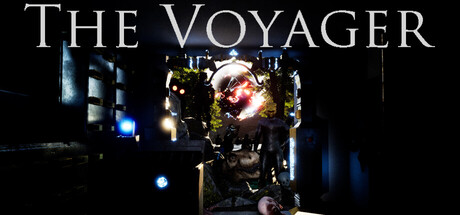
Journey between parallel worlds in a first-person narrative adventure, where each journey reveals an increasingly disturbing threat. Survive, explore, and discover what lies beyond the portal.
Modeled estimate, not a reported figure. How we estimate →
Media

About
In The Voyager you play a solitary inventor who has dedicated his life to breaking the laws of physics. You built the Device, but you never imagined what lay on the other side.
Dimensions
Immerse yourself in the mind of the protagonist in his daily routine, work on the device and play the video game, go to sleep and see what the subconscious tells you from your dreams.
Travel to parallel worlds
You don't know the destination and you don't know the duration of the journey but it's the same land, the same year and the same day, something different has happened in evolution.. Cross desolate dimensions, mysterious islands inhabited by prehistoric creatures and military bases.
Each world is a piece of the puzzle to understand the Krag threat.
Gameplay
is a linear narrative experience where you advance the story by overcoming small environmental challenges, with some horror, FPS, stealth and simple puzzle sections. Between trips, return to the safety of your home, drink coffee, train, upgrade your device and note your discoveries in the journal.
The Horror of the Unknown
Your dreams reflect the trauma of your travels. Confront psychological manifestations of your guilt and terror in dream sequences that change as the story unfolds.
A Terrible Threat
A race is crossing dimensions… and you're in the middle. Discover the truth about the Krags, they are not aliens but they are not human either... but they will stop at nothing to conquer all the parallel worlds.
Genres
Stats
All-time low is the lowest price we've recorded for this game since we started tracking it.
Languages: English*, French, Italian, German, Spanish - Spain, Bulgarian, Czech, Simplified Chinese, Korean, Danish, Finnish, Japanese +12 more
Reviews
Adventure, survival, exploration. PLOT Imagine that you have been working for a long time on a project that you really wanted: to travel to other worlds and you finally managed to make it happen; but you have to test it without knowing what you will find, what would you do? Will you throw yourself into this adventure into the unknown? This story begins like this... you live in your nice apartment you have your hobbies, playing various instruments, video games, and doing some sports training, but you also have to work to finish designing a Timer that will allow you to open a portal to who knows what a world! After several days of testing, everything is finally ready, you have decided to throw yourself into the portal, you have no lack of courage and you will find yourself catapulted into a strange place, you will become aware of a terrible threat, which is why you consider it important to return and equip your Timer with a defense system. Well now you are more confident and ready to face what you will find on the other side, it is a beautiful place similar to earth with plants, water and animals, but there is a powerful force that manipulates this island, and you are perplexed you can't understand sometimes it helps you while other times it seems to hinder you, but who is this being or spirit? What does he want from you? Why does he behave like this? And while you try to survive by getting food and water, you want to solve this mystery, in the end you ask yourself: "Who knows when I will be able to return home!" PLAYABILITY This adventure satisfies many different tastes because it is a bit exploratory, survival, some puzzles, action and mystery. We see that it starts in a very soft way, you live in the safety of your home, it's nice to relax in the pleasure of everyday life, work, listen to music, play, do gymnastics and enjoy a good coffee. But soon the situation changes and you will find yourself exploring and looking for wood and food to survive, certainly here the game becomes more interesting because you never know what can happen to you. There are not many puzzles and they can be overcome easily, you have to look around and explore and you will find the solution. There is no real inventory, there are few objects to collect, and our avatar keeps a diary in the timer where he writes down all his reflections of what he is experiencing and tells us what we have to do, we indulge his desires to continue the story. The music fits the theme of the game The only negative thing is the fact that you can't save manually, sometimes when you die you have to redo the entire session from the last Checkpoint, it's a bit frustrating to repeat the same things to overcome a slightly difficult point. The graphics are pleasant, full of details, from the trees, to the crystal clear waters, sunsets, full moon nights and the sensation of warmth given by the liveliness of the fire; I think it's a truly remarkable work because it was created by one person and we certainly deserve credit for having done a great job.
https://youtu.be/GSh3IfCo_BY In "The Voyager" game, players take on the role of an ambitious scientist who has spent a lifetime creating a device to traverse parallel worlds. As the protagonist ventures into these alternate dimensions, they face a thrilling and perilous journey filled with unpredictable challenges and unexpected encounters. The game offers players the freedom to explore various parallel worlds, each with its unique landscapes, inhabitants, and mysteries to uncover. Along the way, the player must make critical decisions that can impact their chances of returning home. Some parallel worlds may be hospitable and welcoming, while others are fraught with danger and hostility. Success depends on the player's wit, adaptability, and ability to navigate both familiar and alien environments. Throughout the game, players will collect clues, resources, and tools, which will aid them in piecing together the device's hidden secrets. These clues can lead to potential ways to return home, but the path is far from straightforward. Challenges may range from confronting menacing adversaries to solving mind-bending puzzles or even forming alliances with parallel world inhabitants. As players progress, they will discover that returning home is not solely about mastering the device's mechanics, but also about understanding the consequences of their choices across parallel worlds. The game offers multiple endings, each reflecting the player's actions and decisions. "The Voyager" is an immersive, thought-provoking adventure that challenges players' ingenuity, determination, and empathy. With its captivating storytelling and complex gameplay, players will find themselves deeply engrossed in the protagonist's quest to find a way back to their original world while forging bonds and leaving a lasting impact on the parallel worlds they explore.
垃圾游戏,demo版本有这个bug,正式版也有,让我去休息会,我睡觉不让,拿吉他弹总是弹出记录板,关不掉而且循环弹出。最扯的是中文翻译,搞笑的吧,让我去休息的任务提示中文显示杀死什么玩意的字样。依托答辩。 Rubbish game, demo version has this bug, the official version also has, let me go to rest, I sleep do not allow, take the guitar playing always eject the clipboard, can not turn off and loop eject. The most ridiculous is the Chinese translation, funny it, let me go to the rest of the task tips in Chinese to show what to kill the word. Rely on the defense.
Крутой хоррор, только вот начинается он через час, а пока смотри, как главный герой поестЮ попердит, в кочалочку сходит и на гитарке побрямкает. https://youtu.be/zVqy-2qZP6c
The Voyager is an atmospheric science fiction adventure that mixes exploration, psychological horror, puzzle-solving, and survival mechanics into a strange journey through parallel dimensions. Developed by EddysssGames, the title feels like a deeply experimental indie project that prioritizes mood, mystery, and world-building over traditional action-focused gameplay. Rather than presenting players with a straightforward sci-fi shooter or survival experience, the game slowly unfolds as a surreal exploration of alternate realities where every new environment introduces unsettling discoveries and growing uncertainty about what is truly happening behind the dimensional experiments. The premise immediately creates a strong sense of intrigue. Players take control of a scientist who successfully invents a machine capable of traveling across parallel universes after years of research and obsession. What initially begins as a scientific achievement quickly turns into a terrifying experience as each new dimension reveals increasingly disturbing environments and dangerous anomalies. The game constantly pushes players into unfamiliar worlds where reality itself feels unstable, and much of the enjoyment comes from uncovering the secrets hidden across these collapsing alternate realities. Atmosphere is unquestionably the game’s greatest strength. The Voyager excels at creating tension through environmental storytelling and psychological unease rather than relying entirely on traditional horror techniques. Many areas feel abandoned, unnatural, and strangely disconnected from reality in ways that make exploration consistently unsettling. The game often creates fear through uncertainty because players are never fully sure what kind of environment or threat waits beyond the next portal. Some worlds appear peaceful at first before gradually revealing disturbing details that transform the atmosphere into something deeply uncomfortable. The environmental variety helps keep the journey engaging throughout most of the experience. Each parallel dimension introduces different visual themes and architectural styles, ranging from abandoned technological facilities to surreal landscapes that seem completely detached from normal physics. Some areas focus heavily on futuristic sci-fi aesthetics, while others lean into horror imagery and distorted environments that make the worlds feel unstable and corrupted. Even though the game is clearly limited by indie-level resources, the imagination behind many locations gives the adventure a strong sense of personality. Gameplay revolves primarily around exploration, puzzle-solving, and survival. Players spend much of their time searching environments for clues, activating strange machinery, solving environmental puzzles, and gradually uncovering fragments of the larger mystery connecting the parallel worlds. Exploration sections are generally the strongest part of the game because they allow the atmosphere and world design to take center stage. Slowly wandering through abandoned realities while trying to understand what happened there creates a satisfying sense of mystery that keeps the experience engaging. The game also introduces stealth mechanics, platforming sections, and occasional combat encounters throughout progression. This variety helps prevent the gameplay from becoming too repetitive, though not every mechanic receives the same level of polish. The horror-focused sequences are usually more effective than the action-heavy moments because the game clearly excels at building tension through atmosphere rather than direct combat. Certain stealth sections become genuinely tense due to the oppressive sound design and the uncertainty surrounding enemy behavior. Visually, The Voyager delivers some surprisingly impressive environments considering its indie scope. Powered by Unreal Engine 5, the game occasionally produces striking lighting effects and detailed sci-fi environments that successfully create the feeling of traveling through unstable dimensions. Certain scenes involving dimensional transitions and surreal environmental shifts are particularly memorable because of how effectively they combine visual effects with atmosphere. While the overall graphical quality is somewhat inconsistent, the art direction and environmental design often compensate for the rougher technical areas. The sound design also contributes heavily to the game’s immersive qualities. Ambient noises, distant mechanical sounds, environmental distortion effects, and sparse musical tracks constantly reinforce the feeling of isolation. Silence is used effectively throughout many exploration sequences, allowing players to become fully absorbed in the unsettling atmosphere of unfamiliar worlds. Audio cues are especially important during horror and stealth sections where tension depends heavily on environmental awareness rather than visible threats. Narrative pacing works reasonably well because the game avoids overexplaining its mysteries too early. Instead of constantly interrupting gameplay with exposition, The Voyager slowly reveals information through environmental clues, fragmented storytelling, and gradual discoveries spread across different dimensions. This approach strengthens the mystery and encourages players to pay closer attention to the worlds they explore. The story itself becomes more interesting as the boundaries between realities begin collapsing and the consequences of dimensional experimentation become clearer. However, the game does struggle with inconsistency in several important areas. Combat mechanics feel noticeably weaker than the exploration systems, with shooting lacking impact and enemy encounters sometimes feeling awkward or underdeveloped. The action sequences occasionally interrupt the atmosphere instead of enhancing it, especially during moments where combat becomes more frequent. The game clearly performs best when focusing on exploration and psychological tension rather than traditional first-person combat. Pacing can also become uneven during certain sections. Some areas maintain strong momentum and atmosphere, while others involve slower progression or less engaging objectives that temporarily weaken the tension. Platforming and stealth mechanics occasionally feel rough due to awkward movement or unclear level design, leading to moments of frustration that contrast sharply with the game’s stronger atmospheric sequences. Technical issues are another noticeable weakness. Performance inconsistencies, animation roughness, and occasional bugs remind players that this is a smaller indie production operating with limited resources. While these problems rarely make the game unplayable, they sometimes disrupt immersion during otherwise impressive moments. Optimization also appears somewhat inconsistent depending on hardware and graphical settings. Despite these flaws, The Voyager succeeds because of its ambition and creativity. The game creates a genuinely mysterious and unsettling science fiction world built around dimensional travel, isolation, and psychological tension. Its strongest moments deliver an atmosphere that feels immersive, eerie, and emotionally engaging in ways that many larger horror games fail to achieve. For players who enjoy atmospheric sci-fi adventures, psychological horror, and exploration-focused narrative experiences, The Voyager offers a memorable journey through strange and unsettling parallel realities. While its uneven gameplay systems and technical roughness prevent it from fully realizing its potential, the game’s strong atmosphere, imaginative world design, and intriguing mystery make it a worthwhile indie experience for fans of surreal science fiction horror. Rating: 6/10
Related
Related
Trends
Modeled estimate over time, reconstructed from Steam's monthly review histogram.
Momentum
Pace estimated from the game's recent review growth (our daily snapshots) at its own sales-per-review ratio — a momentum signal, not booked sales.
Related
| Bongo Quest | $315.6 | 51 | 45% | $0.49 |
| Glasses and Girls | $315.6 | 51 | 82% | $0.99 |
| Food and Girls | $315.6 | 51 | 86% | $0.99 |
| Dances and Girls | $322 | 52 | 83% | $0.99 |
| Carnival and Girls | $334.4 | 53 | 85% | $0.99 |
| Anime Sunset Ride | $334.4 | 54 | 67% | $0.49 |
Related
| 7 Days to Die | $425.3M | 403.5K | 87% | $44.99 |
| Mount & Blade II: Bannerlord | $309.8M | 293.9K | 88% | $49.99 |
| The Forest | $254.8M | 678.5K | 96% | $19.99 |
| No Man's Sky | $230.9M | 412.1K | 85% | $23.99 |
| Sons Of The Forest | $201.1M | 314.9K | 88% | $29.99 |
| Raft | $144M | 375.8K | 93% | $19.99 |