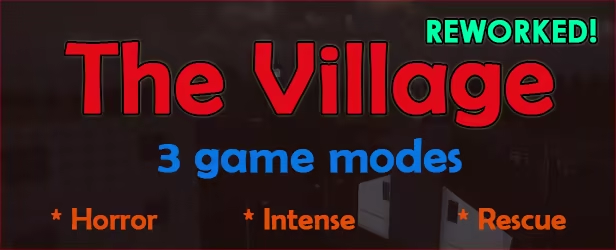
There are several game modes, Horror mode, Rescue mode, Intense mode and other modes that are yet to come. There are also several difficulties, where you may face a shortage of resources or resources found more easily. The game also features some online interactions.
Modeled estimate, not a reported figure. How we estimate →
Media

About

Stats
All-time low is the lowest price we've recorded for this game since we started tracking it.
Languages: English*, Portuguese - Brazil*languages with full audio support
Engagement
Hours played at review time, across 40 reviews with recorded playtime.
Reviews
I will leave this cat here, so that everybody who passes by can pet it and give it a thumbs up and awards /> フ | _ _ l /` ミ_xノ / | / ヽ ノ │ | | | / ̄| | | | | ( ̄ヽ__ヽ_)__) \二つ
Идёт мужик, видит - анекдот лежит, перевернул, а там:wɐɯ ɐ‘vʎнdǝʚǝdǝu ' ɯижǝv ɯоɓʞǝнɐ - ɯиɓиʚ‘ʞижʎw ɯǝ̤ɓи
一坨屎,loading进去就闪退
good
ok game
Игра не работает несколько раз пытался запустить появлялась только надпись The village и бесконечная загрузка если кто-то знает как решить эту проблему то напишите в коментах
The Village is a weird little low‑budget horror/shooter that actually has more ideas than your average asset flip, but it never quite sticks the landing. It tries to juggle horror, tactics and shooter elements across multiple modes, and it does some things surprisingly well for a 2017 indie game that still gets patches in 2025. At the same time, janky "AI", thin storytelling and a very “early access” vibe in places drag it down. Overall: a curious time capsule that’s interesting mostly at a deep discount, not a hidden classic.
The Village, developed by Softwaves and published by SA Industry, is an indie survival horror game that attempts to blend exploration, tension, and multiple gameplay modes into one ambitious package. It unfolds within a mysterious estate known as “Villa,” a place shrouded in darkness and secrets. The story begins with a simple but effective hook—a boy has gone missing after venturing into the villa, and you, the player, step into the role of the protagonist who sets out to uncover the truth. The setup is straightforward but atmospheric, drawing on classic horror tropes of isolation, light scarcity, and unseen danger. What sets The Village apart from many other small-scale horror games is its multi-mode structure, with each scenario offering a distinct style of play that ranges from psychological horror to armed combat. It’s a creative approach that aims to provide variety and replay value, even if the execution sometimes struggles to match its ambitions. Horror mode is the heart of the experience and arguably the game at its most effective. You begin armed with little more than a flashlight, wandering through narrow corridors and decrepit rooms where silence is as oppressive as the darkness itself. Every flicker of light, every creak of wood or whisper of wind, becomes a source of dread. Batteries are scarce, forcing you to scavenge obsessively through drawers and cabinets, hoping for a few more seconds of illumination. When the light dies, the world swallows you whole, and danger can strike from anywhere. This mode emphasizes vulnerability and slow, deliberate pacing—there’s a palpable tension in each step forward. The villa itself is designed to feel claustrophobic, with tight hallways and limited sightlines that heighten the sense of confinement. Exploration feels rewarding but risky, as new rooms might hold crucial supplies or lead you directly into peril. The minimalist storytelling—clues, notes, and fragmented discoveries—keeps the mystery alive, leaving much to the player’s imagination. The other modes—Rescue and Intense—shift the tone dramatically. Rescue mode follows a mission structure in which hostages are held within the villa. The protagonist, cut off from his team after a crash, must infiltrate enemy territory and save the captives alone. Intense mode, on the other hand, trades psychological horror for direct confrontation, placing you in control of a tactical team tasked with retrieving a secret letter hidden inside the villa after a military purge. These modes transform The Village from a slow-burn survival experience into something closer to an action-thriller, complete with firearms, enemies, and mission objectives. This variation is bold, but the transition isn’t always seamless. The shift in tone from fearful vulnerability to armed aggression is jarring, and the limitations of enemy AI and shooting mechanics sometimes expose the game’s technical constraints. Still, the inclusion of multiple playstyles is commendable, as it gives players the opportunity to experience the same setting from very different perspectives. Visually, The Village is modest but functional. Built using CryEngine, the game focuses more on atmosphere than graphical fidelity. The environments are detailed enough to establish mood—dusty furniture, long corridors, and eerie lighting contribute to the overall sense of decay. The interplay of light and shadow is central to the experience, with the flashlight serving as both a lifeline and a source of terror. Darkness isn’t just an aesthetic choice; it’s a core gameplay mechanic that dictates how you move and what you can risk. The sound design complements the visuals well, relying on environmental audio and ambient cues rather than constant jump scares. Distant footsteps, muffled breathing, and creaking doors fill the silence, maintaining tension even when nothing visible is happening. The minimal soundtrack allows the sound effects to carry the emotional weight, creating a sense of realism that enhances the feeling of being trapped in an unfamiliar, hostile environment. From a structural standpoint, The Village’s greatest strength and weakness lie in its variety. On one hand, the inclusion of multiple modes provides replayability and shifts the pacing in interesting ways. On the other hand, these modes also highlight inconsistencies in design quality. Horror mode’s slow, methodical gameplay feels deliberate and immersive, while the more combat-oriented modes expose clunkier controls and shallow AI routines. The enemy behavior can be erratic, with opponents either reacting too quickly or failing to notice the player entirely. Weapon handling lacks precision, which undermines the tension that the atmosphere builds so effectively in the earlier segments. The narrative threads that connect each mode are thin, giving the impression that these are separate experiences rather than pieces of a cohesive whole. For some players, this fragmentation can feel experimental and intriguing; for others, it may feel unfocused and incomplete. Performance and polish are also mixed. The game runs adequately on most systems, but occasional technical issues—such as lighting glitches, awkward animations, or texture inconsistencies—can momentarily break immersion. The interface is simple but sometimes unintuitive, requiring extra effort to manage inventory or interact with objects. Despite these shortcomings, The Village shows glimpses of thoughtful design. The decision to center gameplay around light management is particularly inspired. It evokes a primal fear of the dark while tying directly into resource scarcity, one of the core pillars of survival horror. Players must constantly weigh the safety of illumination against the risk of exposure, a dynamic that sustains tension even in otherwise empty moments. Player reception has been divided, and it’s easy to see why. Those who appreciate low-budget horror games with experimental mechanics often find value in its atmosphere and unpredictability. The dimly lit villa, the scarcity of supplies, and the unpredictable pacing create genuine unease. However, players looking for a polished experience with refined controls and strong storytelling may find it lacking. The mixed reviews reflect this divide—The Village is a project filled with potential that sometimes exceeds its technical grasp. Its ambition to mix horror and tactical gameplay within one framework is admirable, but the end result feels uneven, as if two different games were stitched together in pursuit of one grand vision. Despite its flaws, The Village remains an interesting entry in the indie horror landscape. It’s the kind of game that prioritizes experimentation over convention, embracing imperfection in service of atmosphere and variety. When it succeeds, it delivers moments of genuine tension, forcing players to navigate pitch-black rooms with only the hum of their flashlight for comfort. When it falters, it reveals the limitations of small-scale development and overreaching design goals. Yet even with its inconsistencies, it manages to capture the essence of what makes horror engaging—the vulnerability, the curiosity, and the slow unraveling of mystery within a hostile space. The Village may not be a polished experience, but it is undeniably an earnest one, built with ambition and a desire to unsettle. For players who enjoy experimental indie horror with raw edges and unpredictable shifts in style, it offers a haunting, if imperfect, journey through the darkness. Rating: 5/10
Игра оставила крайне неприятные впечатления. После скачивания почти 10 ГБ, запускает лаунчер, где спрашивают почту, пароль, секретный вопрос и аккаунт Steam — и регистрация не проходит, как у многих. Сама игра часто не запускается или зависает на экране загрузки. Даже если удалось запустить — игровой процесс не оправдывает ожиданий: сырой геймплей, множество багов, отвратительная оптимизация, никакого удовольствия от прохождения. Не рекомендую к покупке, даже с большой скидкой
I don't recommend the game.
Related
Related
Trends
Modeled estimate over time, reconstructed from Steam's monthly review histogram.
Momentum
Pace estimated from the game's recent review growth (our daily snapshots) at its own sales-per-review ratio — a momentum signal, not booked sales.
Audience
Estimated from the language of this game's reviews — a proxy for where players are, not official Steam demographics.
Related
| OutRage: Fight Fest | $2.2K | 71 | 77% | $1.49 |
| RINO RUSH | $2.2K | 56 | 100% | $1.59 |
| Go Outside Simulator | $2.2K | 75 | 96% | $1.00 |
| Once in Flowerlake | $2.2K | 110 | 72% | $0.79 |
| Furry BDSM | $2.2K | 133 | 83% | $0.59 |
| Labirinto | $2.2K | 146 | 75% | $0.99 |