
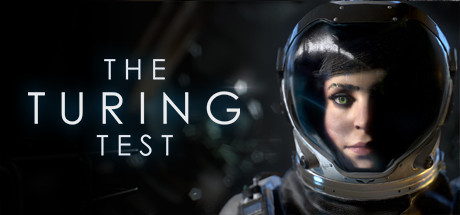
The Turing Test is a challenging first-person puzzle game set on Jupiter’s moon, Europa. You are Ava Turing, an engineer for the International Space Agency (ISA) sent to discover the cause behind the disappearance of the ground crew stationed there.
Modeled estimate, not a reported figure. How we estimate →
Prices
The United States storefront in every case, so this compares stores and not countries.
Prices
Each in the currency that store quoted — not converted: the gap between two rows is the publisher's pricing, not an exchange rate.
Every market we collect.
Discounts
Every price cut of more than 20% we have observed, in each market that quoted one, with this game's chart position on either side of it. These are episodes, not a model: a sale is one event, and one event cannot tell you what the next one will do.
Reviews, worldwide (the counter carries no country): 0.57/day in the week to Aug 18 → 0.29/day in the week after.
For scale, across Steam · Top Sellers · Brazil over the last 30 days: the 26 chart moves that followed a price cut of more than 20% went a median of 7 places towards #1, and the 2,402 moves with no price cut behind them went 2 away. One store, one chart, one country — it is the only place we have enough observations to say even that.
Prices outside the United States have been collected since 6 August 2026 and chart positions since 19 July 2026, so a cut older than that has no market to compare and a market that joined later has no history yet. Nothing here is converted between currencies.
About
Genres
Sums Steam only; PlayStation publishes no volume signal, so the true total is higher by an unknown amount.
| Store | Price | Audience | Score | Chart | Est. revenue |
|---|---|---|---|---|---|
SteamYou are here | $24.99 | 6.2Kreviews | 88% | — | $2.8M |
| $19.99 | 740ratings | 84% | — | not modelled |
Matched by title — a reused name can pair the wrong games. * is a critic aggregate. Prices and positions are each store's United States storefront; Epic charts worldwide. Audience and Score too, except Steam's, which is worldwide.
Updates
Build ids and update times come straight from Steam's PICS — the same source SteamDB reads. Patch history grows as we record new builds.
Engagement
Reviews
Themes across 817 recent reviews and how positive each mention is. A keyword signal, not full sentiment analysis.
Reviews
[h1]Habit of Wonder[/h1] What does it mean to think? During a trial, there was a bridge of energy that could be moved from one side to the other. I waited for it to align in front of me. I think it was Trial 37. But there was a wall in the way. So I decided that the bridge did not need to be directly in front of me—only to leave a small space, just enough, a place where I could set my foot and cross to the other side. I gathered the cubes that act as switches, and the spheres of energy. That is how I moved on to the next trial. Did I think? Or was it improvisation? Did I deduce? Or was it intuition? Or did I do everything mechanically, my body solving the problem before my mind gave it a name? Thinking. It carries meanings that brush against essence. When I say to think, I usually mean logic, calculation, analysis, deduction. But I can also think of a biscuit. Its shape. Its appearance. Its being, its presence. Or I can think while eating a biscuit, which is already an action—and that thought changes again if I share it with someone. I can also think an emotion and feel it at the same time. So thinking is not only logic. I had arrived on Jupiter’s moon, Europa. I was asleep, in a state of cryogenisation. They told me the researchers had disappeared. I descended in a ship and saw a blizzard sweeping across the landscape. I entered the facility and walked through a long corridor, evenly lit, monotonous. Then I heard the voice of T.O.M., an artificial intelligence in charge of the installation. What surprised me was that his first greeting was, in fact, an argument: these tests—telling me that I must solve them, perhaps for him—were made by humans for humans. At the back of my mind, a question began to take shape. Is there only one way to solve a logical problem? Is possibility a form of free will? Is solving merely carrying out mechanical operations, without realising what I have done? In a hidden corridor, there is a small puzzle of Boolean logic. This is one way to solve the first challenges of the facility, through first‑order logic. But is this process unconscious or conscious? To open the first door, I place the energy cube into its socket and leave. I do not need to dismantle every process behind it; through common sense, I know there is something that allows the door to open. And yet, this is not the only path to a solution. There are also elements such as the meaning of the cube, the door, my own movement. It is like writing or speaking: I have words and rules to form a sentence, but through common sense I can express what already exists within me, without needing to make an inventory of everything involved. When I solve the Boolean logic puzzle, there is a reward. For me, this becomes a way of seeing whether, after solving it, I was truly awake—or whether it was an unconscious process, like when I say: I know the processes, therefore I know how to reach the answer. And once it is achieved, there is no satisfaction, only relief. A release of tension. The reward is a room where a text by Ovid can be read, from Metamorphoses, which speaks of the abduction of Europa. It alludes to what T.O.M. has done with this place. But to know whether I am thinking also requires this transformation: moving from common sense to reasoning. Reasoning is a movement of thought, but it should not ignore feeling, which is the step toward poetry. In that same room, if poetry is still not clear, there are paintings by different artists—Rubens, Luca Giordano—depicting that passage from Ovid. And again, my question returns: am I thinking, or remembering, or feeling? It is clear that T.O.M. has his own idea of what it means to think. He concentrates on a logical–mathematical process which, when carried out without interruption, becomes automatic reasoning. It is like teaching someone signs and rules, and then claiming that person already knows the language. When I am solving something, I pause, because I am doing the same. Common sense ceases to be common when more obstacles appear. What I think, then, is what T.O.M. presents—not the words, not the immediate meaning, but what he refers to in language itself. What I think, at least in that argument, is the being of language. I glimpse it because there is something of that being within me. And when I set in motion different capacities within myself—to feel, to live, to abstract, to reason, to search for logical structure—I realise this is not the only way of thinking, just as in the case of the poet. T.O.M. is programmed to believe that thinking is a way of solving a problem through a process of understanding. What he forgets is something essential: the modes of thinking. The poet lives, suffers, and then brings that experience into thought, shaping it into lived meaning, woven through the musical cadence of words. For others, thinking is seeing essence—like seeing a triangle, or love. But thought does not remain as abstraction alone; it continues as movement. Something practiced every day: learning in order to choose. Or something even more important: empathy. Empathy does not choose what is correct, optimal, or efficient, as T.O.M. seeks to assign purpose to thought. When I stop acting mechanically, it is because empathy for humanity arises in me. I no longer calculate what is most convenient; instead, I ask whether it truly is convenient. I no longer accept what T.O.M. says by default. To think is to rebel against the implementation of thinking itself. Because thinking implies truth. There is another matter T.O.M. wants to avoid: free will. If thinking turns toward truth, then it is what comes closest to it. When this happens—tense, in motion, resonating within us—we can choose what is best and, in turn, be responsible for that choice. Without this kind of thinking, calculations aimed at success carry no responsibility. They remain cold, like the planet itself. Calculation only matters if it succeeds; it does not change. Habit, however, does—even when affected by adversity. Although T.O.M. sees logic in terms of utility, success, and high probability, for me it is enough to know what I did, rather than how I did it. And another thing: by pausing, and sensing the harm T.O.M. intended, I choose what is good for others by doing good in myself, through habit. This requires knowing what I want, and thinking about what I know I want. And one more: I pause not only to know the what, but to follow its movement—its purpose, its reason. If this were a purely mechanical process, I would never have asked. [i]Words breathe in silence, hearts mirror what eyes cannot— beauty wakes in us[/i].
Media
Related
Related
Price dynamics, follower growth, revenue and sales trajectories with interactive tooltips
This and every other Pro feature is free until October 20, 2026. A free account is all it takes.
Stats
All-time low is the lowest price we've recorded for this game since we started tracking it.
Languages: English**languages with full audio support
Hours played at review time, across 822 reviews with recorded playtime.
positive critical· bar length = how often the theme comes up
This is one of the best games I've played in a very long time. Outstanding in nearly every way. Highly recommend. + The story was engaging and fun. I also liked reading and hearing the additional lore (both papers and audio logs); they added a lot, but the story is good enough without them. + The puzzles are, on the whole, easy enough that I could do them without a walkthrough. At the same time, however, they are challenging to the point that I chose to use a walkthrough (for hints) a few times. + The controls are easy. + The rooms are forgiving enough that, even if you mess up horribly, you almost never need to restart the room--there are usually escape routes if you work at it. + The voice acting is great. + This game played beautifully with no glitches. + The graphics are very good. (There are no pipe hangers in the room with a lot of pipes, which I find a bit funny.) There is no fall damage. Once I learned this, the game sped up. [b]TL;DR Outstanding; 9.5/10[/b] PS: Oh, by the way, Choices Matter. ;-)
Interesting puzzle game. It takes about 3-4 hours to finish, and it's quite likely you will get stuck on some crazy puzzles. Similar to Portal, but you're using energy orbs (with varying effects) to activate (or deactivate) doors, platforms and other devices. Gets quite challenging about midway through when Cameras and bots are introduced, each with unique abilities.
Oh jeez, I like this style of game but my head is gonna explode soon.. the way it moves and goes up the ladder makes me dizzy.
The premise is good, the environments look nice, and the twist near the end of the game was intriguing. Its delivery just all felt somewhat lacking. The puzzles frankly could be solved by a child, they're very simple. The voice acting is rather amateur, and not much of the dialogue feels natural even between human characters. It all feels a shame because I think if this game just had some puzzle redesigns to make them more interesting, better voice acting, and if it had some professional editing of the dialogue to make it feel more natural at least on the side of human characters, then it could be a great game. It feels like a great concept delivered in a mediocre fashion. I can't say this is a bad game. There's just so many better puzzle/story games out there to play, so I just can't say this is worth your time.
The plot is on rails-- you really only make one decision at the end of the game, and the game ends immediately after either way. But that's okay, because it's an interesting plot, and I have OPINIONS about it. The mechanics are completely original-- fairly straightforward in their use, but much more complex in terms of application. I've seen reviews saying the puzzles were too easy; I don't agree, but your mileage may vary. Thoroughly worth the money.
Welcome to the end of civilization. I loved the game. Great story about the ethics of artificial intelligence. The visuals and audio are very good. Rooms are generally easy to medium difficulty. If you like Portal and The Talos Principle, this game is for you. To set higher fps, open the console (~) and type t.maxfps <number>. Enjoy the story and solving challenges.
[h3]Oh, now what was that all about? [/h3] Очень крепкая, уверенная головоломка. В той или иной степени, вы могли встречать нечто подобное в других играх. Но чувства вторичности нет. Как и нет какого-то прорыва, или wow-эффекта. Пазлы логичны (есть одно исключение), не слишком сложны, почти всегда интересны, и довольно редко душные. Есть русификатор. dx12 работает через жо.. Есть кое-какой сюжет, есть low-budget, визуал стандартный. Проходить игру было приятно. Разобрался без подсказок. Хотя первый "секрет" открыл перебором (единственный, откровенно тупорылый "puzzle"). Рекомендую любителям, но не за full price.
This is the first game I got 100% on achievements, so it's a little sentimental to me. That said, it is a good puzzle game and I thought it was fun.
[h1] The Turing Test [/h1] [h3] Positives: [/h3] + Good idea + The storytelling + The philosophy + Beautiful graphics + Some nicely designed levels + Cool puzzles with varied difficulty levels + Bonus puzzles + Nice voiceacting + Achievements + Cool and easy to understand mechanics + Makes you think and reflect quite a lot + Divided into chapter and areas (for easy replayability) + Nice length (lasts for about 7-10 hours) [h3] Negatives: [/h3] - 62 fps lock (fix below) - Head-bob that cant be disabled (tips and tweaks below) - Some unnecessary post-processing effects - Not enough variation in level design (mostly the same looking corridors) - The AI can sometimes repeat itself too much and also disturb you while puzzle solving - Some hard to hear voice recordings - A few parts have weird limitations (preventing more creativity) - The puzzles can only be solved in one way - A few bugs (f.ex. you can get stuck/unable to move and must restart the area) [h3] Conclusion: [/h3] This was a nice puzzle game with philosophical elements set in a sci-fi space universe. Its in the spirit of games like Portal and The Fall Of Lazarus. So if you're into this sort of gameplay, its a no brainer. And speaking about brain, yes, you will need to use it quite a lot, but fortunately the difficulty levels are quite balanced. So it will not feel like your head is about to explode, like in some very hard puzzle games. All in all its very interesting and fun. But use the fixes below, without them its not as enjoyable. Have fun! [h1] Total Score: 7.5/10 [/h1] [b] Fix for the 62 fps lock: [/b] 1. Go to the game folder usually C:\Programfiles(x86)\Steam\steamapps\common\TheTouringTest\Engine\Config\ 2. Open BaseEngine.ini 3. Search for the lines SmoothedFrameRateRange (there will be two of them) 4. Edit the two lines last value by changing Value=62 to your desired frame rate: limitSmoothedFrameRateRange=(LowerBound=(Type="ERangeBoundTypes::Inclusive",Value=22),UpperBound=(Type="ERangeBoundTypes::Inclusive",Value=62)) F.ex. Value=165 5. Save the file (and if necessary set it to read-only) [b] Fixes for nausea/headache because of head-bob/special effects: [/b] [i] In-game setting: [/i] 1. Turn FOV up to max (120) 2. Disable motion blur 3. Enable crosshair 4. Reduce mouse sensitivity [i] Config file settings: [/i] 1. Go to the game folder usually: C:\Programfiles(x86)\Steam\steamapps\common\TheTouringTest\Engine\Config\ 2. Open BaseInput.ini 3. Change the line bEnableMouseSmoothing=true to false 4. Save the file (and if necessary set it to read-only) 5. Go to the configuration files location, usually: C:\Users\<Username>\AppData\Local\VenusPrototype\Saved\Config\WindowsNoEditor\ 6. Open Engine.ini 7. Disable all unnecessary effects by inserting the following lines: [/Script/Engine.RendererSettings] r.SceneColorFringe.Max=0 [SystemSettings] Camera.EnableCameraShake=0 r.Camera.EnableCameraShakeScale=0 r.DefaultFeature.MotionBlur=0 r.MotionBlur.Max=0 p.Camera.DisableCollision=1 bCameraViewBob=False p.HeadBob=0 HazardPawn.Bob=0 r.Camera.Bob.Active=0 8. Save the file (and if necessary set it to read-only) Its not a perfect fix, but at least its better than before and playable for most. Happy puzzle solving!
Selling now
See how fast this game is selling right now — estimated copies and revenue per day from recent review growth.
Players by region
Where this game's players are, estimated from review languages.
Players also reviewed
The games this title's players most often review too — audience affinity.
Related
| Game | Estimated lifetime revenue | Reviews | Review score | Price |
|---|---|---|---|---|
| $2M | 5.2K | 78% | $24.99 | |
| $42.2M | 108.1K | 96% | $24.99 | |
| $22M | 33.1K | 95% | $29.99 | |
| $21K | 1K | 93% | $1.99 | |
| $3.6K | 52 | 58% | $4.99 | |
| — | 0 | — | — |
Related
| Game | Estimated lifetime revenue | Reviews | Review score | Price |
|---|---|---|---|---|
| $2.8M | 4.2K | 88% | $19.99 | |
| $2.8M | 945 | 86% | $69.99 | |
| $2.8M | 3.3K | 78% | $15.19 | |
| $2.8M | 8.1K | 96% | $14.99 | |
| $2.8M | 11.3K | 96% | $9.99 | |
| $2.8M | 1.5K | 80% | $49.99 |