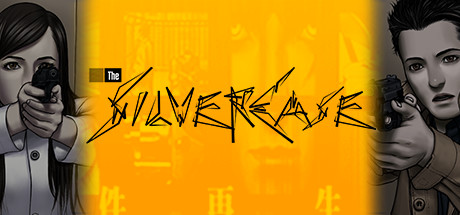
The Silver Case – the debut title from world-renowned developer SUDA51 has been fully remastered and localized to English for the first time ever!
Modeled estimate, not a reported figure. How we estimate →
Media
About


Genres
Stats
All-time low is the lowest price we've recorded for this game since we started tracking it.
Engagement
Hours played at review time, across 44 reviews with recorded playtime.
Reviews
Themes across 44 recent reviews and how positive each mention is. A keyword signal, not full sentiment analysis.
positive critical· bar length = how often the theme comes up
Reviews
I may have only played for 30 minutes and refunded the game but the first 30 minutes really paints a clear picture for what to expect in this game. Obviously, you would expect a story game to actually do the one thing its supposed to do: tell a good story and this game fails to even do that. The opening sequence is supposed to introduce the player to the setting and characters but it does it so in such a convoluted method that i found myself lost before i even knew what was going on in the story. Secondly the devs really should add some QoL into this game because they introduce about 20 different characters in the first 5 minutes of the game so it would be nice if they attach a name to the respective speaker so I can be more familiarised with the characters rather than a loosing gamble between which of the 5 men displayed on screen are Sakamoto, Kusabi, or Morikawa respectively. Also why is majority of the game being displayed in a tiny box on the screen instead of just utilising the whole space? 3/4 of the screen is hogged by this stupid light show of pointless words flashing across as if its purpose was to add to the atmosphere of the game when in reality it just hurt my eyes focusing on the tiny screen with random words flashing past. I would rather stare at a black screen for hours than look at that light pollution again. Somehow the game manages to lower my expectations even more with the abysmally boring and TEDIOUS gameplay. It tries to incorporate some semblance of a point-and-click but does so in a way that punishes the player without reward, just a repetitive loop of dialogue if you don't do what the game wants you to do. By far this is the worst game I have ever played on steam. However, to give credit when credit is due, the only redeeming factor about this game has to be the noir-esque art style. It's very well done and conveys the theme of the game fashionably. I think the art of this game does more story telling than the entire run time that this game manages to ♥♥♥♥ out. i was expecting to be mind ♥♥♥♥♥♥ but i think i just got ass ♥♥♥♥♥♥ instead.
woke and gay
lend a brother 50,000 yen
in need of 50,000 yen
The only review i'll ever write, i heavily recommend playing this game.
dihh the past 🥀
The Silver Case is a surreal and psychologically dense visual novel that stands as one of the most distinctive works ever created by Goichi Suda, long before the director became internationally recognized through titles like Killer7 and No More Heroes. Originally released for the PlayStation in 1999 and later remastered for modern platforms, the game remains an incredibly unusual blend of detective fiction, political conspiracy, cyberpunk philosophy, and psychological horror. It constantly rejects conventional storytelling in favor of fragmented narratives, abstract symbolism, and experimental presentation, creating an experience that feels less like a traditional visual novel and more like a descent into paranoia and societal decay. Even decades later, The Silver Case still feels bold, uncomfortable, and creatively unlike almost anything else in gaming. The story takes place in the fictional “24 Wards,” a massive urban district plagued by political corruption, violent crime, and growing social instability. A string of disturbing murders begins terrorizing the city, and investigators quickly realize the crimes resemble the work of Kamui Uehara, a notorious serial killer believed to have been eliminated years earlier during the original “Silver Case” incident. Players experience the narrative through two interconnected perspectives. One storyline follows members of the Heinous Crimes Unit investigating the murders directly, while the second centers on freelance journalist Tokio Morishima, who slowly becomes entangled in the same web of violence and conspiracy. As both perspectives unfold, the game gradually reveals a world consumed by psychological manipulation, government corruption, and ideological collapse. One of the game’s greatest achievements is its atmosphere and visual presentation. The Silver Case embraces a fragmented multimedia style that constantly shifts between text overlays, low-polygon environments, still photography, animated sequences, and abstract visual effects. Dialogue often appears inside moving windows layered over distorted imagery, giving the entire experience a dreamlike and unstable quality. Rather than trying to create realism, the game deliberately disorients players through its presentation, reinforcing the themes of fractured identity and mental instability running throughout the narrative. The result feels deeply experimental even by modern standards. The writing is exceptionally ambitious and frequently philosophical. Although the game begins as a murder mystery, it quickly expands into discussions involving morality, crime, social conditioning, memory, media influence, and the psychological effects of violence. Conversations regularly shift between grounded investigative work and abstract ideological debates, creating a story that constantly blurs the line between reality and delusion. The narrative rarely provides straightforward explanations, instead expecting players to piece together meaning from fragmented information, symbolism, and conflicting perspectives. This complexity can occasionally become overwhelming, but it also gives the story extraordinary depth compared to more traditional detective games. Character writing is another major strength. The detectives investigating the murders feel emotionally damaged and morally exhausted, shaped by years of exposure to violence and corruption within the city. Veteran investigator Kusabi stands out particularly well as a cynical figure trying to maintain control within a society that increasingly feels unstable and meaningless. Journalist Tokio Morishima provides a different perspective, acting as a more psychologically vulnerable character whose curiosity gradually drags him deeper into the chaos surrounding the case. Kamui himself functions less as a simple antagonist and more as a terrifying symbol tied to the city’s collective trauma and social collapse. Nearly every important character feels psychologically compromised in some way, which strengthens the game’s oppressive atmosphere. Visually, the remastered version successfully preserves the strange identity of the original release while making it more accessible for modern audiences. The low-resolution 3D environments and retro interface design remain intentionally stylized rather than outdated. The game’s visual approach constantly evokes late-1990s Japanese cyberpunk aesthetics, mixing industrial imagery, distorted urban environments, and surreal transitions into a presentation style that feels uniquely tied to its era. Even today, very few games attempt storytelling in such an aggressively unconventional manner. The soundtrack is equally impressive and plays a massive role in shaping the emotional tone. Industrial ambient tracks, eerie electronic compositions, and melancholic melodies create a constant sense of paranoia and emotional fatigue. The music rarely offers comfort or release. Instead, it reinforces the game’s themes of isolation, instability, and societal decay. Certain tracks become deeply associated with particular characters or revelations, helping maintain emotional cohesion even when the narrative itself becomes fragmented and difficult to fully interpret. Gameplay remains intentionally minimalistic throughout most of the experience. Players primarily read dialogue, explore locations from a first-person perspective, and occasionally solve puzzles or interact with investigative sequences. There is little traditional gameplay in the conventional sense, which may disappoint players expecting more interactive mechanics. However, the simplicity allows the game to focus entirely on atmosphere, storytelling, and psychological immersion. The Silver Case is fundamentally about absorbing information, interpreting symbolism, and slowly unraveling a deeply unsettling mystery rather than overcoming mechanical challenges. At the same time, the game’s unconventional structure will absolutely divide players. The pacing can become slow during lengthy dialogue-heavy sections, and the fragmented storytelling occasionally borders on intentionally confusing. Certain narrative threads remain ambiguous even after the credits roll, forcing players to draw their own conclusions regarding major themes and character motivations. Players seeking a clear and straightforward detective story may struggle with the game’s abstract presentation and philosophical focus. However, these qualities are also what make The Silver Case so memorable. The game refuses to simplify itself for accessibility or mainstream appeal. It fully embraces surrealism, ambiguity, and experimental storytelling in ways few narrative games are willing to attempt. Every aspect of the experience feels deeply personal and artistically driven, as though players are exploring the chaotic interior logic of a broken society rather than consuming a conventional crime thriller. The Silver Case succeeds because of how fearlessly original it remains. Even years after its release, it still feels daring in ways many modern narrative games do not. Its mixture of psychological horror, political conspiracy, and fragmented storytelling creates an atmosphere unlike almost anything else in the visual novel genre. While its slow pacing and unconventional structure may alienate some players, those willing to engage with its strange world will discover a deeply rewarding and intellectually fascinating experience. For fans of experimental storytelling, psychological thrillers, and narrative-driven games that prioritize atmosphere and thematic complexity over traditional gameplay, The Silver Case remains one of the most important and distinctive visual novels ever created. Its surreal presentation, philosophical writing, unforgettable atmosphere, and emotionally exhausting mystery combine to form a genuinely unique experience that still stands apart from nearly every other detective game released before or since. Rating: 8/10
I'm 50,000 yen poorer but it's a good trip.
Если суда51 сделает что то интересное то вселенная схлопнется
The Silver Case - игра, которую проще назвать авторским экспериментом, чем хорошей или плохой игрой. Это чистейший Suda51: странный, неудобный, местами гениальный и местами вечно раздражающий. Формально перед нами детектив про серийного убийцу и полицейское расследование. Но на деле постоянный поток диалогов, философствований, газетных заметок и сюрреалистичных сцен, из которых надо самому собирать картину происходящего. Сюжет намеренно запутан, от чего кажется бессвязным, но именно эта атмосфера паранойи и техно-антиутопии делает игру уникальной и запоминающейся. Главная проблема же в ней это геймплей. Управление ужасно устарело, сохранения работают неудобно, многие сцены растянуты до абсурда, а настоящих головоломок здесь почти нет. Несмотря на статус детектива, расследовать по сути нечего т.к. большая часть времени это чтение текста и наблюдение за происходящим. Зато стиль до сих пор работает великолепно. Визуальная подача выглядит самобытно даже спустя десятилетия, а саундтрек традиционно для Suda51 получился отличным. Атмосферу игра создает мощную, но требует огромного запаса терпения. Но в итоге The Silver Case это прям очень нишевая вещь. Если нужен хороший детектив или увлекательная визуальная новелла, лучше пройти мимо. Если хочется чего-то необычного, странного и авторского, что не похоже вообще ни на что другое, игра вполне может зацепить. Но удовольствие от нее напрямую зависит от того, насколько вы готовы мириться с ее возрастом и причудами. Мне в итоге не зашло)
Related
Related
Trends
Concurrent players on Steam, sampled daily since tracking started.
Momentum
Pace estimated from the game's recent review growth (our daily snapshots) at its own sales-per-review ratio — a momentum signal, not booked sales.
Audience
Languages: English, Japanese
Estimated from the language of this game's reviews — a proxy for where players are, not official Steam demographics.
Related
| Full Mojo Rampage | $411K | 1.3K | 84% | $12.99 |
| Tomoyo After ~It's a Wonderful Life~ English Edition | $411.1K | 742 | 91% | $7.99 |
| Survivalist | $411.1K | 2.6K | 80% | $0.99 |
| Windbound | $411.2K | 1.2K | 59% | $19.99 |
| New Arc Line | $410.8K | 759 | 74% | $24.99 |
| Better Mart Simulator | $411.3K | 1.3K | 90% | $9.89 |
Related
| Danganronpa V3: Killing Harmony | $13.6M | 22.9K | 83% | $39.99 |
| Ace Attorney Investigations Collection | $2.5M | 3.3K | 97% | $23.99 |
| Apollo Justice: Ace Attorney Trilogy | $1.7M | 4.4K | 88% | $24.99 |
| 노베나 디아볼로스 | $787K | 1.6K | 93% | $18.99 |
| The Test: Hypothesis Rising | $361.2K | 5.9K | 98% | $1.99 |
| KOEWOTAYORINI / 声之寄托 | $0 | 0 | 86% | Free |