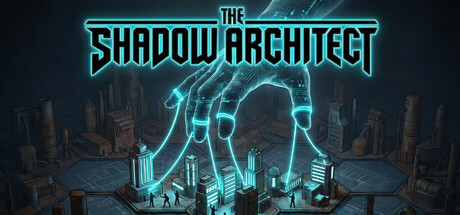
The Shadow Architect is a strategy simulation that explores an uncommon perspective by placing players in control of an invisible force working to undermine a prosperous society through bureaucracy rather than brute strength. Developed and published by StoneBreaker Studios, the game replaces the traditional objective of building successful cities with the challenge of orchestrating their gradual decline. Instead of managing resources to encourage expansion, players manipulate regulations, taxes, inspections, and administrative policies to weaken the foundations of an industrial civilization. This unconventional premise immediately separates the game from more familiar management simulators, offering a satirical take on politics, economics, and institutional power.
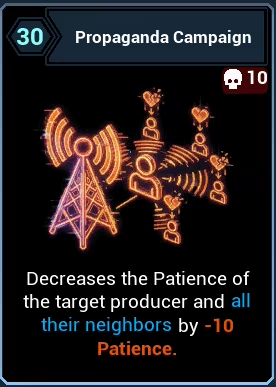
The game's central mechanics revolve around a deck-building system in which each card represents a bureaucratic tool capable of disrupting productivity. Success depends on selecting the right combination of policies and applying them strategically instead of acting recklessly. Every decision has consequences that ripple throughout the city, requiring players to think several turns ahead while balancing short-term gains against long-term objectives. The steady pace encourages calculated planning rather than rapid reactions, making each completed strategy feel rewarding as carefully layered decisions gradually reshape the city's future.
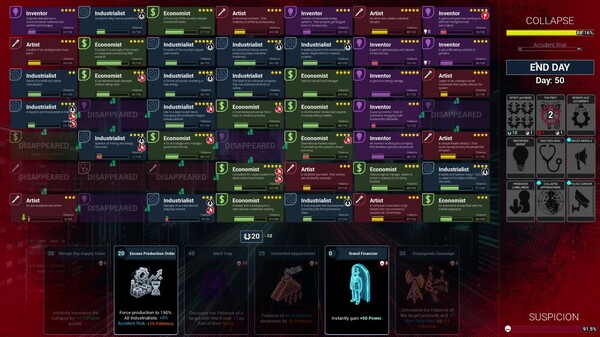
One of the more distinctive aspects of The Shadow Architect is its emphasis on the personalities of the city's productive citizens. Industrialists, artists, inventors, and other influential figures each possess different levels of tolerance toward government interference. Excessive regulations, financial pressure, or repeated obstacles slowly erode their willingness to contribute, forcing players to identify which individuals are most vulnerable and determine the best order in which to target them. This psychological element adds welcome depth, transforming what could have been a simple management system into a thoughtful exercise in observing behavior and exploiting weaknesses.
The city itself functions as an interconnected grid where every resident contributes to a larger economic ecosystem. Removing or discouraging one producer can trigger chain reactions that affect neighboring sectors, creating opportunities for broader collapse if planned correctly. Because every action influences multiple parts of the simulation, positioning and timing become just as important as the cards themselves. Players are rewarded for understanding how different systems interact instead of relying on repetitive tactics, giving each stage a satisfying puzzle-like quality.
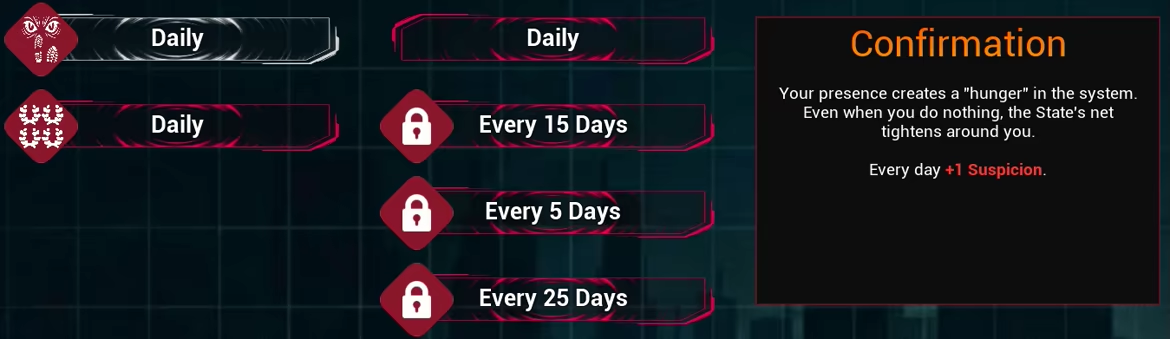
Another engaging feature is the stealth mechanic that limits how aggressively players can pursue their goals. Drawing too much attention through excessive interference increases suspicion, eventually attracting hostile forces that threaten the operation. This creates an additional layer of resource management, forcing players to balance efficiency with secrecy. Rather than rushing toward victory, the game encourages patience and subtle manipulation, reinforcing the fantasy of quietly dismantling a functioning system from behind the scenes.
Although currently in Early Access, the game already offers multiple stages, regions, producer types, and a growing collection of bureaucratic cards that introduce varied strategies. The developers have outlined plans to expand the experience with additional content, including more cards, maps, and gameplay features. While the existing amount of content is understandably smaller than that of fully released strategy titles, the current foundation demonstrates enough creativity to suggest considerable long-term potential as development continues.
Visually, The Shadow Architect favors a clean and readable presentation that keeps the focus on strategic decision-making. Menus and interface elements remain easy to navigate, allowing players to understand complex systems without unnecessary clutter. While the graphics are relatively modest compared to larger productions, they effectively support the game's mechanics. The audio complements the atmosphere appropriately, and the developers have been transparent about incorporating artificial intelligence for some sound effects during production.
The Shadow Architect succeeds because it commits fully to its unusual concept. Its combination of deck-building, psychological manipulation, interconnected city systems, and stealth mechanics creates an experience that feels genuinely different from most management and strategy games currently available. Some balancing improvements and additional content will naturally benefit the Early Access version, but the core design already demonstrates originality and thoughtful execution. Players looking for a strategy game that challenges conventional city-building expectations and rewards careful planning will likely find this a refreshing and memorable experience.
Rating: 6/10