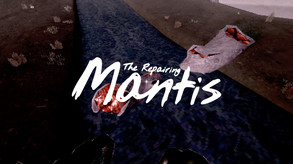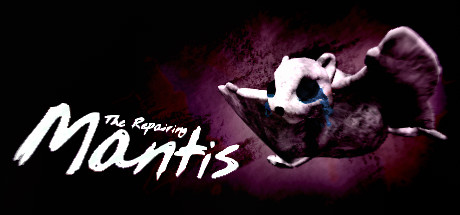
The Repairing Mantis is a narrative horror game that lets you experience the disturbing, violent (yet absurdly poetic) story of a mantis on a mission to repair a bridge made of flying squirrel flesh.
Modeled estimate, not a reported figure. How we estimate →
Media

About
You experience the surreal nightmare of an insect. A squirrel tries to fly. An alligator is going through an existential crisis. A bridge made of flesh is broken.
This bridge eats squirrel’s parts.
This surreal universe can turn out disturbingly relatable. It’s a dark existential experience that can be interpreted in many ways.
As a praying mantis, you explore an eerie world, meet animals, collect dreams, and make impactful decisions.
- Playtime of about 1h
- Exploration game with casual mechanics
- Interactive story with 2 different endings
- Disturbing, violent, and poetic story
- Meet depressing squirrels
- Play as a praying mantis
- “it's so aesthetically and tonally unsettling”
- “When the credits roll you will be thinking about the game, and yourself, and if you should have done it differently”
- “It's a unique, creative, and well done dive into a mind in crisis”
Warning: This game has no save feature during a playthrough.
Stats
All-time low is the lowest price we've recorded for this game since we started tracking it.
Languages: English, French, German
Engagement
Hours played at review time, across 40 reviews with recorded playtime.
Reviews
Themes across 40 recent reviews and how positive each mention is. A keyword signal, not full sentiment analysis.
positive critical· bar length = how often the theme comes up
Reviews
The Repairing Mantis developed and published by Erupting Avocado is a short but haunting narrative experience that leans heavily into surrealism and psychological discomfort. Rather than presenting traditional horror built on sudden scares or combat-driven tension, the game constructs an atmosphere of unease through symbolism, strange dialogue, and an almost dreamlike sense of detachment. Players step into the role of a praying mantis on an isolated island, tasked with an unsettling mission that immediately signals the tone: repairing a bridge made from the flesh of flying squirrels. From this bizarre premise unfolds a meditation on despair, mortality, and existential questioning. The gameplay itself is intentionally minimalistic. Exploration occurs at a deliberate pace, with simple movement and interaction mechanics guiding players through fragmented encounters and conversations. There are no elaborate puzzles or complex systems; instead, the experience relies on environmental storytelling and dialogue exchanges to carry its emotional weight. The island setting feels claustrophobic despite its open spaces, with muted lighting, fog-drenched landscapes, and unsettling creature designs reinforcing the sense that something is fundamentally wrong. Every interaction is tinged with ambiguity, leaving players to interpret meaning rather than receiving clear exposition. Character encounters form the backbone of the narrative. The mantis protagonist crosses paths with creatures who express bleak philosophies and troubled perspectives, often reflecting themes of hopelessness or resignation. Conversations feel less like traditional exchanges and more like fragments of a fever dream, with cryptic lines and symbolic implications. This narrative style encourages introspection rather than providing straightforward answers. Players are invited to consider the motives of their character and the broader metaphorical weight of the island’s events, resulting in an experience that feels deeply personal and open to interpretation. Thematically, the game explores heavy subject matter. Concepts such as depression, inevitability, violence, and self-perception surface organically through the unfolding events. Rather than framing these themes through dramatic spectacle, the game presents them with quiet persistence. The horror emerges from contemplation rather than confrontation. There are no traditional enemies or action sequences; instead, tension arises from the unsettling logic of the world and the uncomfortable emotional truths implied by dialogue. This approach makes the experience more psychological than visceral, leaving lingering impressions long after completion. Visually, The Repairing Mantis adopts a stylized yet eerie aesthetic. The environments are sparse but evocative, combining subdued color palettes with distorted organic forms. Creature models lean toward the grotesque without becoming exaggerated caricatures, striking a balance between realism and abstraction. The sound design supports the mood through ambient noise and restrained musical cues that heighten isolation. Silence often plays as significant a role as audio, reinforcing the contemplative pacing and emotional weight of certain scenes. Despite its brevity—typically lasting around an hour—the game includes branching elements that lead to multiple endings. Player choices influence how events resolve, offering reason to revisit the experience and explore alternate outcomes. These variations do not drastically alter the core narrative but provide different emotional perspectives on the protagonist’s journey. The concise runtime ensures that the unsettling themes remain impactful without overstaying their welcome, maintaining a focused intensity throughout. Ultimately, The Repairing Mantis stands as a distinctive piece of indie horror that prioritizes mood and symbolism over mechanical depth. Its minimalist design, surreal storytelling, and philosophical undertones create a compact yet emotionally resonant experience. While its ambiguity and heavy themes may not appeal to all players, those drawn to interpretive, atmosphere-driven narratives will find it a compelling exploration of existential unease. It is less a conventional game and more an interactive vignette—one that invites reflection, discomfort, and quiet contemplation rather than straightforward resolution. Rating: 8/10
Horrifying not just in it's grotesquely beautiful visuals, but in its approach to exploring such a simple, yet harrowing theme. Easily one of my favorite games.
nice game with a pretty intersting message about dreams, the first ending actually managed to make me feel sad i was a bit dissapointed for the lack of "change" of half of the choices, but it does deliver on a intersting and thoughtful question it only lasted around 1 hour and a half to get both endings and all of the possible choices, its a nice game
I really like this game.Is a short choise drving game a little gore and violent but interesting and serius.I recoomand for the price and to try the experience
I think what this game is trying to do is to use uncomfortable and negative emotions in the presentation of the characters in the narrative to provoke reflections on the human condition of having dreams. One feature that I find interesting in the game is we select dialogues from the other characters' perspectives, i.e. the squirrels and the alligator for them to interact with our character, i.e. the praying mantis. It is interesting because it seems to give us some form of "control" over how other characters interact with our character. Can we call this a second perspective interaction with characters? Below are some of my reflections on the symbolism of the game (spoilers included). [spoiler]Reflecting on our interactions with the characters, the first squirrel we meet in the game is trying to construct a flying machine using branches to fulfil its dream. It then offers to help our character, the praying mantis to repair the bridge using its body parts such as its wings. Does this symbolise that in fulfilling our dreams, it involves the sacrifices of others? After repairing the bridge to reach our "dreams", we are then asked to choose between cutting the cord that connects the moth to the squirrel or cutting the squirrel's tail. The squirrel begs us not to cut its tail. If we choose to cut the squirrel's tail, we get the achievement "Moth Accomplice" and the moth flies away with the squirrel. I don't know what this mean. Perhaps, it means that the moth carries the squirrel off to a better place instead of the squirrel "stuck" in the current reality and getting fixated on fulfilling its dream by building the flying machine? If we choose to cut the cord connecting the moth to the squirrel, we get the achievement "Moth backstab" instead. The moth then flies away by itself, leaving the squirrel in the current reality to complete its dream of building the flying machine. Next, we meet a flying squirrel who has lost/achieved its dream because it has managed to attach wings to its back and can fly. But the squirrel feels lost, demotivated and tired after achieving the dream of flying. Does this reflect our human experience that once we have achieved our dreams, we no longer have anything to motivate us and we feel life is just boring after that? The final squirrel we meet is the one who wanted to cut the cord and die. It said that it is sick of waiting and wanted to die. It seems that this squirrel reflects humans who are depressed with life and wanted to commit suicide. We can either persuade the squirrel not to cut its cord or allow it to cut its cord. We also meet an alligator who told us that he would gladly have the dream of one of the squirrels. We could choose to give one of the squirrel's dreams to the alligator and get the achievement "dream giver". Does this symbolise human beings who do not have dreams of their own but are just living the dreams of other human beings? There are two endings for the game. One is to destroy the squirrel's flying machine (tied to the achievement "End of Hope") and the other is to destroy the bridge (tied to the achievement "End of Reality"). You get to destroy the squirrel's flying machine if you let the hanging squirrel commit suicide and you get to destroy the bridge if you persuade the hanging squirrel not to commit suicide and find its dream across the bridge and return it to her. In the "End of Hope" ending, the alligator told us that the squirrels are not happy even after achieving their dreams, so he told us to destroy the hope of the first flying squirrel., which is the flying machine. Does this symbolise human beings who are not happy with life even after achieving their dreams? In the "End of Reality" ending, the alligator told us that the real world is cursed and cannot be fixed. He told us to destroy the bridge to stop the squirrels from crossing the worlds. Is the bridge a symbol of human's connection to the dream world and if so, is the alligator asking us to reflect on whether humans should stop dreaming and stay grounded in reality? [/spoiler]
holy moly this game is really well made. i really recommend you guys play it.
A decent, but still somewhat lackluster horror game. The Repairing mantis manages to have an amazing setup, with a stylized world and abstract atmosphere, with a few deep, metaphorical themes which tie in uniquely within the gameplay (e.g the mantis dictating other animals' thoughts, by choosing dialogue options), and it certainly invokes uncomfort when it tries to. At the same time though, the gameplay can be tedious, or rather plain boring at times, as it mostly consists of walking around without anything happening, when it really doesn't need to. The conversations are also mostly written in a very simplistic/ superficial manner, always steering towards a certain (pretty obvious) narrative - as this game heavily relies on the conversations, this is quite a big negative, and as such the themes fall very short (or at least lose most of their potential). 6.5/10 - I'd argue that if you decide to connect this game's themes with experiences of your own life, this could probably make up for the narrative shortcomings and have it leave a much better impression, but as it stands on its own, it's simply lackluster.
Pretty good game I've once again been blessed with a hidden gem
wow, really deep game, the story is really tough. i think everybody that went through a rough time can relate to this game, the things the characters say and the overall plot. if you are in the right mindset, this game could really be life changing.
Scary Scuffed Games #349 https://twitch.tv/DitoMido Bisherige Reviews Archiv: https://rsg.ditomido.de/archive Vorgeschlagen von: tony1fcm Achtung Triggerwarnungen! Ist das Kunst, oder kann das weg? The Repairing Mantis ist ein sehr surreales, skurriles Game mit einer fragwürdigen Geschichte die mindestens verstörend ist, aber genau das soll es auch sein. Wer mal etwas einzigartiges erleben und sich ggf. selbst verstören möchte, darf gerne mal reingucken da die Spielerfahrung in vielerlei Hinsicht außergewöhnlich und originell ist, vielen aber unangenehm aufstoßen wird. Ich meine objektiv schafft es das Spiel negative Emotionen durch Surrealismus hervorzurufen wie kaum ein anderes, aber irgendwo wäre es doch ganz schön, nicht einfach nur eindimensional verstört zu werden und zu leiden wenn man das spiel spielt. Rating: Dito: 3.8/5 Chat: 2.48/5 Gesamt: 3.14/5
Related
Related
Trends
Modeled estimate over time, reconstructed from Steam's monthly review histogram.
Momentum
Pace estimated from the game's recent review growth (our daily snapshots) at its own sales-per-review ratio — a momentum signal, not booked sales.
Audience
Estimated from the language of this game's reviews — a proxy for where players are, not official Steam demographics.
Related
| Shell Runner | $11.9K | 95 | 55% | $5.24 |
| Safecracker: The Ultimate Puzzle Adventure | $11.9K | 633 | 59% | $4.99 |
| Extreme Escape | $11.9K | 94 | 81% | $4.99 |
| KUUKIYOMI 3: Consider It More and More!! - Father to Son | $11.9K | 94 | 83% | $4.99 |
| BlackChain | $11.9K | 121 | 87% | $4.99 |
| Antikiller | $11.9K | 53 | 68% | $8.99 |
Related
| 7 Days to Die | $425.3M | 403.5K | 87% | $44.99 |
| Euro Truck Simulator 2 | $421.6M | 932.1K | 97% | $19.99 |
| Mount & Blade II: Bannerlord | $309.8M | 293.9K | 88% | $49.99 |
| Palworld | $279.6M | 445.8K | 94% | $20.99 |
| Clair Obscur: Expedition 33 | $263.7M | 178K | 95% | $47.99 |
| The Forest | $254.8M | 678.5K | 96% | $19.99 |