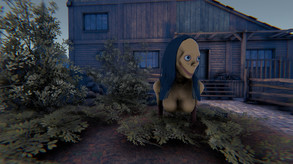
You finally decided to call Momo. Momo is a horror game.
Modeled estimate, not a reported figure. How we estimate →
Media

About
Genres
Stats
All-time low is the lowest price we've recorded for this game since we started tracking it.
Languages: English
Engagement
Reviews
Themes across 41 recent reviews and how positive each mention is. A keyword signal, not full sentiment analysis.
Reviews
The Momo Game is a small-scale indie horror title developed and published by Caffeine that draws direct inspiration from the viral “Momo” internet phenomenon that circulated widely on social media several years ago. Built around the unsettling imagery and urban-legend mystique of that figure, the game attempts to transform a piece of online folklore into an interactive survival experience. Its premise is simple and immediately recognizable: after initiating contact with the mysterious entity, the player finds themselves trapped in a dangerous situation where they must complete objectives and survive long enough to escape. The concept leans heavily on the cultural memory of the creepypasta-style story, using familiarity with the legend as a foundation for its tension. Gameplay unfolds in a confined environment, typically centered around a house and its immediate surroundings. The player is tasked with exploring this space, locating specific items, and completing straightforward objectives while being pursued by the threatening presence of Momo. A countdown timer adds urgency to every action, reinforcing the idea that survival depends not only on awareness but also on efficiency. This timer-driven structure gives the game a consistent sense of pressure, encouraging players to keep moving rather than cautiously lingering in one area. The core loop revolves around searching, reacting, and avoiding danger, with failure often coming quickly if the player hesitates or misjudges the situation. Mechanically, The Momo Game keeps things very basic. Interaction options are limited, puzzles are minimal, and the primary challenge lies in navigating the environment under threat rather than solving complex problems. This simplicity can make the game easy to pick up, but it also restricts the depth of the experience. The horror elements rely largely on the presence and unpredictability of the antagonist, along with occasional jump-scare moments. However, because the systems driving the enemy’s behavior are relatively straightforward, encounters can sometimes feel repetitive after multiple attempts. The tension stems more from anticipation than from layered design or emergent scenarios. Visually, the game adopts a modest presentation that reflects its indie origins. Environments are functional and serve their purpose as enclosed spaces meant to evoke unease, but they lack detailed environmental storytelling or highly polished textures. Lighting and shadows attempt to contribute to the atmosphere, yet the overall graphical fidelity remains limited. Sound design plays a crucial role in horror games, and here it is used to build suspense through ambient effects and sudden audio cues. While these elements occasionally succeed in creating momentary tension, they do not consistently sustain a deeply immersive atmosphere. In terms of pacing, the experience is brief and relatively compact. The structure encourages short play sessions, and the overall content does not extend into a lengthy campaign. For some players, this brevity works in the game’s favor, offering a quick horror diversion that does not demand a large time investment. For others, the limited scope can make it feel more like a prototype or experimental project rather than a fully realized horror adventure. The replay value largely depends on a player’s tolerance for repeating similar objective patterns under slightly varying circumstances. Community reception has generally reflected this divide. Some players approach The Momo Game as a low-cost novelty title, appreciating it for what it is: a short, indie attempt to capitalize on a recognizable internet legend. Others criticize its rough edges, citing simplistic mechanics, repetitive gameplay, and limited atmosphere as shortcomings that prevent it from standing out in a crowded horror market. The game does not attempt to compete with high-budget psychological horror experiences; instead, it occupies a niche as a minimalist survival scenario rooted in viral myth. Ultimately, The Momo Game functions as a curiosity within the indie horror landscape. It captures a moment in internet culture and translates it into a playable format that emphasizes urgency and basic survival mechanics. While it lacks the polish, narrative depth, and mechanical sophistication of more ambitious horror titles, it offers a short and accessible experience for players interested in internet-inspired scares. Those seeking a quick, straightforward survival challenge tied to an infamous online legend may find it mildly entertaining, but players expecting a deeply immersive or innovative horror experience are likely to view it as a limited, albeit intriguing, indie experiment. Rating: 5/10
Related
Related
Trends
Modeled estimate over time, reconstructed from Steam's monthly review histogram.
Hours played at review time, across 41 reviews with recorded playtime.
positive critical· bar length = how often the theme comes up
Momentum
Pace estimated from the game's recent review growth (our daily snapshots) at its own sales-per-review ratio — a momentum signal, not booked sales.
Audience
Estimated from the language of this game's reviews — a proxy for where players are, not official Steam demographics.
Related
| Fiery Disaster | $1K | 56 | 54% | $0.69 |
| Jade's Journey 2 | $1K | 55 | 62% | $0.79 |
| Ashes of Immortality II | $1K | 57 | 47% | $0.79 |
| The Dark Pursuer | $1K | 59 | 75% | $0.99 |
| Grass Toucher | $1K | 65 | 91% | $0.49 |
| Rustled Pete | $1K | 74 | 97% | $2.99 |