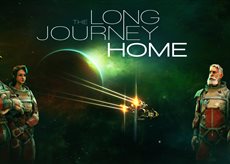
The Long Journey Home combines an open world full of galaxies, planets and anomalies with quests and mechanics of a rogue-like RPG. One destination. Endless adventures. Where will this journey take you?
Modeled estimate, not a reported figure. How we estimate →
Media
About
Genres
Stats
All-time low is the lowest price we've recorded for this game since we started tracking it.
Languages: English, French, German, Spanish - Spain, Korean, Russian, Simplified Chinese, Polish
Engagement
Hours played at review time, across 40 reviews with recorded playtime.
Reviews
Themes across 40 recent reviews and how positive each mention is. A keyword signal, not full sentiment analysis.
positive critical· bar length = how often the theme comes up
Reviews
I really wanted to like this game. The concept is fantastic. Exploration, trading, managing resources - sounds great. But it's sooooo frustrating! You fly around multiple systems and 90% of the time attempting to land on the surface costs more in damage than you can gather so you just skip. Nothing cures the infestation so once you catch it (and you will) you're screwd. Ruins are so rare that you can discover maybe one or two item in a few hours of gameplay. You have no idea how much items are worth. So far the game for me has been flying around, NOT landing on planets and dying of fungi. Ok, I tried to perservere but it's even worse. Almost made it to Earth but the last cluster was only made of black holes and pulsars, with almost no green resources, making it impossible to finish the game. Hours wasted because of randomness of procedurally generated galaxy. Even Kai Rosenkranz's music couldn't salvage this game for me. I want my money back.
The whole thing runs on three minigames that feel like they were ripped straight out of a “Learn JavaScript in 24 Hours” book: 1. Wiggle your ship through fake gravity to reach a planet. 2. Do the exact same thing again, but now you’re landing. 3. Generic pew-pew space shooter. Seriously, search “JavaScript spaceship gravity tutorial” or “Moon Lander clone” and you’ll find the source code for 90% of this game. That kind of bare-bones stuff can work if you’ve got something addictive on top (think Vampire Survivors or the old phone game Flappy Bird), some killer progression, a banger soundtrack, anything to make people want to keep playing the same three loops for hours. This game has none of that. Zero hook, zero payoff. You just repeat the same baby-level minigames until you get bored and quit. And you will quit, fast.
Ad astra per aspera. To the stars through hardships.
I really wanted to like this game, but it's like the developers don't want me to enjoy it. the arbitrary planetfall of the lander killed any enjoyment I would have had with this game. You don't have control over the lander until it's already shooting like a bullet to the surface, clearing any objective you're trying to get to, to the point I believe it was made that way specifically to destroy the lander. When it feels like the game is rigged for you to fail, why care?
The Long Journey Home is a game that expects you to meet it more than halfway. The concept is great, and the core gameplay mechanics are so close to being good. Unfortunately, pretty much every single mechanic or event lands on the wrong side of “fun challenge” vs. “frustrating.” Like, imagine a promising game, but all the playtesters got super good at it, and because of their feedback, the devs made the game impenetrable to new players. My initial impression was strongly negative, and similar to a lot of the other negative reviews—I was ready to ragequit the first time my lander got randomly thrown into a planet’s surface like a bowling ball. After playing it some more, my view is more mixed: [i]if[/i] you engage with the game in [i]the exact right way[/i] the developers want you to, you can enjoy some real moments of fun among the frustration. Basically, [b]don’t explore for the hell of it[/b] (the game doesn’t reward it) and [b]be very risk-averse[/b]. Although you’d think a space game would encourage you to see as much of the universe as possible, The Long Journey Home really punishes taking unnecessary risks, and so much of the exploration in the game [i]is[/i] risky. Also, apparently, [b]the game expects you to fail and restart multiple times[/b]. This was [i]really[/i] not made clear in-game, and it’s only from 1) incidentally doing it myself, and 2) reading the game’s wiki, that I see it’s intentionally designed this way. For example, there are several major alien races in the game, but each run will only have a subset of them—[i]and[/i] some events or missions are only possible with certain aliens in the game. This, plus the procedural generation, can dramatically change the odds you face on each run. IMO it’s unforgivable that the difficulty varies so much, and that this multiple-run structure is not telegraphed well at all. Overall, I wouldn’t recommend this game unless you're feeling masochistic. It’s frustrating not because it’s [i]blatantly[/i] bad, but because it’s [i]so close[/i] to being a good game that I’d happily pour dozens of hours into, yet ends up too unbalanced and unfair to deserve it.
[h1] I guess, you guess, everyone guess that it's not the worst space exploration game. Drift around emptiness of space. A bit of shooting and strategy elements where you choose trajectory of flight and RPG elements. Nice visuals. Overall it's ok to check it out especially for $1. [/h1]
Im Weltall macht es noch Spaß, Die Steuerung bei den Planetenmissionen ist so schlecht. Man flippert nur rum, verbraucht unmengen an Treibstoff. Letztlich nur ständig ein nerviges Minigame nach dem anderen.
The Long Journey Home, developed by Daedalic Studio West and published by Daedalic Entertainment, is a science-fiction exploration RPG built around isolation, survival, and the unpredictability of deep space. The premise is immediately compelling: humanity attempts an experimental hyperspace jump, only for the mission to catastrophically misfire and strand a small crew on the far side of the galaxy. With Earth unimaginably distant and resources limited, the only objective is simple in theory but daunting in practice—find a way home. From that moment forward, the game becomes a blend of procedural exploration, survival management, diplomacy, and trial-and-error learning. The universe itself is procedurally generated, ensuring that each journey feels distinct. Star systems, planets, anomalies, and alien civilizations are arranged differently in every playthrough. This randomness strengthens the sense of being lost in a vast and unknowable cosmos. Exploration is central to the experience, and venturing into new systems often brings both opportunity and danger. Some planets contain valuable resources, abandoned technology, or mysterious signals, while others conceal environmental hazards or hostile encounters. The thrill of discovery is balanced by the constant tension of limited fuel and the risk of damage. Gameplay operates on two main layers: strategic navigation at the galactic scale and hands-on piloting during planetary landings. On the strategic layer, players must chart courses between stars while carefully managing fuel reserves and ship integrity. Miscalculations can leave the ship stranded in deep space, forcing desperate measures to survive. On planetary surfaces, gravity and thrust mechanics come into play in a manner reminiscent of classic lunar lander challenges. Players must carefully balance descent speed and angle to avoid damaging their lander while gathering essential materials. These landings are both mechanically demanding and thematically appropriate, reinforcing the fragility of the crew’s situation. One of the game’s most distinctive features is its alien diplomacy system. Throughout the journey, players encounter numerous alien species, each with unique cultures, values, and communication styles. Dialogue choices shape relationships and can lead to alliances, trade opportunities, quests, or outright hostility. The lack of clear guidance during these encounters adds authenticity but also difficulty; misunderstandings can easily escalate. Some species reward respectful negotiation, while others value strength or deception. Learning these nuances becomes part of the player’s evolving understanding of the galaxy. Resource management underpins nearly every decision. Fuel, hull integrity, crew health, and supplies must be carefully balanced. Mining planets, salvaging wreckage, and trading with aliens are essential survival tactics. Failure is always a possibility, and the game embraces a roguelike structure where mistakes can end a run entirely. Each failed attempt teaches lessons that inform future journeys. This structure reinforces the narrative theme of perseverance in the face of overwhelming odds. Despite its strong conceptual foundation, the game’s mechanics can feel unforgiving. The learning curve is steep, and the lack of explicit tutorials may frustrate players unfamiliar with its systems. Planetary landings, in particular, require precision and patience, and repeated failures can feel punishing. Similarly, resource scarcity can create situations where a run feels doomed long before its conclusion. For some players, this tension enhances immersion. For others, it may feel excessively punishing. Visually, The Long Journey Home adopts a stylized but functional aesthetic. Space is presented with vibrant nebulae, distant stars, and distinct planetary surfaces. Alien species are creatively designed, and their visual identities reflect their cultural personalities. The soundtrack and ambient audio enhance the sense of isolation, alternating between serene cosmic tones and tense moments of crisis. While not graphically cutting-edge, the presentation effectively supports the game’s atmosphere. What ultimately defines The Long Journey Home is its ambition. It attempts to capture the feeling of being a small, vulnerable presence in a massive universe. The emergent storytelling that arises from alien interactions, resource struggles, and unexpected discoveries can create memorable personal narratives. However, its mechanical friction means that enjoyment often depends on a player’s tolerance for difficulty and experimentation. In the end, The Long Journey Home is a bold and conceptually rich space odyssey that prioritizes exploration and consequence over accessibility. Its procedural galaxy, layered diplomacy system, and survival mechanics combine to create a distinctive sci-fi experience. While its challenging systems and occasional opacity may deter some players, those willing to embrace its complexity will find a journey defined by discovery, hardship, and the constant hope of returning home. Rating: 6/10
The Long Journey Home is one of those games that shouldn’t work but absolutely does. On the surface it’s nothing special—mixed reviews, barely any traditional “gameplay.” I mostly play it on Switch and it’s honestly kind of janky. But it's one of my favorite games of all time. The writing feels genuine, and the whole loop of being stranded light-years from Earth and having to make perfect choices just to limp your way home is so tense and believable. Every landing, every gravity-assist, every resource gamble matters. One bad decision and the whole mission is done. It's rough around the edges, but there's something invaluable at its core.
[h1]🌌 Крайне недооценённая игра! [/h1] [i]Предыстория:[/i] Вы управляете космической операцией [b]«Дедал-7»[/b]. Её цель — протестировать первый в истории человечества варп-двигатель и добраться до ближайшей звезды — [b]Альфа Центавра[/b]. (Для умников уточню: в системе три звезды, и ближняя к нам — [i]Проксима Центавра[/i]. Но варп-двигателю, честно говоря, всё равно 😄) Но что-то пошло не так... И корабль [b]пулей уносит за 37 000 парсек![/b] В итоге вы оказываетесь слишком далеко от Земли — буквально на прототипном двигателе, собранном человечеством на коленке. Вы управляете [i]мусорным кораблём[/i], который не рассчитан на такие нагрузки. Вокруг — горячие и холодные планеты, чёрные дыры, радиация, нехватка ресурсов и множество разумных рас, которые: пытаются вас надуть, уничтожить или просто смотрят на вас, как на мусор... ...чем вы, впрочем, и являетесь по меркам существ, охвативших вселенную еще тысячи лет назад. [b]Ваша задача — выжить и вернуться домой.[/b] И, поверьте, это [i]непростая задача[/i]. Справедливая экономика? Лёгкий лут? Простые миссии? Если вы ожидали лёгкой прогулки — прочтите текст выше ещё раз 😄 Разработчики идеально передали атмосферу: [b]сложность, безысходность, отсутствие поблажек.[/b] Каждый ресурс на счету. Каждый неверный шаг может стать последним. А поверх всего — богатый [i]лор[/i]: сюжеты, разумные виды, древние цивилизации, загадки, технологии, интриги галактики. Если вы заядлый задрот и решили сыграть роль спасателя вселенной — флаг вам в руки. Но для начала постарайтесь хотя бы [b]выжить сами[/b] 😉 [b]Потрясающая атмосфера:[/b] Музыка, звуки и графика создают удивительное чувство спокойствия и одиночества. Но расслабляться нельзя — игра держит в напряжении постоянными поломками, болезнями и нехваткой ресурсов. И чем вы ближе к дому, тем напряжение выше... [i]Управление приближено к реальности:[/i] учитывайте гравитацию планет, траектории, орбиты и расход топлива — ошибка стоит дорого. [b]Многие минусы, описанные в других отзывах, считаю неуместными.[/b] Они противоречат самой идее хардкора. Ей-богу, ещё бы на [i]Elden Ring[/i] жаловались за сложность... [b]💬 Комментарии к обзору оставляю открытыми, поскольку могу быть необъективным, не описав минусы. Хотя о какой объективности может идти речь в обзорах? 😄[/b]
Related
Related
Trends
Concurrent players on Steam, sampled daily since tracking started.
Momentum
Pace estimated from the game's recent review growth (our daily snapshots) at its own sales-per-review ratio — a momentum signal, not booked sales.
Audience
Estimated from the language of this game's reviews — a proxy for where players are, not official Steam demographics.
Related
| Hazumi and the Pregnation | $54.4K | 258 | 91% | $11.99 |
| [Chilla's Art] Jisatsu | 自撮 | $54.5K | 622 | 75% | $5.99 |
| Synthetic Lover | $54.4K | 105 | 86% | $24.99 |
| Invector: Rhythm Galaxy | $54.4K | 105 | 79% | $24.99 |
| Bunch of Heroes | $54.5K | 432 | 49% | $4.99 |
| Myths of Rules | $54.4K | 1K | 88% | $2.99 |