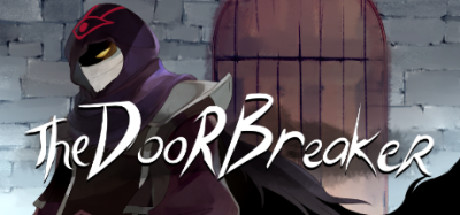
The Doorbreaker is a story about one very patient person who has a long way to go in the obscurity. The game includes more than 26 different levels where you have to break doors with a random chance. This game requires you to be patient and tough, I warn you!
Modeled estimate, not a reported figure. How we estimate →
Media

About
Stats
All-time low is the lowest price we've recorded for this game since we started tracking it.
Languages: English
Engagement
Hours played at review time, across 40 reviews with recorded playtime.
Reviews
Themes across 40 recent reviews and how positive each mention is. A keyword signal, not full sentiment analysis.
positive critical· bar length = how often the theme comes up
Reviews
PODEM COMPRAR!!!!!!!!! Esse jogo é uma merda, botou fogo na minha mãe, ressuscitou Hitler, jogou meus Lego no chão e me fez pisar em cima, mijou na minha cara, deu chumbinho pro meu cachorro, usa crocs, compra na terabyte, joga de exodia. Recomendadíssimo.
this game is a piece of s-h-i-t don't buy it because it's a waste of money
Так себе,проебал 20 часов в пустую
The Doorbreaker is an intentionally austere and highly unconventional indie title that challenges traditional ideas of what constitutes engaging gameplay. Developed by Meepower and published by My Way Games, the game presents itself as a journey through dozens of levels toward an eventual confrontation with a mysterious antagonist. In reality, it functions more like an endurance test, built almost entirely around repetition, patience, and the player’s willingness to continue interacting with a system that offers minimal feedback or reward in the conventional sense. At the mechanical level, The Doorbreaker is stripped down to a single dominant action: interacting with doors until they break. Each level typically consists of little more than a new door standing between the player and progression. There are no combat mechanics, no traditional puzzles, and no meaningful variation in how challenges are approached. Success is often governed by chance or sheer persistence rather than strategy or reflex, requiring players to click or interact repeatedly—sometimes an extreme number of times—before the door finally gives way. This design choice is deliberate, positioning the act of repetition itself as the core experience rather than a means to an end. Because of this, pacing becomes a defining feature. Progress is slow, uneven, and frequently frustrating, especially for players approaching the game with expectations shaped by conventional action or adventure titles. Levels blur together, differentiated more by the amount of time required to clear them than by any mechanical or visual evolution. The absence of escalation in difficulty or complexity reinforces the sense that the game is less about overcoming obstacles and more about enduring them. For some players, this creates a strange form of tension rooted not in danger or challenge, but in uncertainty about how long any given task will take. Narrative elements exist only in the loosest sense. The game hints at a larger story—an unseen villain, a journey with purpose—but these ideas are barely developed within the game itself. There are no meaningful story beats, character interactions, or environmental storytelling elements to contextualize the player’s actions. As a result, the promise of narrative resolution feels abstract and distant, serving more as a conceptual justification for the game’s structure than as a motivating force. Players are left to project their own meaning onto the experience, or to accept that the lack of narrative payoff is itself part of the design. Visually and technically, The Doorbreaker reflects its minimalist philosophy. Built with RPG Maker, the presentation is basic and static, offering little in the way of animation, visual variety, or feedback. Sound design and music exist but play a minor role, providing background presence rather than emotional reinforcement. While this simplicity keeps system requirements low, it also amplifies the sense of emptiness, making the game feel more like a prototype or conceptual experiment than a fully realized production. One area where the game attempts to add structure is through its extensive list of Steam achievements. These achievements encourage players to continue interacting with the game, sometimes rewarding obscure or time-consuming actions. For completionists, this can provide an additional layer of motivation, turning the experience into a checklist-driven grind. For others, achievements feel like superficial incentives layered on top of a loop that already demands significant patience, doing little to alleviate the monotony. Community reception reflects how polarizing this approach is. A small subset of players embraces The Doorbreaker as absurdist humor, experimental art, or a novelty experience meant to be shared as a joke or challenge among friends. For them, the game’s refusal to entertain in traditional ways becomes its defining trait. The majority of players, however, view the experience as tedious and unrewarding, criticizing the lack of meaningful interaction, depth, or payoff. To these players, the game feels less like a deliberate experiment and more like an empty exercise in repetition. Ultimately, The Doorbreaker is a game that exists on the fringe of interactive design, appealing primarily to those who enjoy irony, endurance challenges, or unconventional experiments that blur the line between game and provocation. It does not reward skill, creativity, or strategic thinking, and it offers little satisfaction in the traditional sense. For most players, it will feel frustrating and purposeless, but for a niche audience willing to engage with it as a conceptual oddity rather than a source of fun, it stands as a stark reminder that sometimes a game’s message is found not in what it offers, but in what it deliberately withholds. Rating: 5/10
this game made me develop a fear of doors i never knew i could have the end is never
Глубоко.... Глубокооо.......
YEY~ Got all achievements XD
this game ♥♥♥♥♥♥♥ sucks
A mildly amusing joke, but you're smoking meth if you think this is worth 5 dollars. Gift this to a soon to be ex-friend during a sale.
W T F . . .
Related
Related
Trends
Modeled estimate over time, reconstructed from Steam's monthly review histogram.
Momentum
Pace estimated from the game's recent review growth (our daily snapshots) at its own sales-per-review ratio — a momentum signal, not booked sales.
Audience
Estimated from the language of this game's reviews — a proxy for where players are, not official Steam demographics.
Related
| Horror Girl Puzzle | $1.1K | 76 | 83% | $0.59 |
| Beyond Magic | $1.1K | 76 | 71% | $0.79 |
| Mountain Trap: The Manor of Memories | $1.1K | 88 | 56% | $0.76 |
| Poopy Philosophy | $1.1K | 77 | 75% | $0.49 |
| Shining Plume 2 | $1.1K | 61 | 75% | $0.79 |
| Spell Cast | $1.1K | 62 | 66% | $0.49 |