The Detail, a crime noir adventure in a modern American city. This is a city where cases matter, clearance rates matter, and on a good day even justice matters.
Modeled estimate, not a reported figure. How we estimate →
Media

About
Stats
All-time low is the lowest price we've recorded for this game since we started tracking it.
Engagement
Reviews
https://youtu.be/Z1g-o76p7TI Offering an inconsistent art style along side a cast of generally, and intentionally, unlikeable characters makes it hard for characters to be draw into the setting.
I dettagli fanno la perfezione e la perfezione non è un dettaglio [Cit. Leonardo delle tartarughe Ninja]
Don't bother, it starts interesting and suddenly mess up at last chapter.
Related
Related
Trends
Modeled estimate over time, reconstructed from Steam's monthly review histogram.
Languages: English
Hours played at review time, across 40 reviews with recorded playtime.
not a fan of the gameplay.
So far I really like the story and the style of play. Looking forward to finishing the game.
Great art style. About 1.5 hours of gameplay if you take your time. Unfortunately just the base game gets you nowhere. Seeing the few reviews on the follow-up episodes I think I'll pass. I never hid a game in my library so far, but will do so with this one. IMHO the episodes should have been combined into a single game when the third one was released. Feels like a money-grab to me. For about 2€, with 4.5 hours of playime overall it would be worth it (assuming the other episodes are similar in length) BUT NOT THIS WAY.
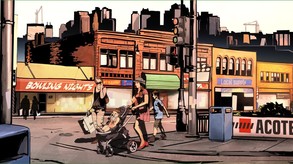
The Detail is a story-driven adventure developed and published by Rival Games Ltd that places narrative ambition and moral complexity at the center of its design. Framed as an episodic crime drama, the game draws heavily from television noir and graphic novel storytelling, presenting a bleak modern city shaped by corruption, violence, and compromised ideals. Rather than focusing on puzzles or mechanical challenge, it positions the player as an observer-participant, guiding multiple characters through intersecting storylines where decisions are less about winning or losing and more about choosing which moral burden to carry forward. The structure of The Detail is closer to an interactive graphic novel than a traditional point-and-click adventure. Gameplay primarily consists of reading dialogue, navigating stylized scenes, and making choices at key narrative junctions. These choices often reflect ethical dilemmas rather than tactical decisions, asking the player to weigh personal loyalty, professional duty, and self-preservation. While the game does include limited investigative segments and environmental interaction, these moments are deliberately understated and serve to reinforce narrative flow rather than disrupt it with complex mechanics. This approach ensures that pacing remains steady and that the focus stays firmly on character development and story progression. Narratively, the game follows several protagonists whose lives intersect through crime and consequence. A hardened detective struggling with burnout and compromise, a former criminal attempting to escape his past, and a young officer confronting the harsh realities of law enforcement each bring distinct perspectives to the unfolding events. By shifting viewpoints between these characters, The Detail offers a multifaceted look at its setting, emphasizing how the same incident can carry vastly different meanings depending on who is affected by it. The writing leans into morally gray territory, avoiding simple heroes or villains and instead presenting a world where even well-intentioned choices can have damaging outcomes. Visually, The Detail distinguishes itself through a strong comic-book-inspired aesthetic. Scenes are presented like animated panels, with sharp lines, muted color palettes, and cinematic framing that evoke printed noir illustrations brought subtly to life. This stylistic choice enhances the tone of the story, reinforcing themes of grit, inevitability, and emotional distance. The restrained animation and transitions contribute to the feeling that the player is flipping through a living graphic novel, rather than controlling characters in a fully animated environment. It is a presentation style that prioritizes mood and symbolism over realism, and it suits the narrative well. One of the more debated aspects of the experience is the extent to which player choices meaningfully alter the story. While decisions often feel impactful in the moment and shape character relationships and dialogue, the broader narrative arc tends to converge toward fixed outcomes. This can create a sense that the story is more reactive than truly branching, particularly for players who replay episodes to explore alternate paths. However, the emotional texture of scenes can vary based on earlier choices, subtly changing how characters perceive one another and how events are framed, even if the destination remains largely the same. The episodic format allows the story to unfold gradually, building tension and deepening character arcs over time. Each episode expands on unresolved threads and introduces new complications, though pacing can occasionally feel uneven as dialogue-heavy sequences dominate the experience. For players invested in the characters and themes, this slow burn can be engaging, but those expecting frequent interaction or mechanical variety may find certain stretches overly passive. The game clearly prioritizes narrative cohesion and atmosphere over constant engagement. Overall, The Detail stands as a distinctive example of narrative-first game design, one that values tone, writing, and moral ambiguity above traditional gameplay depth. It is not a game that seeks to challenge reflexes or problem-solving skills, but rather one that invites reflection on difficult choices and compromised ideals within a crime-ridden world. While its limited interactivity and constrained branching may not appeal to all players, those drawn to interactive fiction, noir storytelling, and character-driven drama will find a thoughtful, if imperfect, experience that leaves a lingering impression long after its final episode concludes. Rating: 7/10
More of a visual novel than a proper "game" with many navigational annoyances, some of the choices are divergent and with no manual save system this means you'll have to replay the game over and over again just to see slightly different flavors. For something that pretends to be about player choices none of your decisions end up mattering all that much, not to mention the art is often amateurish and without proper voice acting the whole thing just falls flat. What is supposed to be a visceral and gritty crime thriller is a clicking bore fest that's also glitched out on me multiple times, would not recommend even on sale the whole thing feels stuck together with duct tape.
Det visuella och musiken är det jag tar med mig från detta spel. Jag tyckte spelet på det stora hela var klart tillfredställande. Minus i kanten för att det var rörigt att hålla ordning på alla figurer emellanåt och det faktum att spelet saknar röstskådespelare. Jag rekommenderar trots allt. 7.1 / 10
This game is rough around the edges, sure. Quite a few visual bugs, gameplay is not exactly smooth, and the story feels inconsistent - it's a drag first two chapters and it's rushed in the last one. Sometimes there are no music where it's supposed to be, UI hints come and go as they please. Long story short, it's not a perfect game, and neither was Rival Games Ltd's next one, Thief of Thieves. So why do I recommend it? I think this game's got soul. It perfectly scratches the itch of a neo-noir detective story, even if it's full of cliche. You can see the people behind the curtains cared about what they were doing. Despite all its flaws, it drags you in until the very end, and there are quite a few choices branching out along the way. Granted, this game could use more quality assurance that will never come. But it doesn't deserve to be forgotten.
Momentum
Pace estimated from the game's recent review growth (our daily snapshots) at its own sales-per-review ratio — a momentum signal, not booked sales.
Audience
Estimated from the language of this game's reviews — a proxy for where players are, not official Steam demographics.
Related
| U.F.F.C - Ultra Fuckin’ Fuckable Championship | $34.7K | 151 | 81% | $8.99 |
| Nevrosa: Escape | $34.7K | 103 | 80% | $14.99 |
| Sex Apartment 2: Grand Hotel | $34.7K | 90 | 78% | $9.99 |
| Immortal Hunters | $34.7K | 137 | 64% | $9.99 |
| Into the Nightmare | $34.7K | 198 | 91% | $8.99 |
| Flashback | $34.7K | 551 | 59% | $2.49 |