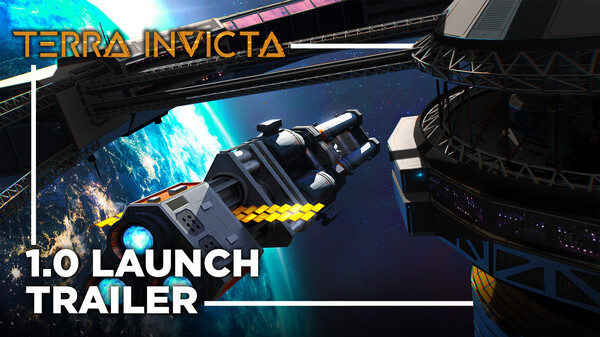
An alien invasion has fractured humanity into seven ideological factions each with a unique vision for the future. Lead your chosen faction to take control of Earth’s nations, expand across the Solar System, and battle enemy fleets in tactical combat.
Modeled estimate, not a reported figure. How we estimate →
Prices
Each in the currency that store quoted — not converted: the gap between two rows is the publisher's pricing, not an exchange rate.
Discounts
Every price cut of more than 20% we have observed, in each market that quoted one, with this game's chart position on either side of it. These are episodes, not a model: a sale is one event, and one event cannot tell you what the next one will do.
About
An extraterrestrial probe is detected approaching Earth. Unknown to humanity, an alien force has arrived in the far reaches of the icy Kuiper Belt and has begun mining a dwarf planet to prepare for an invasion.
With Earth’s nations unable to unite to address the alien arrival, transnational groups of like-minded political, military, and scientific leaders develop covert channels to coordinate a response. With the aliens' motives uncertain, factions emerge, driven by hope, fear, or greed.
You will control one of these factions.
The Resistance works to form an alliance of nations to mount a coordinated defense.
Humanity First vows to exterminate the aliens alongside any who sympathize with them.
The Servants worship the aliens and believe they will solve all the troubles of the world.
The Protectorate advocates negotiated surrender as the only means to avoid annihilation.
The Academy hopes the alien arrival heralds the opportunity to form an interstellar alliance.
The Initiative seeks to profit from the chaos and destruction.
Project Exodus plans to build a massive starship and flee the Solar System.

A distant anomaly, a mysterious crash site, and a spike in reported disappearances. Could this truly be humanity's first contact with extraterrestrial lifeforms? As your field agents investigate sightings and your scientists race to explore new fields of research, you will slowly learn the truth behind the alien arrival.
From early sightings and UFO crash sites to rampaging alien megafauna and robotic armies, it will rapidly become clear that the other six human factions are not your sole competition. Throughout the game, illustrated events will present you with difficult choices as you investigate growing alien activity on Earth. Uncover the mystery of the aliens’ origins and motives – unless, of course, you are Humanity First, and all that matters to you is extermination.
Terra Invicta has a global research system that creates opportunities for both competition and cooperation. Shared scientific advancement unlocks private engineering projects. Factions can choose to focus on private projects, at the cost of weakening Earth as a whole and ceding influence over global research direction to other factions with different priorities. Left unchecked, factions like the Servants or the Initiative may steer the world’s efforts toward developing methods of social control, rather than propulsion or weapon systems.

You begin on Earth as the head of a shadowy organization devoted to your chosen ideology. The aliens are coming – soon – but your first enemies (and perhaps allies) will be other human factions.
Lead a faction united by ideology, rather than a nation defined by territory. This is a stark change from most strategy games – in Terra Invicta, you will not paint the map with the colors of some chosen nation. Instead you will rule from the shadows and compete with other factions for control points representing a region's military, economic, and political leadership.
Geopolitics is your sandbox – unite or break apart nations as best serves your ends, while using those under your influence to conduct proxy wars against the other six factions. Earth’s regions are modeled in detail, from educational levels and unrest to GDP and inequality. Gaining command over regions with great monetary wealth and military power can allow you to implement your will on Earth, but the war for the Solar System will not be won without also securing regions containing space launch facilities.
Enact your will through a council of politicians, scientists, and operatives sent around the world (and even into space). The starting abilities of these councilors will improve through gaining experience and acquiring control over powerful organizations like intelligence agencies or wealthy corporations. A veteran commander may make the perfect choice to lead a tactical team under the council’s direction, while an experienced diplomat works to secure the funding needed to resist the alien invasion.
Seek out like-minded populations and politicians and take actions to convert followers of opposing ideologies. Public opinion is modeled along multiple axes – the Servants’ alien worship and the Protectorate’s advocacy of negotiated surrender may largely align in terms of support or opposition to the aliens, but events that show the aliens can be defeated have the potential to convince followers of the Protectorate that resistance is a realistic choice.

Terra Invicta bridges the gap between our modern-day world and the vast interstellar empires of other space strategy games, asking you to take humanity’s first steps in colonizing our Solar System, where over 300 asteroids, moons, and planets in constant motion create an ever-changing strategic map.
Start your campaign in the modern day and build your capabilities from the ground up, or begin in the near-future and push into the final frontier from the very start – build space stations and planetary bases, quickly gain control of the inner Solar System, and prepare for the existential threat growing at the far reaches of the system.
Take your faction beyond the confines of Earth, building space stations to act as shipyards and fuel depots, constructing mining stations to acquire advanced resources, and establishing bases to serve as research or construction facilities. Terra Invicta zooms into the strategic geography of the Solar System, presenting space not as a series of isolated stars that you order units to move to and from, but rather a rich and varied landscape of asteroids, moons, dwarf planets, gas giants, and other celestial bodies creating texture and tactical opportunities at every turn.
The expansive map is constantly shifting as celestial bodies orbit the Sun. This means your space stations and forward operating bases are constantly moving as well, forcing you to plan accordingly and adapt to the evolving circumstances – your colonies among the Jovian moons could find that a once-distant alien military outpost or Initiative privateering base has suddenly become a close neighbor.

Terra Invicta explores what might be – how colonies on Mars might function, what plausible engines could power our spaceships, and the nature of how space colonization and warfare might proceed. Players may find themselves establishing a mining base on the asteroid 16 Psyche after noticing it is rich in metals – and then learn that in our world NASA planned The Psyche Mission for the same reason.
Exploring and eventually colonizing space will require access to many resources: water for life support and propellant, metals for manufacturing, fissiles for nuclear drives and weapons, and more. At the start, you’ll have no choice but to acquire such resources on Earth and suffer the high cost of using rockets to escape Earth’s gravity, but over time you’ll increasingly choose to instead rely on asteroid mining and other means of securing local supply.
Spaceship design in Terra Invicta draws from the best of scientific speculation and hard science fiction. You can design your own ships, selecting from an array of weapons, drives, and other modules to place on a variety of hulls, ensuring each ship has the right mix of fuel capacity, maneuverability, and other capabilities.
Tactical combat is built around a realistic simulation of Newtonian physics, where momentum and maneuver in 3D space are just as important as the firepower your ships carry. Fire missiles and use point defense cannons to destroy incoming projectiles; build up momentum then swing hard to bring the enemy into your firing arcs; or grapple with the difficult decision to retract radiators and sacrifice heat dissipation to achieve better armor against an incoming enemy barrage.

Terra Invicta is built with modding support in mind, and much of the game is accessible to modders without a coding background. We hope that the Solar System setting and geopolitics simulation will provide a useful framework for modders to realize their own creative visions.
Add-ons
Each DLC is estimated with the same model as a game, then summed — a modeled figure, not reported DLC sales.
Sums Steam only; Xbox, GOG, Epic publish no volume signal, so the true total is higher by an unknown amount.
| Store | Price | Audience | Score | Chart | Est. revenue |
|---|---|---|---|---|---|
SteamYou are here | $19.99−50% | 9.9Kreviews | 80% | — | $14.5M |
| $39.99 | 273ratings | 58% | — | not modelled | |
Updates
Build ids and update times come straight from Steam's PICS — the same source SteamDB reads. Patch history grows as we record new builds.
Engagement
Reviews
Themes across 985 recent reviews and how positive each mention is. A keyword signal, not full sentiment analysis.
Reviews
Rating 6/10. I like the use of agents to influence world powers. It is an innovative way to play a 4X game. What killed the game for me: the bloated Tech tree - which makes deployment of research resources incomprehensible; too many factors to control - each agent has 10 ratings plus a suite of personal characteristics - once you get 5 or 6 agents it is impossible to remember all their buffs, debuffs, skills, etc; too many dimensions - managing countries is likewise incomprehensible - there are complex feedback loops - so increasing knowlege might have one direct effect and three indirect effects - so once again - achieving a desired result is a minder bender. Other complaints: other than the alien faction, which is a fantastical leap into unknown territory, I can't see the prospect of mining planets, or even more rediculous asteroids, as economically viable in any future world. The time and cost of transporting the machines, humans, and establishing habs, plus the time and cost of transporting minerals all the way back to earth or between planets is so immense as to make the whole exercise implausible. The game is a waste of time on so many levels. Very sorry I spent money to buy it.
Media

Related
Related
Price dynamics, follower growth, revenue and sales trajectories with interactive tooltips
This and every other Pro feature is free until October 20, 2026. A free account is all it takes.
Every market we collect.
Reviews, worldwide (the counter carries no country): 16.29/day in the week to Jul 30 → 14.14/day in the week after.
For scale, across Steam · Top Sellers · Brazil over the last 30 days: the 24 chart moves that followed a price cut of more than 20% went a median of 9 places towards #1, and the 2,404 moves with no price cut behind them went 2 away. One store, one chart, one country — it is the only place we have enough observations to say even that.
Prices outside the United States have been collected since 6 August 2026 and chart positions since 19 July 2026, so a cut older than that has no market to compare and a market that joined later has no history yet. Nothing here is converted between currencies.
Genres
Stats
All-time low is the lowest price we've recorded for this game since we started tracking it.
Languages: English*, French, Spanish - Spain, Japanese, Simplified Chinese, Traditional Chinese, German, Polish, Portuguese - Brazil, Italian, Czech, Korean +2 more
| $19.99−50% |
| 113ratings |
| 80% |
| — |
| not modelled |
| $39.99 | — | 92% | — | not modelled |
Matched by title — a reused name can pair the wrong games. * is a critic aggregate. Prices and positions are each store's United States storefront; Epic charts worldwide. Audience and Score too, except Steam's, which is worldwide.
Hours played at review time, across 987 reviews with recorded playtime.
positive critical· bar length = how often the theme comes up
Игра топ показала мне каково быть тем кто не читает и скипает обучение Дорогой дневник мне не подобрать слов какое унижение я испытал играя в эту игру
Ok this is some type of woke ideology game. Its about building a faction that has eco friendly sustainable factories, equity base wealth economy etc etc. Basically teaching you to have a successful faction it needs to be socialist driven. I couldn't even get pass the tutorial description of population characteristics let alone get to other peoples endless hours of play and get a nut'n burger.
想法挺好的,节奏还得调节一下,发展的又慢但是钛君来的又太快了。
Divertido. Quizas lo he apreciado mas esta segunda vez que he jugado tras años abandonado. Es interesante leer al menos parte de la informacion que suministra el juego. Por mi parte ademas en vez de usar una guia , utilizo consultas puntuales a Gemini ( IA) me lo resulve de modo bastante efciciente y sus consejos suelen funcionar.
Terra Invicta: A Massive Potential Buried Under Terrible Game Design Terra Invicta is one of those games that tricks you at first glance. The concept is fantastic: global politics, competing secret factions, influence over nations, building a space empire, and eventually fighting a long war against an alien invasion. On paper, it sounds like a dream grand strategy game. But in practice? It is one of the most frustrating, exhausting, and poorly designed strategy experiences I have ever played. The problem is not that the game is too hard—in fact, the basic mechanics can be learned in less than an hour. The real issue is that the deeper you go, the more you realize that the game constantly replaces real strategy with broken dice rolls, random punishments, and brain-dead AI behavior. 1. Artificial Intelligence? No, Just Random Stupidity The game presents itself as a deep strategy experience, but the rival factions barely show any real strategic logic. The AI might completely ignore a neighboring country with a strong economy, good public support, and clear unification potential. Instead, out of nowhere, it will throw all its energy into some worthless country that has nothing to do with its goals, simply because you (the player) are present there. It feels like the AI isn't designed to create logical competition; it simply looks for what the player is doing and sends councilors there until something breaks. They behave less like intelligent political rivals and more like flies constantly circling around whatever you are doing for no logical reason. 2. Terrible RNG: Where Strategy Gets Crushed by Dice Rolls The political layer eventually devolves into a ridiculous dice-roll dogpile, showcasing some of the worst RNG implementation I have ever seen. You can spend years building a massive economic superpower: an $80-trillion economy, 2 billion population, incredibly high public support, and active "Defend Interests." Then, suddenly, in a single turn, the game throws around 14 councilors from four different factions at you with a flood of reports: Crackdown. Purge. Crackdown. Purge. They act as if they secretly formed an alliance to tear apart a country that would take you years to capture under the exact same conditions. They don’t outplay you with a clever strategy; they simply spam enough dice rolls until your country breaks. The game doesn't say, "You made a mistake, face the consequences." It says, "You did everything right, but I decided to ruin it anyway." This isn't strategy. This is a torture simulator with dice. 3. Stupid Events and Illogical Punishments The event system has the exact same problem, sometimes feeling so nonsensical you wonder if it was even tested. For example, an alien life form appears on your station. The game gives you options: Try to capture it: 30% chance of failure. You fail? Five station modules are destroyed. Next turn, the alien causes another issue. Cut off the oxygen. You fail? Four more modules are destroyed. Next turn. Blow it up. You fail? Three more modules are destroyed. Suddenly, you get a report that an enemy faction is attacking your station. Because all your Battlestations were wiped out by a chain of idiotic RNG events, your main base falls without you ever having a real chance to defend it. In theory, space should be dangerous. But in practice, this isn't game design; this is the game randomly deleting your progress. Good strategy games punish bad decisions. Terra Invicta punishes you because the dice said so. Conclusion The game features many systems, numbers, resources, and menus, but complexity is not the same as depth. Depth means meaningful decisions, where planning matters and failure feels understandable. In Terra Invicta, failure often feels random, artificial, and forced. Terra Invicta could have been a masterpiece. The scale is ambitious, and the mix of Earth politics, space colonization, and alien invasion is genuinely exciting. But the execution is awful. Instead of rewarding good decisions, the game destroys what you built with brain-dead AI, ridiculous RNG, and punitive mechanics. For me, it was one of the most disappointing gaming experiences I have ever had. Not because it lacked potential, but exactly because it had so much potential and wasted it in the worst possible way. Status: Not Recommended.
Слишком заебисто захватывать мир и 100500 планет и астероидов, просто взял и помог инопланетным пришленцам побыстрее захватить землю за фракцию слуг. Единственное что понравилось, это битвы в космосе, где как надо учитывать инерцию полета кораблей и количество топлива и тд.
Highly addictive, brutally difficult and exceptionally deep. You also quickly learn to symphatise with native americans that were faced with a superior enemy while internally divided.
Симулятор эксель таблиц, имеющая кнопку играть в себя. Любителям Эксель таблиц зайдет, но вот остальным врядли
Less is More. Bad UI, too many things that punish players for learning the game, too many useless ship components, too much micro (really, way too much micro), and way too many clicks for basic UI interactions (ship management is a nightmare). There are also too few features to help players make informed choices, and too many hidden mechanics and important pieces of information that you can only find on the wiki, if you're lucky and it's up to date. Normal difficulty is hardcore. The devs need to work on a proper Normal difficulty that's there to help players learn the game, rather than punish them for choices they made 20 hours earlier because they had no idea what they were doing at the time. Also, the game is very laggy. FPS drops significantly in the mid-to-late game, saving takes several seconds, and it autosaves every "turn". Some UI windows take a full second to open. The game needs some serious cleanup. At least it doesn't crash very often. There aren't many options either, such as disabling autosave or having an autosave before the start of a new turn. Currently, it only autosaves at the end of the turn, so if something goes wrong, you sometimes have to redo everything you did during the entire previous turn. Amazing game, but I can't recommend it in its current state. Buy it only if you're crazy about space games and enjoy conquering the world. PS: Probably another game where the devs don't play their own game enough. Yes, a campaign can take 100 hours, so properly testing this game is hard. But playing your own game is mandatory if you want to fix it. There are UI problems that are OBVIOUS and would be easy to fix. Play your own game! And play it like a normal player. Don't just let the hardcore devs who know the game by heart do it. Hell, hire a random person and make them play the game.
Active players
Estimated daily and monthly active players (DAU/MAU) modeled from peak concurrency.
Players by region
Where this game's players are, estimated from review languages.
Players also reviewed
The games this title's players most often review too — audience affinity.
Related
| Game | Estimated lifetime revenue | Reviews | Review score | Price |
|---|---|---|---|---|
| $7.4M | 6.9K | 83% | $39.99 | |
| $3.3M | 7.6K | 82% | $14.99 | |
| $216.2M | 137.4K | 88% | $49.99 | |
| $5.4M | 3.2K | 84% | $24.99 | |
| $4.8M | 3.8K | 67% | $39.99 | |
| $276.4K | 291 | 78% | $29.99 |
Related
| Game | Estimated lifetime revenue | Reviews | Review score | Price |
|---|---|---|---|---|
| $14.5M | 33K | 96% | $19.99 | |
| $14.5M | 14.6K | 92% | $25.99 | |
| $14.4M | 31.4K | 96% | $19.99 | |
| $14.4M | 17.4K | 82% | $34.99 | |
| $14.6M | 8.8K | 41% | $59.99 | |
| $14.6M | 14K | 61% | $39.99 |