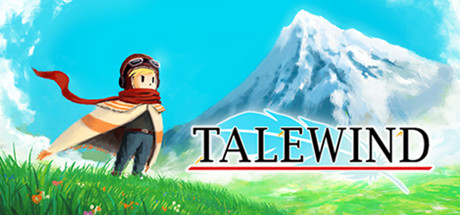
Talewind, developed and published by WindLimit Studios, is a beautifully crafted 2D platformer that merges old-school challenge with a unique elemental twist built around the power of wind. The game opens in a peaceful little village resting at the foot of a towering mountain, a place once blessed by endless gusts of air that kept life flowing. When those winds begin to falter, the tranquil world faces decline, and a young boy sets off on a journey to climb the mountain and restore balance. What immediately stands out is the game’s aesthetic—a hand-painted presentation full of color and life, with softly drawn environments that evoke the serenity of a watercolor painting. Its visual tone gives the impression of a gentle, breezy adventure, but underneath that calm exterior lies a tough, precision-based platformer that demands timing, patience, and persistence.
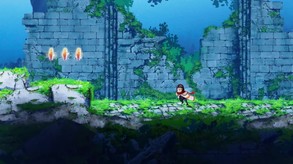
The game’s story is minimalist by design, functioning primarily as a background motive rather than a central narrative drive. It does not linger on dialogue or exposition, instead letting the landscapes and small environmental details imply a deeper mythology. Ancient monuments, scattered ruins, and fading gusts of air suggest a world slowly losing its spirit. The premise—an ordinary boy ascending a mountain to uncover the mystery of the dying wind—feels simple but meaningful, a kind of mythic journey told through the rhythm of platforming rather than through lengthy storytelling. The sparse approach allows the player’s imagination to fill in the blanks, making the experience less about plot and more about the atmosphere and the sensation of movement.
Gameplay is where Talewind defines its identity. The entire adventure revolves around using wind currents to move fluidly through the air, glide over obstacles, and control your momentum. Each level introduces new ways to manipulate or depend on the wind, forcing the player to adapt constantly. You can catch drafts to soar upward, drift across wide gaps, or ride strong gusts to reach hidden paths. This dynamic system transforms the typical side-scrolling experience into something more graceful and expressive. Instead of just jumping from platform to platform, you are invited to float and flow through the world, using the environment itself as both a challenge and a companion. The design encourages mastery through trial and error, rewarding precise control and sharp observation of wind behavior.
However, the charm of Talewind’s movement system is also where its greatest difficulty lies. The game embraces a punishing one-hit-death mechanic, meaning even the smallest mistake sends you back to the beginning of a section or sometimes the entire level. Early stages feel fair and forgiving enough to let players adjust to the mechanics, but the difficulty ramps up quickly as levels grow longer and more complex. The challenge itself is not unreasonable, but the combination of long stages and instant death can be exhausting when progress is repeatedly lost. Some jumps demand near-perfect timing, and certain wind currents feel less predictable than they should, leading to moments of frustration rather than satisfaction. The game walks a thin line between rewarding precision and testing patience, and not all players will appreciate its relentless demand for perfection.
From a design perspective, the world of Talewind is rich with personality despite its simplicity. Each area feels distinct, from lush forest canopies to dizzying sky temples, and the art direction does an impressive job of maintaining coherence and charm throughout. The soundtrack reinforces this sense of wonder with gentle melodies and airy tones that match the themes of flight and discovery. There are moments where the game feels almost meditative—floating across a wide chasm with nothing but the sound of wind beneath you, watching the horizon shift into soft hues of gold and blue. Yet just as often, that peace gives way to sharp tension as enemies and obstacles threaten to send you plummeting back to the start. The contrast between serenity and struggle defines much of Talewind’s experience.
While the game’s visuals and atmosphere are memorable, its mechanical polish is not always consistent. Jumping and gliding sometimes feel slightly rigid, lacking the fluid responsiveness of the best platformers. The collision detection can be unforgiving, and the checkpoints are spaced just far enough apart to make repeated retries feel grueling. Still, it’s clear that the developers aimed for a deliberate challenge—one that evokes the spirit of classic platformers from the 8-bit and 16-bit eras. Players who thrive on precision and repetition will find satisfaction in mastering each stage, while others may find the game’s harsh structure discouraging. The lack of adjustable difficulty options further cements its identity as a game made for those who embrace skill-based design rather than accessibility.
In the end, Talewind stands as a testament to the passion and artistry of WindLimit Studios. It may not have the refined smoothness of larger-budget platformers, but its personality, artistic vision, and creative use of wind mechanics make it stand out in a crowded genre. It’s a game that rewards perseverance, asking players to find rhythm and patience within its gust-driven challenges. For those who appreciate handcrafted visuals, atmospheric world-building, and the satisfaction of conquering difficult platforming sequences, Talewind offers a memorable journey through a world caught between serenity and struggle. It’s an experience that floats between beauty and brutality—graceful in concept, demanding in execution, and carried throughout by the ever-present breath of the wind.
Rating: 6/10