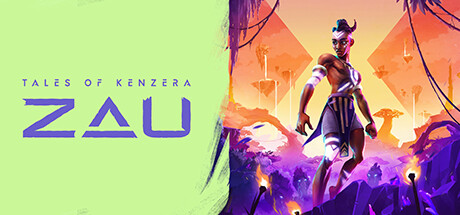
Wield the dance of the shaman. Reclaim your father’s spirit. Brave the beautiful and treacherous land of Kenzera with the God of Death in Tales of Kenzera™: ZAU, a metroidvania-style adventure crafted by Surgent Studios.
Modeled estimate, not a reported figure. How we estimate →
About
Genres
Sums Steam only; PlayStation, Xbox, Epic, Nintendo publish no volume signal, so the true total is higher by an unknown amount.
| Store | Price | Audience | Score | Chart | Est. revenue |
|---|---|---|---|---|---|
SteamYou are here | $19.99 | 986reviews | 83% | — | $452.8K |
| $19.99 | 7.1Kratings | 73% | — | not modelled | |
Engagement
Reviews
Themes across 57 recent reviews and how positive each mention is. A keyword signal, not full sentiment analysis.
Reviews
Metroidvania tarzı oyunları pek sevmiyorum, en azından kendime söylediğim yalan bu. Sürekli olarak geriye dönüşler, yavaş keşifler ve kilit açma süreçleri bla bla. Tales of Kenzera: Zau, bir babanın ölümü ve oğullarına bırakılan bir hediye ile başlıyor. Zuberi, babasının kaybıyla başa çıkmaya çalışırken, babasının ölümünden sonraki günlerde ona bıraktığı bir kitabı alıyor. Hikayemiz bu sayfaların içinde gizli. Amandla halkının şamanı Zau, Ölüm Tanrısı Kalunga'dan babasının ruhunu geri vermesini rica ediyor; karşılığında Zau, Kalunga'yı reddeden 3 büyük ruhu ölüm diyarına götürecek. Bu yolculukta ona yardımcı olması için Zau'ya iki maske veriliyor. Menzilli saldırılara ve dondurma etkisine odaklanan Ay Maskesi ve yakın menzilli kombolara odaklanan Güneş Maskesi. Oyun, savaş sırasında gerektiğinde aralarında geçiş yapmanıza olanak tanıyor. İkili karşıtlık. Ne yazık ki, bu ikilik teması hikaye ve oynanışa da yansıyor. Tales of Kenzera: Zau'da, hikaye gibi daha önemli anlara odaklanıldığı için ihmal edilmiş gibi görünen veya öncelik listesinde aşağılara düşmüş ele alınmamış gibi hissettiren oynanış yönleri var. En önemlisi, Harita. harita birçok şeyi açıkta bırakıyor. Teknik olarak bakarsak, evet, bir harita A noktasından B noktasına gitmenizi sağlıyor, hedefinizi ve diğer işaretleri gösteriyor. Ancak bir metroidvania oyununda aradığınız ekstra özellikleri eksik. Haritaya işaret veya yol noktası yerleştiremiyorsunuz ve bir alanı keşfetmek, istediğinizde daha fazla harita alanını ortaya çıkarıyor, bu da nerede olduğunuzu ve yeni bir şaman gücü alana kadar kilitli kaldığınız yeri ayırt etmeyi zorlaştırıyor. Harita düzeni bazı yerlerde biraz fazla sadeleştirilmiş olsa da, çoğu zaman yollar ya kendi etrafında dönüyor ya da iki yöne ayrılıyor, biri doğru yol, diğeri ise bonus yol. Etrafta gizlenmiş odalar var ama bir metroidvania oyununda aradığınız derinlik ve keşif duygusu burada istediğiniz kadar güçlü değil. Oynanış mekaniklerindeki çeşitliliğe gelecek olursak; Savaş sistemi, size uygun bir oyun tarzı seçmenize ve bunu geliştirmenize olanak tanıyor. Bu, ağırlıklı olarak tek bir maskeye odaklanmak veya her ikisinin tarzını bir araya getirmek olabilir. Dünyada bulunan tılsımlar, bir metroidvania oyununda beklediğiniz gibi işliyor. Hasarınızda veya ruh toplamanızda küçük değişiklikler sağlayan çeşitli yuvalara takabileceğiniz eşyalar. Şaman Denemelerini tamamlayarak daha fazla tılsım yuvası açabilir ve ruh çubuğunuzu artırarak daha fazla iyileşme fırsatı veya süper yeteneklerinizi kullanma olanağı elde edebilirsiniz. Ayrıca iki maske için oldukça basit yükseltme ağaçları ve bir metroidvania oyunundan beklendiği gibi, ilerledikçe kilidini açacağınız ve daha önce kilitli olan dünya alanlarına erişmenizi sağlayan ek güçler de mevcut. Tüm bunlar, dünyaya uygun şekilde tasarlanmış, keyifli bir savaş sistemi oluşturuyor. Harita dışında karşılaştığım tek sorun, neyse ki sınırlı sayıda olan zorlu görevlerle ilgiliydi. Oyun boyunca birkaç noktada canınızı kurtarmak için tekdüze kaçmanız gerekecek. Başarısızlık sizi görevin başına geri döndürüyor, bu tamamen ya hep ya hiç tarzı bir durum. Neyse ki, belirttiğim gibi sınırlı sayıdalar ve sadece birkaç tane var. Genel bağlamda hikaye ve oynanış iyiye yakın dursa da oyun beni pek içine çekemedi.
Media

Related
Related
Price dynamics, follower growth, revenue and sales trajectories with interactive tooltips
This and every other Pro feature is free until October 20, 2026. A free account is all it takes.
Stats
All-time low is the lowest price we've recorded for this game since we started tracking it.
Languages: English*, French, Italian, German, Spanish - Spain, Japanese, Simplified Chinese, Spanish - Latin America, Portuguese - Brazil, Swahili**languages with full audio support
| $19.99 |
| 1.3Kratings |
| 72% |
| — |
| not modelled |
| $19.99 | — | — | — | not modelled |
| $19.99 | — | — | — | not modelled |
Matched by title — a reused name can pair the wrong games. * is a critic aggregate. Prices and positions are each store's United States storefront; Epic charts worldwide. Audience and Score too, except Steam's, which is worldwide.
Hours played at review time, across 57 reviews with recorded playtime.
positive critical· bar length = how often the theme comes up
This is a very good game, and I really appreciate the soul that went into the voice acting in the Kiswahili language. I can't say how authentic the cultural references might be, but it was so intriguing that I played the whole game in the non-English mode to try to absorb as much as I could. I bought this game prior to 2025. Unfortunately, in the time since, EA has been bought out by nefarious actors in the real world (Saudi murderers and American fraudsters), I can't recommend that anyone buy this nor any other EA product.
[h1]Tales of Kenzera: ZAU[/h1] [i]ZAU Long, Farewel[/i] [b]Tales of Kenzera: ZAU[/b], the debut title from Surgent Studios, arrives carrying an emotional weight larger than itself, a game born not from market trends or genre opportunism, but from grief. The game nails that sincerity almost immediately. You can feel it's a deeply personal story to the creator. And yet sincerity, admirable as it often is, has never been enough to guarantee greatness. The story follows Zau, a young shaman mourning the death of his father, who strikes a bargain with Kalunga, the God of Death to recover the spirits of three powerful beings, and perhaps then his father may be returned to him. It is a tale rooted in Bantu mythology, unusual and refreshing within a medium that too often cannibalizes the same fantasy tropes. Death, loss, acceptance , these are the themes, handled with an earnestness. So here I find myself back in the world of the Metroidvania, a neighborhood populated by towering modern landmarks like [b]Hollow Knight[/b], [b]Ori and the Will of the Wisps[/b], and more recently [b]Prince of Persia: The Lost Crown[/b] (which kickstarted my dive back into the genre) and recently with my play of the brilliant [b]Blasphemous II[/b]. This is unfortunate for [b]Tales of Kenzera: ZAU[/b], because comparison reveals how much of its design vocabulary has been borrowed without fully understanding why those predecessors worked so well. What [b]Tales of Kenzera: ZAU[/b] is attempting is admirable, to fuse a more deeply personal storytelling with fast-paced action-platforming, using the structure of a Metroidvania to mirror the emotional process of grief itself. In theory, it is an elegant idea. In practice, the metaphor is stronger than the mechanics supporting it. Movement is smooth and energetic. Zau switches between Sun and Moon masks, each dictating combat style and traversal abilities. The system creates a rhythm that initially feels clever, forcing players to adapt between ranged and melee combat while navigating environmental hazards. But as the game unfolds, repetition sets in. Enemy encounters begin to feel algorithmic, challenge rooms become predictable, and the act of switching masks gradually transforms from strategic decision-making into simple routine. The greatest disappointment lies in the world design itself. A Metroidvania lives and dies by discovery. The joy is meant to come from curiosity rewarded, the inaccessible ledge you remember, the secret passage newly opened after acquiring a long-awaited ability, the feeling that the map itself is conspiring with you. Here, exploration often feels startlingly linear. Corridors lead where they are expected to lead. Secrets feel sparse. Backtracking, traditionally the heartbeat of the genre, rarely generates excitement. You are not uncovering mysteries so much as completing obligations. And yet it is difficult to dismiss the craftsmanship outright. Visually, [b]Tales of Kenzera: ZAU[/b] is often stunning. Its use of color is vibrant but I did find that sometimes when things get chaotic, I would lose sight of my character not helped by the fact that when wearing the sun mask your Zau exudes a yellow aura that blends him in with the enemies making it difficult to pick him out of the pack. The environments evoke a rich Afrofuturist identity rarely seen in big-budget or independent games alike and I found that quite pleasing to the eye. The performance generally stable, and the presentation definitely has confidence. Voice acting, too, deserves praise. There is conviction behind every line, and the emotional sincerity of the writing often transcends the limitations of the game surrounding it. As a gamer I always like my reviews to pose the question of whether the game is worth the price of admission, and more importantly, the demand on your time? Yes, but with caveats. At roughly eight to ten hours, priced around twenty dollars, [b]Tales of Kenzera: ZAU[/b] occupies an awkward middle ground. It is not expensive enough to feel exploitative, but neither is it substantial enough to feel essential. The game asks for a modest financial investment, yes, but more importantly it asks for your time, and time remains the more precious currency. The problem is not that the game is bad. It isn’t. It is competent, occasionally beautiful, intermittently moving. But competence is a dangerous thing in a genre currently overflowing with excellence. I kept thinking while playing that [b]Tales of Kenzera: ZAU[/b] is like listening to a gifted storyteller reading from a remarkable book while standing on an unstable stage. The words resonate. The emotion lands. But the structure beneath them wobbles just enough to keep pulling your attention away. I don't regret experiencing it though. It is, however, a game I suspect I will remember more for what it wanted to say than for how it played. And sometimes, unfortunately, good intentions are only half the journey. [h1]One word or phrase to sum up the experience[/h1] [i]A gorgeous near miss[/i] [h1]Performance/Bug related incidents[/h1] [i]None the game ran flawlessly.[/i] [h1]Similar to games[/h1] [i][b]Blasphemous II[/b], [b]Hollow Knight[/b], [b]Ori and the Blind Forest[/b][/i] [u][b]Rating[/b][/u] ★★★★★★☆☆☆☆ https://steamcommunity.com/sharedfiles/filedetails/?id=869454819
I wouldn't recommend for metroidvania fans. Controls feel weird. Basic movement set is too simple. World isn't very refined to the platforming.
Apart from the nice voice acting and decent visuals, the overall experience was very disappointing.
En [i]Tales of Kenzera: ZAU[/i] nos ponemos en la piel de Zuberi, un chico que acaba de perder a su padre y que, incapaz de superarlo, se refugia en un libro que este comenzó a escribir antes de morir. Este libro nos lleva a Kenzera, una tierra de magia y fantasía inspirada en los mitos y leyendas africanos. Allí nos ponemos en la piel de Zau, un joven chamán que, al igual que Zuberi, acaba de perder a su padre. Sin embargo, en lugar de aceptarlo, decide llegar a un acuerdo con Kalunga, el dios de la muerte. El punto fuerte del juego es el [b]mensaje que nos quiere transmitir sobre la pérdida y el duelo, y en todas las dificultades y emociones que tenemos que atravesar para superarlo[/b]. A lo largo de la aventura, Kalunga va dejando a Zau [b]pequeñas lecciones sobre la vida y la muerte[/b] que, aunque puedan parecer sencillas, consiguen que la historia tenga más peso del que puede aparentar al principio. Jugablemente es un [i]metroidvania[/i] sencillo y tradicional, donde la parte más interesante la encontramos en el combate. Zau puede alternar entre la máscara del Sol (ataques cuerpo a cuerpo y habilidades de fuego) y la máscara de la Luna (ataques a distancia y habilidades de hielo). Alternar entre ambas durante los combates hace que estos sean [b]ágiles y frenéticos[/b], especialmente cuando tienes que cambiar rápidamente de una máscara a otra para adaptarte a los enemigos. Sin embargo, aquí es donde empiezan a aparecer algunos de los [b]problemas[/b] que le veo al juego. Hay [b]poca variedad de enemigos[/b] y el combate se hace [b]muy repetitivo[/b], sobre todo porque hay varias secciones donde no puedes avanzar sin derrotar a todos los enemigos de la zona y esto consiste básicamente en matar a los mismos enemigos, en las mismas zonas, recolocados de la misma forma. Todo el juego. También me ha sacado un poco de la experiencia la forma en la que están planteadas algunas conversaciones, ya que estás corriendo o saltando y de repente el personaje se frena en seco para mantener la conversación. Obviamente quieren contar la historia y los diálogos son importantes, pero el problema es que [b]interrumpen el ritmo de la partida[/b]. La [b]pega principal[/b] que le veo es el diseño de niveles. Al ser un [i]metroidvania[/i] esperaba otro ritmo, que la partida fluyera entre las plataformas, los combates, la exploración... Sin embargo, el diseño es bastante [b]sencillo y lineal[/b]. Apenas hay desafíos o estímulos. Parece que buscan que nadie se frustre y que todo el mundo pueda disfrutar de la historia. El problema es que, para alguien que busca precisamente la exploración, el desafío y esa sensación de descubrimiento que caracteriza al género, puede llegar a aburrir. El mapa tampoco ayuda demasiado. No se pueden poner marcadores y es difícil saber dónde hemos estado y dónde no, ya que el mapa revela toda la zona cuando la visitas por primera vez. En el [b]apartado visual[/b], en cambio, me parece un juego [b]muy llamativo[/b]. Los escenarios están llenos de detalles y utilizan muy bien los fondos para generar una sensación de profundidad. Es un juego muy [b]colorido y bonito[/b], y consigue transmitir bastante bien esa mezcla entre [b]fantasía y mitología africana[/b]. La [b]banda sonora[/b] es épica o emotiva cuando tiene que serlo, mezclando coros y ritmos africanos que encajan muy bien con la ambientación. Además, los [b]efectos ambientales[/b] hacen que sea más fácil sumergirse en este mundo. [h1]Conclusión[/h1] Si eres un gran aficionado a los [i]metroidvania[/i], como yo, seguramente [i]Tales of Kenzera: ZAU[/i] te choque por lo ya comentado. Es un juego que tiene una estructura de [i]metroidvania[/i], pero que apuesta por una experiencia mucho más sencilla, dejando de lado la exploración y el desafío que se busca en este género. Aún así, creo que es una [b]propuesta interesante[/b]. Su narrativa sobre el duelo, la pérdida y todas las emociones que aparecen cuando perdemos a alguien que queremos funciona bastante bien, y la ambientación resalta la cultura y la mitología africana. Además, audiovisualmente está muy bien conseguido, con unos escenarios preciosos y una banda sonora que acompaña perfectamente cada momento. Si buscas lo que es un [b][i]metroidvania[/i][/b] probablemente se te quede corto, así que únicamente lo recomiendo por su historia y por su ambientación ♡
Gameplay wise, it's a little too simple at times for a metroidvania. But the story and visuals are wonderful, and absolutely make it worth a playthrough
While the story and artstyle are certainly fresh, the gameplay can be painfully tedious - chipping away at your patience. The camera is VERY laggy at times and doesn't track the character nearly as well as it should. Other negative reviews about combat and progression capture perfectly the rather pointless levelling system. I wish they offered actual upgrades like being able to freeze enemies for longer than 1 second or slightly increased damage that scales with the enemies. If you want the story and style in an alternative African inspired history, this does hit the mark well. But otherwise, prepare to get bored quickly and find the game often working against you. There's a literally a part of the game that allows you to skip sequences. When you have to build a skip button, you've done it wrong. Edit: having finished the game, I can conclude outright that the game design is at a complete disconnect with the story which is sweet and solemn. It's such a shame that the game insists that cheap mechanics are akin to 'challenge'. So disappointed at the potential this has and how broken it actually is and disappointed still that so many have commented on the gameplay being poor but give a good review because it's from an underdog studio.
I'm current 6hrs into this game and I am having a blast!!! 10/10 game!! update- So I just completed this game and I enjoyed it way more than I thought I would!! i definitely recommend picking this game up. Great story, and awesome causal gameplay!!
[h1]Mitologia, família, luto e superação[/h1] [b][u]Nota:[/u][/b] [i]7/10[/i] Tales of Kenzera: ZAU é um daqueles jogos que não se esforça em reinventar o gênero Metroidvania, mas demonstra sua identidade através de uma conexão emocional com o jogador. Da para sentir exatamente o que o desenvolvedor quis passar para quem está jogando sua obra. A história acompanha Zau, um jovem xamã que faz um acordo com o deus da morte para trazer seu pai de volta. Eu amei que o jogo explora muito sobre a mitologia bantu, algo que não me lembro de ter visto em um game até então. Visualmente, o jogo é LINDO. Os cenários abusam de cores vibrantes, e a direção artística inspirada em tradições africanas e a trilha sonora emocional ajudam a criar uma atmosfera memorável. Na minha opinião, o ponto mais alto é a dublagem dos personagens, especialmente as conversas entre Zau e Kalunga (Deus da morte), que carregam o peso emocional da narrativa. O sistema de combate é simples e funcional, baseado nas máscaras Sol e Lua que oferecem variedade entre closed combat e ranged combat, enquanto a movimentação se mantém rápida e fácil de se adaptar. E claro, conta com desafios para conquistas aquele upgrade para o personagem e suas habilidades no decorrer do jogo. Este é um jogo que entende exatamente a história que quer contar e utiliza seus sistemas para reforçar essa mensagem. Quando suas batalhas contra espíritos transformam emoções como medo, raiva e dor em desafios jogáveis, a obra alcança momentos genuinamente especiais. Posso dizer com tranquilidade que esta é uma experiência curta, emocional, e uma excelente opção para quem busca um metroidvania pouco focado em exploração complexa, mas interessado em entregar uma experiência simples, funcional, com uma história emocionante.
Players by region
Where this game's players are, estimated from review languages.
Players also reviewed
The games this title's players most often review too — audience affinity.
Related
| Game | Estimated lifetime revenue | Reviews | Review score | Price |
|---|---|---|---|---|
| $43.8K | 136 | 60% | $14.99 | |
| $34.1K | 180 | 79% | $12.99 | |
| $7.9K | 23 | 70% | $13.99 | |
| $364.8K | 1.3K | 91% | $17.99 | |
| $236.5K | 495 | 90% | $24.99 | |
| $111.8K | 292 | 80% | $15.99 |
Related
| Game | Estimated lifetime revenue | Reviews | Review score | Price |
|---|---|---|---|---|
| $452.8K | 868 | 73% | $24.99 | |
| $452.8K | 4.3K | 87% | $6.69 | |
| $452.9K | 1.7K | 94% | $9.00 | |
| $452.9K | 2.2K | 71% | $14.99 | |
| $452.9K | 562 | 64% | $19.99 | |
| $452.9K | 1.1K | 87% | $19.99 |