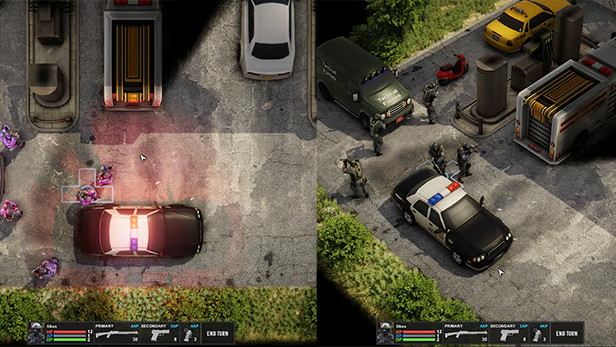
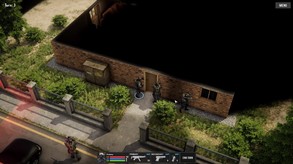
Tactical Combat Department is a tactical turn-based strategy game inspired by Swat games. You command a special intervention squad that intervenes in various situations and environments.
Modeled estimate, not a reported figure. How we estimate →
Media

About

Genres
Stats
All-time low is the lowest price we've recorded for this game since we started tracking it.
Languages: English**languages with full audio support
Engagement
Hours played at review time, across 40 reviews with recorded playtime.
Reviews
I loved this game! I will admit, it would probably be beneficial to have a little bit of a polish, but it looks good! Managed to get perfect runs on all eleven levels: https://www.youtube.com/playlist?list=PLgcAAYytZPanvoO1MnUSeIcp-6qk7-xk9
Broke
The game is bad, really bad!
Vždy jsem měl slabost pro tahové taktické hry a námět této je skutečně dobrý. Bohužel má hra dost chyb a umělá inteligence je skutečně slabá. Celkově hra působí jako takové "proof of concept" demo, které by si ale zasloužilo promakanější pokračování. Ve slevě můžu určitě doporučit všem fandům tahových taktických akcí.
This is not a hidden gem. This is abandoned alpha code.
A nice little tactical game :)
Tactical Combat Department, developed by LukasH and published by Render System, positions itself as a grounded, turn-based tactical experience that leans heavily into careful planning and controlled execution rather than spectacle. It clearly draws from the DNA of classic law-enforcement strategy games, where success depends less on firepower and more on discipline, awareness, and decision-making under uncertainty. From the outset, the game establishes a slower, more deliberate rhythm, asking players to think several steps ahead before committing to any action. The structure revolves around commanding a small tactical unit tasked with neutralizing threats and securing environments room by room. Each move is governed by an action point system, forcing players to weigh every decision—whether to advance, hold position, breach an entry point, or prepare for a potential ambush. The presence of fog of war adds a constant layer of tension, as visibility is limited to what each unit can realistically perceive. This creates a sense of vulnerability that defines much of the experience; even routine movements carry risk, and the unknown becomes a persistent adversary. One of the more compelling aspects of the game is its attempt to simulate behavior rather than simply script encounters. Suspects are not static targets but reactive entities that respond to sound, proximity, and pressure. They may surrender when confronted or become more aggressive if the situation escalates, which encourages players to approach each encounter with restraint rather than brute force. The availability of non-lethal options—such as flashbangs or other incapacitating tools—reinforces this philosophy, giving players alternatives that align with the game’s law-enforcement theme. When these systems align, the result can be surprisingly immersive, capturing the tension of controlled, high-stakes operations. That said, the game’s ambition often exceeds its execution. While the core mechanics are conceptually sound, they don’t always evolve into deeper layers of strategy. Missions tend to follow similar patterns, and over time the sense of discovery begins to fade as players recognize the limits of the game’s systems. The lack of broader tactical variety—such as more complex objectives or evolving mission conditions—can make extended play sessions feel repetitive, even for those who enjoy the methodical pacing. Presentation is another area where the game shows its indie roots. The visuals are serviceable but minimal, prioritizing clarity over detail, and the interface can feel unintuitive at times. Navigating menus, issuing commands, or interpreting certain feedback from the game isn’t always as smooth as it should be, which can interrupt the flow of otherwise tense scenarios. These friction points become more noticeable the longer you play, especially in a genre where precision and clarity are essential. Technical roughness also plays a role in shaping the overall experience. Occasional inconsistencies in AI behavior, minor bugs, and awkward interactions can pull players out of the moment. While none of these issues completely derail the game, they collectively contribute to a sense that the project hasn’t been fully refined. It feels less like a finished, polished product and more like a solid foundation that could benefit from further iteration and expansion. Even with its shortcomings, Tactical Combat Department manages to carve out a niche appeal. There is a genuine sense of tension in moving cautiously through confined spaces, anticipating threats that may or may not be there. The unpredictability introduced by randomized elements helps maintain some replay value, ensuring that missions don’t become entirely predictable. For players who enjoy slow, thoughtful gameplay and are willing to accept a degree of roughness, the game offers moments that capture the essence of tactical planning. Ultimately, Tactical Combat Department is a game defined by its intentions as much as its limitations. It demonstrates a clear understanding of what makes tactical strategy engaging—uncertainty, consequence, and control—but struggles to fully deliver on that vision due to limited depth and polish. It stands as an interesting entry in the genre, one that hints at greater potential but doesn’t quite reach it. Rating: 6/10
Recomendo: Não Nota: 1/10 História: 0/10 Zerou: Sim. Dificuldade: Padrão (Não tem opção de dificuldade) Jogaria de novo: Não. Feedback: Positivo: É um jogo tático. É um jogo bem simples e é isso. Negativo: O jogo não tem nenhuma interação, zero de história, só um textinho da fase... realmente não gostei, os equipamentos não fazem a menor diferença, não da para dar upgrade no squad, não tem nenhuma diferença entre os membros... poderia ter bastante conteúdo, mas pecou em tudo!
meh
In my opinion, this game is an incredibly stale and boring experience. Everything feels so lifeless and stiff. You cannot crouch or take cover effectively. You just stand out in the open and bark commands or shoot at enemies who are always standing around hidden in the shadows until you are right up on them. It is also unclear how to get a handcuff icon to appear or how to cancel a command without accidentally shooting a civilian. If you are looking for a cool isometric tactical game with turn-based combat, I would seriously skip this one and keep searching. The reviews are mixed for a reason.
Related
Related
Trends
Modeled estimate over time, reconstructed from Steam's monthly review histogram.
Momentum
Pace estimated from the game's recent review growth (our daily snapshots) at its own sales-per-review ratio — a momentum signal, not booked sales.
Audience
Estimated from the language of this game's reviews — a proxy for where players are, not official Steam demographics.
Related
| Sentimental Trickster: Yaoi BL Gay Visual Novel | $16.2K | 77 | 95% | $14.99 |
| Idle Reincarnator | $16.2K | 101 | 68% | $4.99 |
| Froggy's Battle | $16.2K | 465 | 94% | $1.99 |
| The Hero of Kendrickstone | $16.2K | 107 | 78% | $5.99 |
| ARCADE GAME SERIES: Ms. PAC-MAN | $16.2K | 381 | 90% | $1.99 |
| KAOS SurVival | $16.2K | 144 | 62% | $3.99 |