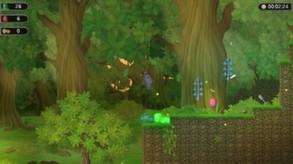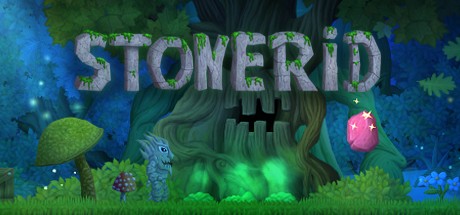
Stonerid is a challenging 2D platformer, which the most important feature are two parallel, different worlds. Over 30 different levels to complete, unconventional game style and lots of dangerous traps and monsters make it extremely difficult to rise to the challenge.
Modeled estimate, not a reported figure. How we estimate →
Media

About
Stats
All-time low is the lowest price we've recorded for this game since we started tracking it.
Languages: English**languages with full audio support
Engagement
Hours played at review time, across 40 reviews with recorded playtime.
Reviews
Stonerid is yet another of literally thousands of 2D retro platformers infesting Steam and lowering the average quality of all video games everywhere, although this certainly isn't the worst, it's also by no means pushing any envelopes or raising any bars. The game features the often used two-dimensions gimmick where you can switch between two universes. You have different characteristics in each dimension and you must use skills in both dimensions to progress through each level. From a technical perspective, the game doesn't meet basic minimum requirements that most PC gamers expect as standard. While there are options to change the resolution for the game, all this does is scale up the simplistic 2D art assets used to make the game, which makes little or no difference to the graphics quality. Without any other substantial graphics tweaks, it's not possible for gamers to improve the lacklustre 2D visuals. The controls can't be customised, which will be an annoyance for many, but it can also render the game unplayable for differently-abled gamers. While this is on PC, it has all the hallmarks and deficiencies of a console game, from the clunkier than needed control scheme to the less than cutting edge graphics. There's 10's of thousands of PC games on Steam, and PC gamers deserve only the best. This might not appeal to many gamers due to the lack of PC-centric design. It's unclear why this game was never accepted on the video game console appliances it seems to have been designed for. These technical defects push this game below acceptable standards for any modern PC game. Stonerid didn't appeal much to the people who own a copy of the game, either. It has achievements, and they show us a very clear picture that the game didn't really capture any interest from gamers. The most commonly and easily attained achievement is for completing the tutorial, and only around 17 percent of players bothered to get that far before uninstalling the game, less than half the players. Hardly a success story, gamers just weren't all that interested in the game. Stonerid has the pathetically optimistic price of around $5 USD, it's not worth it given the defects and shortcomings with the product, especially considering the sheer number of completely free, much higher quality games on Steam.
💋
2d platform kontroller kötü oynanış kısmı zor hikaye satmıyor
Bu oyun tam bir kart kasma oyunudur! Ülkemiz şartlarında oyuna artık para yatırmak lüks sayılıyor. bu yüzden oyuncular sanal ticaretlere atıldı.Bunlardan biride steam üzerinde kart kasarak paranızı katlamak, ve ben incelemelerimde tamda buna göre olan oyunları bulunduruyorum eğer paranızı 2 veya 3 katına çıkartıp oyun sayınızın artmasını istiyorsanız profilimi ve öbür incelemelerimi takip edebilirsiniz Profilimden öbür incelemelerimede göz atabilirsiniz, incelememin üstlerde kalması için geri bildirim yapmayı unutmayınız
Przyjemna platformówka
ein 2D platformer spiel für zwischendurch. insgesamt gut. kann es empfehlen.
нет
is cute lil plataform game i enjoy it
Bu şekilde kart kasabileceğiniz oyunları arıyorsanız hesabımdaki incelemelere göz atabilirsiniz
Stonerid is a challenging indie platformer that builds its entire identity around precision movement, environmental manipulation, and relentless trial-and-error gameplay. At first glance, it resembles many side-scrolling platformers inspired by the indie boom of the early 2010s, but beneath its familiar structure lies a surprisingly creative mechanic centered around shifting between parallel dimensions. Developed by Enitvare, the game combines difficult platforming with puzzle-oriented level design, creating an experience that constantly forces players to think carefully about both movement and timing. While its brutal difficulty and repetitive deaths may not appeal to everyone, the game succeeds in delivering a rewarding challenge for players willing to embrace its demanding design. The story takes place around the mysterious Atronast Mountain, where a dangerous toxic corruption has begun spreading throughout the land. Players journey through hostile environments in search of answers while encountering strange creatures, environmental hazards, and remnants of a world slowly falling apart. The narrative itself remains fairly minimal, serving mostly as a backdrop for the gameplay rather than the central focus of the experience. However, the game’s environments and atmosphere communicate enough mystery to make the journey feel purposeful. Instead of relying on lengthy dialogue or cinematic storytelling, Stonerid lets the world itself establish the tone through visual design and environmental progression. The defining mechanic of the game revolves around switching between two separate dimensions that exist simultaneously within every level. With the press of a button, players can instantly shift between realities, completely altering the environment around them. Platforms may disappear or appear depending on the active dimension, enemies may occupy different positions, and hazards can transform into pathways or deadly traps. This mechanic turns even basic movement into a constant strategic process where players must observe both realities while navigating dangerous terrain. It is a genuinely clever concept that gives the game a distinct personality compared to more conventional platformers. The level design makes excellent use of this dimensional system. Every stage introduces new situations that challenge players to combine platforming precision with environmental awareness. Some sections require mid-air world shifting during jumps, while others force players to rapidly react to hazards existing differently across both dimensions. The game rarely allows players to become too comfortable because it continuously introduces new obstacle combinations and increasingly complex timing challenges. Later levels become especially intense, requiring near-perfect execution while managing enemies, moving hazards, and dimensional transitions simultaneously. Difficulty is unquestionably one of the game’s core identities. Stonerid is intentionally unforgiving, demanding patience, quick reflexes, and a willingness to repeat sections until movement patterns and hazards become familiar. Spikes, traps, collapsing platforms, and aggressive enemies punish even small mistakes immediately, creating a constant sense of pressure throughout the experience. The game clearly targets players who enjoy mastering difficult platformers through repetition and precision. Those looking for a more relaxed adventure will likely find the constant deaths and demanding timing frustrating rather than satisfying. Despite its punishing nature, the game generally remains fair because failures usually result from player mistakes rather than unpredictable mechanics. Success depends heavily on learning how the two worlds interact and understanding the exact timing required for difficult sections. Overcoming particularly brutal sequences becomes rewarding precisely because the game never hands out victories easily. Every completed stage feels earned through persistence and careful execution rather than luck. Visually, Stonerid delivers a surprisingly atmospheric experience for a smaller indie title. The environments feature a colorful yet often eerie art style that gives each region its own distinct identity. Forests, frozen landscapes, underground caverns, and corrupted industrial areas all feel visually different while maintaining the game’s mysterious tone. The dual-world mechanic also allows for interesting contrasts between dimensions, with one world often appearing darker or more dangerous than the other. Although the graphics are relatively simple compared to larger platformers, the visual design remains memorable because of its strong environmental variety and moody atmosphere. The soundtrack complements the gameplay extremely well. Ambient melodies and atmospheric tracks reinforce the mysterious tone of the world while also enhancing the tension during difficult platforming sequences. Some levels feature calmer music that emphasizes exploration, while others use more intense tracks to heighten the pressure during dangerous sections. Combined with the visual presentation, the music helps create a surprisingly immersive experience that elevates the game beyond its relatively simple structure. One of the more impressive aspects of Stonerid is the amount of content packed into the experience. The game features dozens of levels spread across multiple environments, along with additional challenge stages designed specifically for players seeking even greater difficulty. Hidden content and optional objectives encourage exploration and mastery, adding replay value for completionists willing to fully engage with the game’s mechanics. Considering the game’s indie scope, there is a respectable amount of content available for players who enjoy difficult platformers. However, the same qualities that make the game rewarding can also become exhausting. Certain sections rely heavily on memorization and repeated failure, which may frustrate players who dislike trial-and-error design. The extreme precision required in later levels occasionally makes the gameplay feel punishing rather than challenging, especially during longer sequences with limited room for mistakes. Some players may also find the pacing uneven because the game rarely provides long periods of relief between demanding platforming sections. Even with those issues, Stonerid remains memorable because of how committed it is to its mechanics and challenge. The game never compromises its identity in an attempt to appeal to a broader audience. Instead, it focuses entirely on delivering a demanding platforming experience built around experimentation, timing, and environmental manipulation. The dimensional shifting mechanic keeps the gameplay fresh throughout the adventure and provides enough originality to help the game stand apart from countless other indie platformers released during the same era. For players who enjoy precision platformers and difficult indie games that reward persistence, Stonerid offers a satisfying and creative challenge. Its combination of atmospheric world design, clever dimensional mechanics, and intense platforming creates an experience that feels rewarding for those willing to invest the patience required to master it. While the punishing difficulty and repetitive deaths may limit its appeal to a more niche audience, the game succeeds as a focused and inventive platformer that confidently embraces its challenging nature. Rating: 6/10
Related
Related
Trends
Modeled estimate over time, reconstructed from Steam's monthly review histogram.
Momentum
Pace estimated from the game's recent review growth (our daily snapshots) at its own sales-per-review ratio — a momentum signal, not booked sales.
Audience
Estimated from the language of this game's reviews — a proxy for where players are, not official Steam demographics.
Related
| DEAD END | $3.7K | 59 | 83% | $1.99 |
| 100 hidden gnomes | $3.7K | 292 | 75% | $0.99 |
| Play with NEKO | $3.7K | 66 | 62% | $1.99 |
| Not an Aim Trainer | $3.7K | 59 | 93% | $2.99 |
| OctoFurry | $3.6K | 145 | 88% | $1.99 |
| Extraordinary Ball | $3.7K | 108 | 86% | $0.99 |