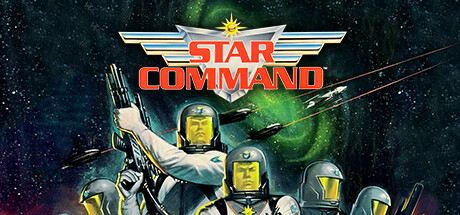
STAR COMMAND offers the thrill of the best sci-fi novels, and then some. In this epic multiple-character role-playing game, you don't just read about the adventure — you live it!
Modeled estimate, not a reported figure. How we estimate →
Media

About
Genres
Stats
All-time low is the lowest price we've recorded for this game since we started tracking it.
Languages: English
Reviews
OK. This game was my introduction to characterization in a computer game oh-so-many years ago. I played this game with caution, and tenacity, because I was invested in my squad. I named them after all my friends - I HAD to keep them alive! This game coming to Steam makes my heart swing. I'm right back into the thick of the fight, trying to keep my squad alive again. Now I have kids, and I made the mistake of putting my son in the game! HE WILL ** NOT ** DIE! NOT ON MY WATCH!!!! Look - It's an old game. It's a classic. It's a time-suck in the very best way possible. Buy this game.
CGA version of Traveler RPG. RNG heavy.
One of my favourite games as a kid. Named the crew after everyone in Aliens. Still doing that today. It's such a fun game. Worth the money. Give it a shot.
Star Command is one of those classic science-fiction RPGs that feels incredibly ambitious for its time, even if many of its ideas now appear rough around the edges. Originally released in 1988 by Strategic Simulations and Doug Wood, then later revived on Steam by SNEG, the game represents an era when developers were experimenting fearlessly with large-scale space adventures long before modern open-world RPG design became common. While it never reached the legendary status of bigger sci-fi classics, Star Command still stands out because of the sheer amount of systems and concepts packed into a single game. It combines crew management, tactical combat, exploration, ship operations, and role-playing progression into a surprisingly immersive experience that remains fascinating for retro gaming fans. The premise immediately captures the spirit of classic space opera. Players assume command of a crew operating under the authority of Star Command, an interstellar organization tasked with protecting civilization and carrying out dangerous assignments across the galaxy. Instead of focusing on one protagonist, the game places heavy emphasis on managing an entire crew, which gives the adventure a more strategic and simulation-focused identity. Missions involve everything from investigating planets and recovering resources to battling hostile ships and boarding enemy vessels. This structure creates the feeling of participating in a functioning galactic organization rather than simply moving through disconnected story missions. One of the game’s biggest strengths is its variety. Star Command constantly shifts between different gameplay systems, preventing the experience from feeling repetitive for long stretches. Planetary exploration introduces survival and discovery elements, while ship combat focuses more heavily on tactical positioning and resource management. Boarding enemy ships transitions the game into smaller-scale combat encounters where crew composition and preparation become important. The fact that the game attempts to combine all of these mechanics within a single science-fiction RPG is impressive even today. It feels like the developers wanted to create an interactive space adventure where players truly lived the role of a starship commander rather than merely piloting a ship from one battle to the next. Crew management plays a surprisingly important role throughout the game. Each crew member has unique skills and can improve over time through successful missions and training. Choosing how to organize and develop the crew adds depth because different situations require different specialties. Some crew members may excel during combat scenarios, while others are more valuable for technical operations or exploration missions. Watching the crew gradually become stronger creates a satisfying sense of progression that helps players become attached to their team over time. Planetary exploration remains one of the game’s most memorable aspects because it captures the excitement of venturing into unknown territory. Landing on alien worlds creates a genuine sense of unpredictability, as players never fully know what dangers or opportunities might appear. Some planets contain valuable discoveries, while others hide hostile threats capable of destroying an unprepared crew. Although the exploration mechanics are fairly basic by modern standards, the atmosphere still works because the game relies heavily on imagination. Much like many classic DOS-era RPGs, Star Command leaves enough visual and narrative space for players to mentally fill in the details themselves. The ship combat system also deserves recognition for balancing accessibility with tactical depth. Battles are not simply reflex-driven arcade encounters. Players must consider positioning, weapon management, crew safety, and resource conservation during conflicts. Enemy encounters can quickly become dangerous if approached recklessly, especially since damaged ships and injured crew members directly affect future missions. Boarding hostile ships adds another layer of strategy because combat shifts from large-scale space battles into close-quarters tactical encounters. Few science-fiction games from the late 1980s attempted this level of gameplay integration. Visually, Star Command is unmistakably a product of its era. The graphics are simplistic, interfaces are dense, and animations are extremely limited compared to modern standards. Yet there is still a certain charm to the presentation. The game successfully conveys the fantasy of commanding a starship despite technological limitations. Menus, planetary maps, and combat screens may look primitive now, but they still reflect a clear sense of ambition. Retro PC enthusiasts will likely appreciate the game’s old-school style, especially because it represents a period when developers prioritized depth and imagination over cinematic presentation. The sound design is similarly minimal but effective enough for the experience it aims to create. Music and sound effects help reinforce the atmosphere of deep-space exploration and military operations, even if the audio technology of the time restricted how dramatic the presentation could become. Much of the immersion instead comes from the pacing and structure of gameplay itself. Quiet moments of exploration mixed with sudden combat encounters create tension naturally, allowing the game’s systems to generate memorable situations without relying heavily on scripted storytelling. What makes Star Command especially interesting today is how experimental it feels. Modern games often streamline mechanics heavily in order to maintain accessibility, but this game embraces complexity and player-driven progression. It expects players to learn systems gradually, adapt to unpredictable situations, and manage resources carefully. That approach can feel intimidating at first, particularly for newcomers unfamiliar with retro PC gaming conventions, but it also creates a stronger sense of accomplishment once the mechanics begin to click. The game is not without flaws. Navigation can become cumbersome, menu management occasionally feels tedious, and some systems lack clear explanations. Certain gameplay loops may also become repetitive during longer sessions, particularly because the game’s pacing is slower than what modern audiences may expect. The interface clearly reflects late-1980s design philosophy, meaning players must invest patience before fully understanding everything the game offers. However, these flaws are easier to forgive because of the sheer ambition behind the project. The Steam rerelease by SNEG is valuable because it preserves an unusual and historically important science-fiction RPG that could easily have faded into obscurity. Strategic Simulations is often remembered for fantasy RPGs and wargames, but Star Command demonstrates how willing the company was to experiment with broader science-fiction concepts and hybrid gameplay systems. Revisiting the game today offers insight into a period when developers were still discovering how expansive computer role-playing games could become. Ultimately, Star Command succeeds because of its imagination and scope. The combination of crew management, exploration, tactical combat, and ship operations creates a science-fiction adventure that still feels unique decades after its release. Even when the mechanics show their age, the sense of commanding a crew across dangerous space missions remains compelling. For retro RPG fans and players interested in classic DOS-era experimentation, Star Command remains a rewarding hidden gem filled with creativity, ambition, and old-school charm. Rating: 8/10
SSi <3
This almost 40-year-old game is a gem, if you take the time to learn it, because without reading the manual, you can't even leave port. But if you have the patience, you will experience something unique.
such a throwback to 1990 for me. Just a solid old game...no frills.
Being that I don't have a nostalgic connection to this, I still think it's pretty okay. Nothing exceptional and obviously quite dated. But it's still an interesting game to explore if you're willing to give it an honest shot. If you're unsure about delving into it, maybe wait for a sale and get it bundled with other similar retro games.
Fond are the memories I have of playing this game on the Amiga in the early 90s and loving it. Never did finish it then, but found it to be quite fun (This time I'm playing it through). The classic appeal is definitely there in this faithful release. Space, the final frontier! Star Command is a futuristic RPG. Recruit cadets into Star Command, the last vestige of human life in the galaxy. Explore space, fight off enemy ships, make cargo runs, and complete missions as humanity's last hope! The game revolves around a group of 8 cadets that you recruit, customize, train, equip, and control on missions throughout the galaxy. Explore planets, both dead and living. Fight off pirates, insectoids, and killer robots. Buy and sell exotic cargo as you seek to increase your rank and buy better equipment to explore farther. Encounter friendly, neutral, or enemy ships. Be victorious... Or be destroyed. Things I like: I'm a big fan of SSI RPGs. They are older and take some time to play, but that means investing in the game as opposed to breezing through it in a day or two. I like the progression. Though slow at times, it makes you work for what you earn. I like the tactical aspects of the battles SSI is known for those, and they were prevalent in their other RPGs (TSR Gold Box, Buck Rogers, etc.) I know that's not for everyone, but there is something about the games that keep me playing them. Some notes to consider if you have never played the game before: 1. The game is dated. It's older, and certainly looks and sounds that way. It runs on EGA graphics and old PC speaker sound. For me, those things were never a problem. 2. The game tends to be clunky. There is a lot of menu navigation which takes time to go through, i.e., inspecting each person, buying equipment, training, arming your ship, etc. 3. The game is designed to be played through more than once. There are a total of 50 missions, and each time you play, you will only be assigned 17 of those missions. 4. Battles, both space and land, are turn-based and can take some time. Have patience if you choose to play. 5. Progression is slow. It will take time to get to where you need to be. Overall, this is a great blast to the past. As someone who grew up with these games, SSI was one of those names that you knew would give you lots of entertainment and play value. I reiterate, this type of game is may not appeal to everyone due to the time it takes to get into and the slowness of it. But if you grew up with SSI or want to experience the early years of RPG gaming (the game was released in 1988), this is a great title to play.
Yes.
Related
Related
Trends
Modeled estimate over time, reconstructed from Steam's monthly review histogram.
Momentum
Pace estimated from the game's recent review growth (our daily snapshots) at its own sales-per-review ratio — a momentum signal, not booked sales.
Related
| MMMmmm... Cake! | $836.9 | 60 | 73% | $1.99 |
| 101 Cats in Los Angeles | $839.5 | 58 | 91% | $0.99 |
| Finding Cats In Fallen Leaves Town | $839.5 | 58 | 97% | $0.99 |
| Miyuuri's Cozy Hours | $835.2 | 53 | 94% | $0.99 |
| Lichenvale | $840.1 | 57 | 79% | $0.79 |
| Miner Ultra Rag Smash | $834 | 50 | 74% | $0.99 |