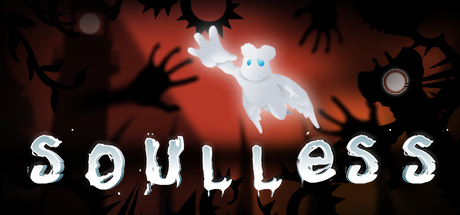
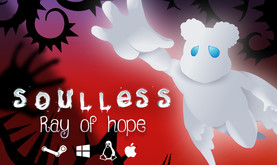
Soulless: Ray of Hope, developed by Frisky Fatal Games and published by Meridian4, is a hauntingly atmospheric 2D puzzle-platformer that weaves together melancholy storytelling, minimalist design, and expressive world-building into a short but memorable journey. It follows Elin, a young boy who awakens in a dark and desolate world where light is scarce and the boundaries between reality and dream seem to blur. Driven by the desire to rescue his lost friend, Elin traverses a realm filled with crumbling ruins, shadowy creatures, and mysterious remnants of a civilization long gone. Beneath its simple premise lies a tale about perseverance, guilt, and the search for redemption, all told with very little dialogue but through visuals, sound, and emotional tone. The game’s greatest strength lies in its ability to communicate a world and a mood through atmosphere rather than exposition.
Visually, Soulless: Ray of Hope is striking in its simplicity. It embraces a silhouette art style reminiscent of games like Limbo, but distinguishes itself with layered backgrounds, glowing accents, and delicate color gradients that infuse the bleakness with beauty. Every environment feels meticulously crafted, from forests of twisted trees to abandoned temples and forgotten cities, each radiating a quiet sadness that mirrors Elin’s journey. The interplay between shadow and light becomes a recurring visual motif, not only defining the aesthetic but also tying directly into the game’s themes of hope and despair. The smooth animations and particle effects lend the game an almost ethereal quality, where light flickers and fades like memories on the verge of being lost. The haunting soundtrack further elevates the experience, relying on ambient piano melodies and mournful tones that create an emotional backdrop to the lonely trek through the darkness.
The gameplay combines traditional platforming with puzzle-solving, though its approach is more deliberate and contemplative than action-oriented. Elin moves through the world with a blend of agility and fragility—he can run, jump, glide, and manipulate certain objects to progress. Many puzzles rely on environmental awareness, timing, and experimentation rather than complex logic. The glide mechanic, introduced early in the game, becomes a defining feature of traversal, adding a sense of grace and vulnerability as Elin soars briefly before gravity inevitably pulls him back toward the ground. At its best, the gameplay mirrors the story’s emotional core—moments of freedom punctuated by tension and fragility. There are also chase sequences and timed challenges that provide bursts of adrenaline, breaking up the otherwise quiet pacing.
However, Soulless is not without its rough edges. While the mechanics serve the story’s tone well, they can occasionally feel imprecise. Jumping between platforms or evading hazards sometimes lacks the responsiveness expected of modern platformers, leading to moments of frustration during chase scenes or precision jumps. A few puzzles lean more on trial and error than clever deduction, which can interrupt the narrative flow. Yet even with these flaws, the gameplay maintains a meditative rhythm. The occasional clunkiness never entirely disrupts the immersion, largely because the visual and emotional presentation remains so compelling.
The narrative unfolds with subtlety, told through imagery and brief, fragmented revelations. Elin’s journey to find his friend becomes more than a literal rescue mission—it evolves into a symbolic exploration of memory, loss, and inner darkness. The world around him reflects emotional turmoil, and the story’s progression mirrors his gradual confrontation with grief. There’s a dreamlike logic to the way levels are structured, as if each new environment represents another layer of Elin’s psyche. The storytelling culminates in a conclusion that leaves room for interpretation, with multiple possible endings depending on the player’s choices. While some may find the ending abrupt or ambiguous, it fits the game’s tone—a quiet reflection rather than a loud resolution.
In terms of pacing and structure, Soulless: Ray of Hope delivers a concise experience that can be completed in just a few hours. Rather than overstaying its welcome, it opts for emotional resonance over scale. Every stage feels handcrafted to serve the central theme rather than to pad out gameplay time. For players who enjoy narrative-driven indie games, the brevity may enhance the experience by keeping the story focused and impactful. On the other hand, those expecting deep replay value or complex mechanics may find the content limited. The game compensates for its short runtime with visual polish, emotional weight, and a cohesive artistic vision that lingers after the credits roll.
Despite its modest scope, Soulless succeeds in creating a complete, emotionally engaging experience. It doesn’t rely on complex dialogue or heavy exposition to tell its story; instead, it communicates through imagery, sound, and mood. The world feels alive with a quiet melancholy, and the player’s gradual progression through it becomes both a literal and metaphorical journey toward hope. It’s the kind of game that resonates most with players who appreciate subtle storytelling and atmospheric design, where meaning is found between the shadows rather than spelled out directly.
Soulless: Ray of Hope may not revolutionize the genre, but it refines its influences into something personal and affecting. It stands as a quiet testament to how art direction and mood can elevate simple mechanics into an emotionally cohesive experience. Its imperfections in control and pacing are outweighed by its sincerity and artistic ambition. For players who enjoy introspective platformers like Limbo or Ori and the Blind Forest—but prefer a more subdued and symbolic tone—Soulless offers a world worth getting lost in. It is a brief but beautifully melancholic odyssey through darkness and light, one that captures the fragile interplay between despair and hope with uncommon grace.
Rating: 7/10