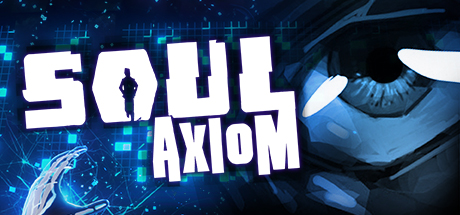
From the studio that brought you Master Reboot comes a first-person story-driven adventure puzzle game, set in the beautiful, haunting cyber-world of Elysia. Collect unique hand powers, discover multiple endings and choose your own destiny as you unravel the mystery of your digital afterlife.
Modeled estimate, not a reported figure. How we estimate →
About


Stats
All-time low is the lowest price we've recorded for this game since we started tracking it.
Languages: English**languages with full audio support
Engagement
Hours played at review time, across 40 reviews with recorded playtime.
Reviews
Themes across 40 recent reviews and how positive each mention is. A keyword signal, not full sentiment analysis.
positive critical· bar length = how often the theme comes up
Reviews
Soul Axiom, developed and published by Wales Interactive, is a surreal first-person puzzle adventure that explores the intersection between technology, memory, and the afterlife. Set within a digital realm known as Elysia, the game casts players as a lost soul drifting through fragmented landscapes of human consciousness. You awaken in an ethereal world of floating islands, glowing pathways, and flickering visions of lives once lived, with no memory of who you are or why you’re there. As you navigate this strange digital purgatory, you begin to uncover the secrets behind Elysia, a network designed to capture and preserve souls after death, and the ethical chaos that ensued when humanity tried to control immortality through data. Soul Axiom immediately distinguishes itself with its premise: a metaphysical mystery that blends science fiction and spiritual philosophy in a way that feels both eerie and thought-provoking. The game’s atmosphere is one of its strongest assets. Elysia is a world of contradictions—a place that feels both alive and artificial, serene yet unsettling. Each area you explore represents a reconstructed memory, from ruined cities and desolate laboratories to surreal dreamscapes and mythic temples. The variety of settings is impressive, and Wales Interactive uses its distinct art direction to create a sense of otherworldly fragmentation. The color palette shifts from cool blues and purples to harsh neon tones, reflecting the unstable nature of the environment and the memories it holds. The minimalist ambient soundtrack deepens this mood, layering synthetic tones with echoes of haunting melodies. The result is a dreamlike atmosphere that feels equal parts digital simulation and liminal afterlife, drawing the player into a space where memory and reality constantly bleed together. Gameplay in Soul Axiom centers around exploration and puzzle-solving, using a series of “hand powers” that serve as the main interactive mechanic. Throughout the journey, you acquire new abilities that allow you to manipulate the environment—phasing objects in and out of existence, freezing mechanisms in time, and reassembling broken structures. Each new power builds upon the last, and the puzzles evolve to incorporate combinations of these abilities. The progression system has a satisfying rhythm at first, as each new tool opens previously inaccessible areas and deepens the complexity of the challenges. However, the design sometimes struggles to maintain momentum. While some puzzles are cleverly constructed, others rely too heavily on repetitive mechanics or obvious environmental clues. There are moments of brilliance where you feel like you’re truly manipulating a living system of digital memories, but these are balanced by long stretches where the challenges feel formulaic or lack the spark of discovery that the game’s concept promises. The narrative structure of Soul Axiom is intentionally fragmented, encouraging players to piece together meaning through exploration rather than direct exposition. As you move through the different environments, you discover collectible artifacts known as PEMOs—digital remnants of memories and personal histories that hint at the lives of those whose souls have been uploaded into Elysia. These fragments slowly reveal a web of moral and emotional dilemmas surrounding the technology that created this world. The story touches on themes of identity, loss, corporate corruption, and the ethics of digital immortality, but much of it remains ambiguous. This nonlinear approach mirrors the instability of memory itself, but it can also be disorienting. Some players will appreciate the interpretive storytelling, while others may find the lack of clarity frustrating. The game offers multiple endings based on your discoveries, allowing for personal reflection on the moral choices you’ve encountered, but the emotional payoff doesn’t always match the intrigue that builds along the way. From a technical perspective, Soul Axiom shows both ambition and limitation. The game runs on Unity, and while it manages to produce some beautiful and haunting imagery, it also suffers from uneven performance and occasional glitches. Movement can feel slightly clunky, and collision detection is inconsistent in places, leading to moments of awkward platforming or misjudged jumps. Load times between levels are noticeable, and in some versions of the game, long segments may need to be replayed due to infrequent autosaves. Still, there’s a charm in how the developers push their tools to create a space that feels handcrafted and strange. The level architecture often reflects the themes of memory and decay—corridors looping into infinity, structures phasing in and out of visibility, or impossible architecture that forces you to rethink your orientation. These touches make exploration rewarding even when the mechanics falter. What ultimately defines Soul Axiom is its atmosphere and ideas rather than its precision or polish. The world-building is fascinating: a digital afterlife filled with echoes of human ambition, where the boundaries between life, memory, and code have collapsed. The game’s pacing can be uneven, alternating between moments of deep immersion and stretches of mechanical monotony, but its aesthetic and conceptual strengths remain consistent. It feels like a spiritual successor to the likes of Myst or Dear Esther, where the journey itself—the act of wandering through surreal spaces and interpreting fragments of story—is the true reward. Wales Interactive’s creative ambition is evident in every corner of Elysia, even if not all of it coalesces into a seamless experience. Soul Axiom is a flawed but captivating game, one that dares to ask big questions about consciousness, legacy, and what it means to exist beyond death. It doesn’t always have the pacing or refinement to match its thematic depth, and its puzzle design can be hit-or-miss, but its mood, concept, and sense of scale make it memorable. For players who enjoy introspective narratives and abstract worlds—those who can overlook rough edges in favor of atmosphere and imagination—Soul Axiom offers a haunting and contemplative experience. It may not reach the same heights of emotional clarity as the best narrative-driven adventures, but it lingers in the mind long after you’ve left Elysia behind, like a half-remembered dream stored somewhere between life and the digital beyond. Rating: 7/10
I have a special fondness for Master Reboot as it was one of those games that far surpassed my expectations. So I really don’t know why it has taken me so long to get round to playing its sequel. This game clearly builds on the foundations Master Reboot and as such I thoroughly enjoyed it. Overall it is a much more polished game than Master Reboot but that doesn’t always work in its favour It uses the same style of breadcrumb story telling. I won’t go into any detail as that defeats the point. I will say that I did enjoy the story and it does follow on from the first game. One thing I liked was how you get some of the story in each level and then have to revisit each level to get the full story later. It feel like one of the developers’ goals in this game was to improve the puzzles which I feel they have done well. The puzzles are a bit more intricate this time round but they are still satisfying and not too challenging. This game introduces some abilities so puzzles are solved by more than just clicking on things. The time travel level is particularly excellent. The general scale of the game has been increased. One of my few complaints about Master Reboot was how short it was. This is over 3 times as long for a first play through. The levels are much bigger too but unfortunately this leads to some of them feeling rather sparse and having to rely on maps find your way around. The graphics have been upgraded however in doing so it loses that stylised charm to the visuals. It has lost the creepy dark cyberpunk atmosphere. There are still some great dark and neon areas that work well but the more realistic environments don’t hold the same magic. The 2D cut-scenes have been upgraded to 3D with more extensive voice acting but since the graphics and acting are not the best I’m not sure they are an improvement. My biggest complaint about the game is the ability lag. When you release or switch an ability there is a noticeable lag before you can activate it again. This can make solving some of the puzzles frustrating when you’ve worked out what to do and you are just fighting against the controls. Don’t let the negatives put you off because the core of this game is the story and the puzzles both of which are great.
Nul à chier, c'est mon avis. Je l'ai fini, donc j'ai le droit de dire
Before us atypical representative of the genre "adventure platformers. Soul Axiom allows you to plunge into a fictional and mysterious universe in which you have to find a lot of answers to your questions. Experience all those fears that you depend on... It's all about making you stronger!!! Sometimes it will be too BORING! The game won many awards in 15-16 but is still playable today (which is surprising), but currently has a 5.7 rating on metacritic :\ I think it's an underrated platformer that can give something new to old-school players and new-game aficionados alike
For me, the game seemed quite interesting, considering that I do not like puzzles at all, there were not very many of them and they are not very easy and fast to pass. Special thanks for the graphics
The game is amazing. Puzzles and cyberworld - I love it. I went on an intriguing journey, faced difficulties that put me in danger during my mission. But, it was better to leave some secrets unsolved.. Several times the game finished its work.. Maybe it's because of my computer? It was nice to get 3 collectible cards during the game.
На вечер.
затянутая и душная игра, которая хоть и опирается на Master Reboot, но ощущается намного хуже, слишком длинные и растянутые уровни, нудный и неинтересный сюжет с тонной записок, которые хочется прочитать в последнюю очередь, я уж промолчу про сюжет, в общем оно того не стоит, Master Reboot, была и будет лучшей игрой от Уэльсов
Futuristic, simplistic journey through a virtual landscape. I recommend watching at least part of a walkthrough on YouTube before buying.
похоже на игру "Master Reboot"
Related
Related
Trends
Modeled estimate over time, reconstructed from Steam's monthly review histogram.
Momentum
Pace estimated from the game's recent review growth (our daily snapshots) at its own sales-per-review ratio — a momentum signal, not booked sales.
Audience
Estimated from the language of this game's reviews — a proxy for where players are, not official Steam demographics.
Related
| Pan-Pan | $94.7K | 250 | 87% | $19.99 |
| Setteeh | $94.7K | 344 | 74% | $7.99 |
| Raiders of the North Sea | $94.7K | 263 | 87% | $14.99 |
| METAL GEAR SOLID: MASTER COLLECTION Vol.1 BONUS CONTENT | $94.7K | 162 | 59% | $29.99 |
| 7 Wonders: Ancient Alien Makeover | $94.8K | 308 | 86% | $9.99 |
| Queens Casino | $94.7K | 341 | 98% | $9.99 |