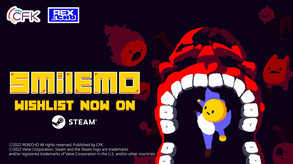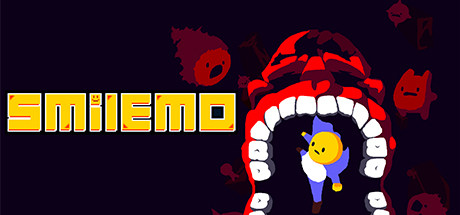
A new side-scrolling platformer where you go flying out of control at the slightest touch! In this virus-infected world, it is your job to collect the scattered pieces of vaccine code and exterminate the virus!
Modeled estimate, not a reported figure. How we estimate →
Prices
The United States storefront in every case, so this compares stores and not countries.
About
Genres
Stats
All-time low is the lowest price we've recorded for this game since we started tracking it.
Languages: English, Spanish - Spain, Japanese, Simplified Chinese, Traditional Chinese, Korean
Sums Steam only; Nintendo publishes no volume signal, so the true total is higher by an unknown amount.
| Store | Price | Audience | Score | Chart | Est. revenue |
|---|---|---|---|---|---|
SteamYou are here | $9.99 | 1.3Kreviews | 74% | — | $230.8K |
| $9.99 | — | — | — | not modelled |
Matched by title — a reused name can pair the wrong games. * is a critic aggregate. Prices and positions are each store's United States storefront; Epic charts worldwide. Audience and Score too, except Steam's, which is worldwide.
Engagement
Reviews
Themes across 69 recent reviews and how positive each mention is. A keyword signal, not full sentiment analysis.
Reviews
Très bon jeu avec mécaniques intéressantes. Chaque niveau évolue pour donner de la diversité a chaque fois. Le seul bémol c'est qu'il peut se 100% en 4h je pense, il y a peu de niveaux...
Smilemo is a deceptively cheerful 2D action platformer that combines colorful pixel art with an intentionally punishing approach to movement and failure. Developed and published by SungjunJo, it places players inside a computer system that has been overwhelmed by a dangerous virus. The surviving Smilemo sets out to recover scattered vaccine code and restore the infected system. Although the premise is simple, it gives the adventure a fitting digital identity while allowing the platforming mechanics to remain the primary attraction. The controls begin with familiar platforming fundamentals, including running and jumping, but Smilemo gradually demands much greater precision. Wall climbing expands the possibilities for vertical movement, while the air dash gives players an important tool for crossing gaps, avoiding hazards, and correcting positioning in midair. These abilities work together particularly well once their timing becomes second nature. Later sections expect players to chain movements confidently rather than approach every obstacle independently, creating an enjoyable sense of progression based more on personal skill than character statistics. What separates the game from more conventional platformers is its unusual punishment for touching infected hazards. Contact with a virus can send Smilemo bouncing away uncontrollably, potentially undoing a significant amount of carefully earned progress. A small mistake near the end of a difficult sequence can therefore become a spectacular journey backward through hazards and platforms. It is simultaneously amusing and infuriating, and this mechanic defines much of the game's personality. Instead of simply killing the player and immediately resetting the encounter, Smilemo often makes players witness the consequences of their mistake. This design makes patience almost as important as reflexes. Obstacles that initially appear straightforward become stressful because players know how costly one poorly judged jump can become. Repetition gradually teaches the safest routes, appropriate timing, and the places where aggressive movement should be avoided. Successfully completing a previously troublesome sequence feels rewarding precisely because the game has made failure so memorable. Players who enjoy mastering difficult platformers are likely to appreciate this cycle, while those who strongly dislike losing progress may find it considerably less welcoming than its charming presentation suggests. Checkpoints prevent the punishment from becoming completely excessive. They provide useful recovery points throughout the adventure and ensure that failure does not normally mean restarting everything from the beginning. Their placement gives players opportunities to practice difficult sequences repeatedly and slowly develop consistent techniques. Even so, reaching the next checkpoint can become an objective in itself, especially when multiple hazards must be crossed without allowing a single collision to ruin an otherwise excellent attempt. Collecting pieces of vaccine code provides a clear objective while complementing the computer-virus theme. Rather than overwhelming the player with complicated systems, inventories, or extensive character development, Smilemo concentrates almost entirely on navigating dangerous environments. This focused structure suits the game well. Every new challenge is essentially another examination of movement, positioning, timing, and the player's ability to remain composed after an unfortunate setback. The adventure also includes a boss confrontation that changes the rhythm without abandoning the mechanics established during regular stages. Survival becomes particularly important as players avoid attacks and wait for suitable opportunities to retaliate. The encounter emphasizes pattern recognition and movement rather than introducing an unnecessarily elaborate combat system. As a result, the skills developed while navigating the stages remain relevant when the game shifts into a more direct confrontation. The visual presentation uses charming pixel graphics and a bright protagonist to create an amusing contrast with the difficulty. Smilemo looks friendly and expressive, while the infected digital environment is constantly attempting to knock that smile away. The computer-based setting gives the levels a coherent thematic foundation, and the straightforward visual design helps hazards remain readable during fast movement. The presentation is not trying to overwhelm players with graphical spectacle; its strength comes from clarity, personality, and the humorous contradiction between its adorable appearance and unforgiving mechanics. Replay value is primarily connected to improving performance, completing achievements, and overcoming challenges more efficiently. Players who become invested in mastering the movement can find themselves repeating sections simply because executing a clean sequence feels satisfying. Those expecting a large exploration-driven platformer with extensive side content should temper those expectations. Smilemo is better understood as a concentrated challenge built around a distinctive mechanical gimmick rather than an enormous adventure. Steam Deck compatibility is officially categorized as Playable rather than fully Verified. Performance with the default graphics configuration is considered suitable, and the game can run successfully on SteamOS. However, handheld players should expect compromises. Some functionality is not fully accessible through the default controller configuration, touchscreen interaction or a community controller layout may occasionally be useful, and text entry can require manually opening the virtual keyboard. Some interface text may also appear small, while certain prompts can display keyboard, mouse, or non-Steam Deck controller icons. It is therefore functional on the Deck, but the experience is less seamless than a fully optimized handheld release. Ultimately, Smilemo succeeds because it fully commits to its central idea. The bouncing punishment could easily have been nothing more than a novelty, but it fundamentally changes how players approach hazards and makes ordinary mistakes unusually dramatic. The resulting experience can be frustrating, funny, tense, and rewarding within the same few minutes. It is best suited to players who enjoy precision platforming, repeated attempts, and games that turn failure itself into part of the entertainment. Anyone willing to tolerate its deliberately mischievous punishment system will find a compact platformer with considerably more character and challenge than its smiling hero initially suggests. Rating: 8/10
Media

Related
Related
Price dynamics, follower growth, revenue and sales trajectories with interactive tooltips
This and every other Pro feature is free until October 20, 2026. A free account is all it takes.
Hours played at review time, across 69 reviews with recorded playtime.
positive critical· bar length = how often the theme comes up
你可以不玩 但一定要給你最好的朋友玩 讓他們體會得了肌腱炎還要一直坐牢過不了的感覺
개씨발게임
재밌어요
ㅗ
喜欢赤石的可以玩!!强烈推荐!
你就玩吧,一玩一个不吱声 玩这个游戏前我感觉没有多难,完之后我就是那个最M的M。 这游戏可太好玩了,玩了一个小时还在初始点。 不是M不建议玩这个游戏。
정말, 재미있는 게임이었습니다. 꼭, 정말 꼭, 다른 사람에게 선물해서 꼭 여러분만의 재미를 보시기 바랍니다. 저도 지금 아는 지인에게 선물하러 가는 길입니다.^^
제작자를 10년 뒤에 죽여주세요
Selling now
See how fast this game is selling right now — estimated copies and revenue per day from recent review growth.
Players by region
Where this game's players are, estimated from review languages.
Players also reviewed
The games this title's players most often review too — audience affinity.
Related
| Game | Estimated lifetime revenue | Reviews | Review score | Price |
|---|---|---|---|---|
| $0 | 0 | 100% | $9.99 | |
| $11.2K | 69 | 93% | $11.99 | |
| $670 | 12 | 100% | $2.99 | |
| $125 | 1 | 100% | $5.99 | |
| $74 | 1 | 100% | $2.99 | |
| $0 | 0 | — | $5.99 |
Related
| Game | Estimated lifetime revenue | Reviews | Review score | Price |
|---|---|---|---|---|
| $230.8K | 673 | 91% | $12.99 | |
| $230.9K | 254 | 85% | $39.99 | |
| $230.9K | 2.5K | 50% | $3.74 | |
| $230.7K | 750 | 56% | $9.99 | |
| $231K | 688 | 75% | $16.99 | |
| $231K | 730 | 73% | $9.99 |