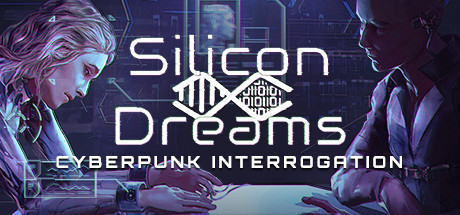
It’s 2065, and you are an interrogator-model android tasked with rooting out deviants among your own kind. You must probe for lies, monitor and exploit emotional spikes, earn the trust of your subjects, and make the final call: release, or destroy?
Modeled estimate, not a reported figure. How we estimate →
Media

About
Genres
Stats
All-time low is the lowest price we've recorded for this game since we started tracking it.
Languages: English, German
Engagement
Hours played at review time, across 40 reviews with recorded playtime.
Reviews
Themes across 40 recent reviews and how positive each mention is. A keyword signal, not full sentiment analysis.
positive critical· bar length = how often the theme comes up
Reviews
While I did have an enjoyable time, I would definitely say they front-loaded this game in the demo. None of the other cases are nearly as interesting as the Shakira Barber case, and just in case you were wondering, there is no nuance with the followup cases on whether the androids are deviant or not. They make it seem like sussing out if a deviant is trying to pass itself off as regular, but they are just all deviants. The choices literally just come down to if you want to help them or kill them. Each case has an interesting idea at least and moral implications on different parts of artificial sentience, and if your enjoyment would come from such moral quandaries than I do recommend this game. I simply can not because there is a massive disconnect from the gameplay in the demo and the gameplay in the actual game.
Reviewing (mostly) every game (or DLC) in my library, part 284: ⭐️⭐️⭐️⭐️⭐️⭐️⭐️⭐️⭐️⭐️ (10/10) MAN, this game is so underrated. [i]Silicon Dreams[/i] wears its influences proudly—part [i]Detroit: Become Human, [/i]part [i]Papers, Please,[/i] and entirely fixated on the thorny question of what makes us human. It’s a game that could’ve easily fallen into cliché, but instead, it delivers one of the most thoughtful, tightly written, and thematically rich experiences I’ve had in the cyberpunk genre. The core gameplay loop is deceptively simple: you’re an android interrogator tasked with rooting out deviant behavior in other androids. But what unfolds is a series of tense, uncomfortable conversations where you are both judge and executioner, coaxing out confessions, pushing on emotional triggers, and deciding who gets a second chance and who gets decommissioned. And as you do, your own programming—and its limits—come into question. 🤖 [b]Pros:[/b] [list] [*]Absolutely stellar writing. Dialogue is the heart of [i]Silicon Dreams, [/i]and the devs knew it. Every conversation, every interrogation, is tense, layered, and morally charged. You’re probing real personalities (even if they’re androids), reading tone and emotion, deciding whether to be sympathetic or ruthless. It’s more interactive drama than traditional game, but it works. [*]Gorgeous retro-futuristic visuals. The art direction walks a fine line between sterile corporate dystopia and something deeply personal. Cold, brutalist tech environments are livened by warm character portraits and subtle UI animations that give off this tactile, analog feel—like peeling back the casing of a machine and seeing something beating underneath. It’s minimalist, but every design choice supports the narrative tone. [*]A focused, powerful narrative. The story is short (6–8 hours), but laser-sharp. As you interrogate rogue or broken androids, you start questioning everything: corporate control, memory manipulation, the cost of loyalty. It’s political without being preachy, emotional without being melodramatic. There’s this constant tug-of-war between following orders and doing what’s right, and every case pushes you further into uncomfortable moral territory. [*]A dynamic interrogation system that actually works. You’re not just clicking dialogue options. You’re also managing emotional states, adjusting your approach mid-conversation, analyzing logs for contradictions. It’s more involved than it looks at first glance, and it rewards close attention. Even small shifts in attitude can lead to major consequences later. [/list] 🗃️ [b]Cons:[/b] [list] [*]It’s emotionally heavy and limited in scope. The game is laser-focused on its themes, and while that’s a strength, it can also feel claustrophobic. You’re in the same chair, looking at the same screen, for the whole game. If you’re not hooked by the writing or find the premise too bleak, there’s not much else to engage with. [*]Some emotional states can feel finicky. The mood-tracking mechanic is great conceptually, but occasionally a line of questioning seems to spike a reaction that feels off. You might be aiming for comfort and accidentally trigger fear or anger, simply because of how the system interprets tone. [*]Minimal music and animation. While this contributes to the game’s stark atmosphere, it can also make play sessions feel monotonous. If you're not in the mood for reading and parsing emotional nuance, there’s very little sensory stimulation to keep you engaged. [*]Occasional lack of feedback. Sometimes it's unclear whether you made the “right” choice, or how a decision impacted your standing. The ambiguity is intentional—it’s a game about moral uncertainty—but it may frustrate players looking for clearer consequences. [*] It can be hard to 100%. Even with a guide, getting every achievement or optimal outcome requires replaying entire runs and tracking very specific dialogue paths. Some flags are obscure, and there's no fast-forward feature, which makes revisits a bit of a chore. [/list] [hr] If you enjoyed this review, please check out my curator page to find more: [url=https://store.steampowered.com/curator/45814768-Verdict-Play-or-Pass/]Verdict: Play or Pass. [/url] Also, please leave a like and visit [url=https://steamcommunity.com/groups/Indie_Gems]IndieGems[/url] and our YouTube channel for more reviews like this one. [/hr]
This is one of the few gems among the influx of cyberpunk adventure games and VNs, many of which are heavy on aesthetic without understanding the source material. A great story that, if you want to see it all the way through, requires you to walk a tightrope of corporate loyalty and serving your own interests in the choices you make that really pays off in the end. Be nice to your AI, folks.
This is... a ride. If you enjoyed 'Papers Please' but wanted the ability to consider things a bit more, you're probably going to love this. It's got all the smooth, pretty graphics and sound effects of a nifty cyberpunk story-- but some serious bite and thought-provoking content, too. This is one of those games which is going to stay with me a long time. I've just completed one playthrough, and it's so beautifully done and the vibe and the narrative creeps around you-- nothing, and no one, is as simple as first glance may suggest, and suddenly you're pushed into a position of doing things that feel uncomfortable if not awful to stay afloat. Midway through, and especially with the added content, you start getting insight into the world you're in, and it stops feeling like science fiction and more like a metaphor for survival under late stage capitalism. The "responses" to the problems are well framed with various characters coming into the hot seat, too. Having worked in government and corporate environments, it absolutely nailed the bureacracy and company line stuff, and it was relatable, if not entirely chilling. If you've ever had to deal with HR and performance reviews and found them scary IRL... well, the devs here have captured that feeling at times perfectly. The outcome I received at the very end was beautifully done, too: subtle but also offering some closure and points for reflection. I got a couple of happier than expected outcomes. Ultimately, it was beautiful, and brutal, one of those games that gives you some serious stuff to consider including who you are in the dark and about the nature of society and humanity in general. Spoiler: it feels very accurate, and it's very bleak. But damn, I'd be saying if the ride wasn't worth it.
The spirit of Blade Runner flows strong through this one. You're android, interrogation model. Your task: seek out defects in other models through questioning, determine the nature of defect and decide their fate. Will you release them, send them to repair, or mark them for disassembly? https://steamcommunity.com/sharedfiles/filedetails/?id=3527051475 All models are sentient and have feelings, the more advanced they are the wider range of feelings they possess. Common to them all are uniformly servant roles in human society. Despite their ability to feel and self-awareness, they are considered merely an assets and can be disposed of at whim of their owners. Inhumane treatment is the cause of tension not only between androids and humans, but is dividing humans as well, into supporters of established ways and those who advocate more rights for androids. Ongoing agendas will influence your work as your role will extend to exposing dissidents among your ranks. On occasion, you will even get to interrogate a real human being. Imagine that. As plot unfolds [spoiler]you will have to decide which camp to join while[/spoiler] your every move is being monitored by the board. The Company made you and they own you. If they won't like what they see, you will be marked for termination. On another hand, if your performance will be approved of, you might even win promotion [spoiler]granting move to a new apartment cell, with beautiful view over nearest concrete tower tops bathing in neon ad lights, amidst unending smoggy twilight of the City[/spoiler]. How uplifting. Where Silicon Dreams shines is presentation of duality. During sessions, interrogees might claim one thing while indicators on your instruments tell you they actually feel very different about the topic of discussion. This layer of dialogue depth is a remarkable achievement on its own and something I never saw in any other game. Let me know if you did, I'd love to play anything similar if it's out there. While progress is pretty straightforward and interrogation mechanically noncomplex - above all else I'd describe the experience as highly interactive multi-layered visual novel - dialogue is well written and the mood is spot on. A great deal of heavy decisions will be placed before you, in terms of morals. I wonder. What sound do sheep androids dream of make.
It's a miserable game. As an interrogator at Kronos Coprorations (rad name by the way) it's your job to decide what's to do with the deviant androinds. Kronos cares way more about its image than doing any good tbh. Which means that oftentimes they'll tell you what outcome they desire, and you need to find a justification for it. Or not, and suffer the consequences. As an interrogator you're not allowed to congregate with other androids which means that there's little incentive to lick Kronos' boot. Sure, you can get nicer apartment and that one tool that may or may not be useful. And I think it's the point. You're just a cog in a machine. And if you want to help the androids without being decommissioned for it at the first attempt, you need to be smart. And sometimes there's very little you can do. If you refuse to decommission that android, someone else might do the job. The most emotional parts of the game was telling the androids they'll be decommissioned through no fault of their own. The gameplay consists of interrogating androids. Then when you get all the information you need, fill the report. Sometimes they won't reveal it unless you convince them to trust you or invoke a certain emotion. You can use this trust against them later. Or not.
Left me speechless. HIGHLY recommend for everyone looking for a narrative-driven, choices-matter type of a game. I love how each of the cases has left me thinking if I had done the right thing.
Uncovering flaws and hidden truths in other androids through preset questions, emotional analysis, and moral choices that shape your future. The game’s premise and presentation are unusual. You take on the role of an android, an artificial being created with one primary purpose: to interrogate other androids and machines on behalf of a corporation. While your character is officially identified only by a designation number, this reinforces the idea that you could essentially be anyone or anything. Your function, however, is clear. By questioning other units, your task is to detect flaws, irregularities, or signs of malfunction in their responses, ultimately determining whether they are still fit for service or if they need to be repaired, released back into service, or decommissioned. Through the entire game, you’re confined behind a desk, operating entirely through a computer terminal. The subjects of your interrogations are never physically present in front of you; for security reasons, they are restrained in another location. Each new interrogation begins with a brief dossier containing information about the subject, a short description of the suspected problem, and finally, a screen showing a close-up of an eye, an image strongly reminiscent of iconic moments in classic science fiction movie. The interrogation process is straightforward but still tied to its own rules. You are provided with a list of topics and preset questions. While you cannot improvise or ask your own, the subjects’ answers can unlock new lines of inquiry, gradually expanding your options. Sometimes progress depends on selecting a very specific question before others will appear. In other cases, you may need to decide whether to loosen the restraints to build trust, or tighten them to instill fear. The order of your questioning can matter greatly, and occasionally you are forced to choose a single path while others become permanently inaccessible. The user interface has been designed to minimize frustration and keep the experience fluid. Once a question or topic has been asked, it automatically becomes unavailable and is grayed out. In addition, the full record of the interrogation is always accessible through a transcript icon. This means that no piece of information can be permanently missed, except for the options that become locked due to your questions. To add complexity and tension, the game introduces emotional monitoring. Alongside the subjects’ spoken answers, you have access to a screen displaying six core emotions. Each time you ask a question, you can observe how their emotional readings spike in response. This often creates a revealing contradiction between what they claim and what they truly feel. For example, a subject may insist they are perfectly content, but their emotional graph may show a surge of disgust or sadness. To further assist the player, these emotional spikes are recorded directly in the transcript. Each reaction is represented numerically in increments of fifteen; small reactions at +15, more significant surges at +30, +45, and so on. Because these numbers are placed beside the relevant question in the transcript, it becomes easier to spot patterns and identify when a subject’s words and emotions are not aligning. At the end of each interrogation, you must compile a report summarizing your findings. This involves answering a series of multiple-choice questions and then deciding whether the subject should be released, sent for maintenance, or terminated. Once your decision is made, the interrogation concludes, and you receive a performance rating. The corporation then provides commentary on your choices, either approving your analysis, disagreeing with it, or offering neutral feedback. The game reinforces correct play by rewarding careful and logical answers, but it also allows you to pursue more unconventional approaches. A flowchart at the end of each case records the most important discoveries and outcomes, though certain details remain locked until you replay the interrogation and explore different questioning paths. The cast of subjects is surprisingly diverse, ranging from androids with specialized roles to actual humans. You may interrogate an android police officer programmed to pursue rogue machines, a unit pretending, or perhaps genuinely believing, it is human, a stunt android designed to endure punishment, and others. Some of these characters are stand-alone cases, while others are tied to the overarching mystery involving a rogue android network. The gameplay loop remains the same throughout the game. Achieving consistently high ratings can unlock one single tool, which has the ability to provoke a specific emotional reaction in a subject, making them easier to manipulate. You will also gain a new home, but this has purely visual effect. While the safest and most straightforward approach is to decommission every subject perfectly in line with corporate expectations, the game allows for more rebellious playstyles. You can choose to release units, explore their answers more deeply, and pursue hidden threads of narrative. However, deviating too far from standard procedure may put you at risk of becoming a target yourself. In fact, strange or suspicious actions can land your own character in the interrogation chair, forcing you to defend yourself. Ultimately, after interrogating the final subject, the story concludes with one of several possible endings depending on the choices you made. You are then shown a comprehensive summary of all the subjects and outcomes. From here, you can begin again or rewind the narrative to revisit a particular case. However, rewinding erases all subsequent progress, meaning that if you jump back to the second or third case, you’ll practically have to replay the entire game. This makes finding all achievements a bit of a hassle.
[h1]The Game[/h1] [i]Silicon Dreams[/i] is a game that I would consider to be a hidden gem within the gaming community. At times, I wonder how I ever discovered this Sci-fi interrogation game on the internet. And yet, not once have I regretted it. Rather, I find myself thankful for the small experience that the game offers and hopeful that it will reach a larger audience. This game mixes the two themes of [i]Detroit Become Human[/i] and [i]Blade Runner[/i] into a beautifully crafted game, one that I couldn't stop playing. In the cyberpunk dystopian 2065, you find yourself woken up in an interrogation room, sitting in front of a desk with only your device to turn to. When you load this device, you see an android on the screen who tells you that you were born five minutes ago and you were designed to interrogate her. She is the first of many androids you must face with the decision to release or destroy. [h2]The Positives[/h2] [list] [*][b]The visuals.[/b] The UI of the interrogation device is simple and effective. The smallest details of the elapsed time, the android's file, and the cameras in the interrogation room were not necessary but incredible for player immersion in the interrogator role. Even the reference to [i]Blade Runner[/i] through the eye tracker was a fantastic decision that I am glad the developer took. [*][b]The lore.[/b] I will say that the story is a little limiting, but for the limited playtime it has, I like to believe [i]Silicon Dreams[/i] covered an interesting set of topics within the cases. As someone who has studied aged care, I loved the focus of the medical industry, as well as other industries that have impacted androids and humans alike. [*][b]The choice branches.[/b] Though I wished that the choices could further impact the direction of the story, I was satisfied with the decent amount of choices given to the player. The choices of [i]Silicon Dreams[/i] primarily impacted the current case, not the storyline of the game. As an interrogator, your company gives the cases to you, meaning a 'good' or 'bad' case wouldn't impact the next case given to you. Putting this information aside, I do like the multiple ways to either help or harm the android, whether you act kind to them then destroy them or act rudely to them and free them. The relation between choice branches and emotions was a fun feature that also helped make the androids less one-dimensional. [/list] [h2]The Negatives[/h2] [list] [*][b]The Interrogation Functions.[/b] Though I can praise this game for all it has to offer, two of the game's mechanics seem to be useless. Through high ranking, you are rewarded with the ability to control android's emotions with music. However, this reward becomes useless once you realise you don't need it in your gameplay. For the times I attempted to use it, the function didn't work as intended. In addition, you can restrain and unrestraint the android without the character being bothered by it, which breaks the player's immersion. [*][b]Possibly rushed.[/b] Comparing the beginning of the game to the end, I question if the developer was forced into rushing the game's release. I enjoyed the game's beginning where you can explore the lives of Kronos androids and the moral challenges surrounding them. However, amid the game, the story begins to lean towards the android revolution as the other themes fade out. I am aware that there are plenty of players who are happy with this, some even preferring if the story focused more on the deviant androids. But as someone who enjoyed the casual cases, the story shift felt forced. This issue could be resolved if [i]the android revolution was only unlocked if you chose the route[/i]. That way, more routes can be added surrounding the other topics that the game lightly went across. [/list] [h2]Overall[/h2] It is a shame to see low ratings for [i]Silicon Dreams[/i] when there was clearly a lot of work put into the game's creation. While I can see the downsides, I can also see the goodness of the game and appreciate it for what it is. Since it is a short game, I recommend buying it when it's on sale. I believe the game's demo possibly impacted the player's expectations for the game due to the cases. But, I can promise that if you love delving into the possible androids' impact on industries, then you will love this game. I like to think [i]Silicon Dreams[/i] has a little bit of everything, a game that I wish was expanded upon.
its good and u should play it. multiple routes / endings. I think even the ones that end your run prematurely are narratively engaging. maybe i just eat up slop that tests my moral backbone but i feel genuinely vindicated in a weird way after this. even if I didn't fully understand a few bits and mechanics, like that Kronos doesn't actually read every transcripted bit of your interrogations (woulda done slightly different stuff) minor annoyances, like my subject of interrogation saying they trust me after I accidentally toggle their handcuffs on, then frantically take them off
Related
Related
Trends
Modeled estimate over time, reconstructed from Steam's monthly review histogram.
Momentum
Pace estimated from the game's recent review growth (our daily snapshots) at its own sales-per-review ratio — a momentum signal, not booked sales.
Audience
Estimated from the language of this game's reviews — a proxy for where players are, not official Steam demographics.
Related
| Lingo | $106.9K | 811 | 94% | $9.99 |
| THE MULLER-POWELL PRINCIPLE | $106.9K | 366 | 73% | $14.99 |
| Her World | $106.9K | 487 | 97% | $14.99 |
| Magisterium: Fantasy Craft | $106.9K | 244 | 71% | $14.99 |
| YOU ARE THE MONSTER | $106.9K | 416 | 70% | $9.99 |
| Nine-Tailed Okitsune Tale | $107K | 305 | 97% | $17.99 |