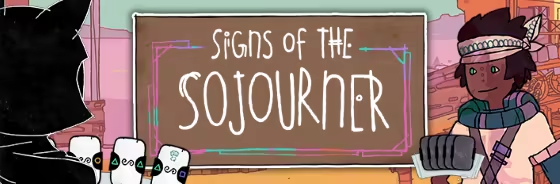
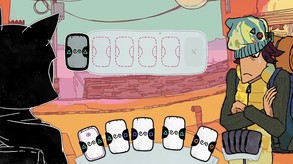
In this narrative card game about relationships and communication, navigate conversations in a colorful world reminiscent of our own. Learn and grow through the cards you choose to play. Who will you become? What will you leave behind?
Modeled estimate, not a reported figure. How we estimate →
About

Stats
All-time low is the lowest price we've recorded for this game since we started tracking it.
Languages: English
Engagement
Hours played at review time, across 40 reviews with recorded playtime.
Reviews
Themes across 40 recent reviews and how positive each mention is. A keyword signal, not full sentiment analysis.
positive critical· bar length = how often the theme comes up
Reviews
If you like things like Life is Strange, Undertale, Pyre, Nights in the Woods, and Slaying the Spires, you may have some interest in this game. It will probably be more interesting to young or softhearted Americans, as it captures the indie queer-Americana vibes of things like NiTW and Life is Strange. Most of the negative reviews are complaining about the same thing justifiably -- the more complex the gameplay is, the more frustrating and chorelike it becomes. While working together with your 'opponent' to reach a solution is immensely satisfying (and unique solutions moreso!), it starts too simple and almost instantly becomes tedious. The very small deck limit is interesting only until it begins to limit the way you need to route your days, which is almost instantly, at which point it begins to feel like padding in hopes that I replay the game to try multiple routes and combinations. If you really love spending time in the world, perhaps that is fine, but spending time in the world is undercut by the high difficulty of conversing with those you do not have a deck-advantage against. It would be like if pokemon was unbeatable without one of every type, yet had no PC. This is made worse by the fatigue mechanic, which fills your deck with trash cards that almost always guarantee fails when played. The more you play, the more your deck fills with trash, and more you will fail even advantageous matchups. Now this is again interesting at first, because the game, like another favorite, Pyre, clearly has 'no fail state'. Meaning losing out on conversations should in theory only add to the experience, however unlike Pyre, negative outcomes rarely influence the story, and only result in lost tips and rewards. In a game that truly had 'no fail states', 'losing' should not result in a worse story or compel a replay or restart. This game clearly signals missed outcomes, combined with the heavy deckbuilding restriction, this makes it frustrating for something that is clearly designed to heard you along a series of spur-of-the-moment choices, made in response to a changing world as you get your footing. It forces you out on your own and often kicks you while you're down, leaving you to get along on smiles. There is no 'getting good' at this game. There are choices, and there are the way those choices open one door and close another. Every choice is like this. A tradeoff, and it doesn't serve the experience of playing it, nor the thesis therein. So the restrictive type-mechanics, plus the fatigue trash cards, plus the narrative interplay -- means the game is an absolute drain that often results in being scolded specifically for committing to playing it. It is this grand illusion cast by mechanics that are purposefully more opaque and difficult to service a meandering ethos, that is why another reviewer wrote that it is a 'masterclass in game design'. Now certainly, for the reasons above, I think that is laying it on a little thick, and that the game design is slipshod in many places, even though it comes together coherently. I will say why. It is just annoying to play a card game in which the meta and deck are so restricted that the majority of matches are forced-fail states, even before 'fatigue' sets in. This is intentional. Life is full of heartbreaks and flubbed chances. As a conversation-game, this is the experience of being a 'sojourner', one who is only passing through this world. It is an accurate snapshot of being an outcast, an autist, a disassociate, and the faceless, catlike protagonist is easy to step into and become. It is still annoying that one cannot get good enough at the game to overcome type disadvantages. Diagetically, this paints a pessimistic view of travelers, of being an outsider. That it is mechanically possible to match against someone against whom it is impossible to win, on every day of the game, many times over, is interesting in the scope it provides -- some people are just impossible, after all -- but when so much of the game is this, it sets a cap on the ability of one to improve by tying it to their route, separating routes by type, flattening their experiences, and rendering mixed-paths frustrating slogs through a world that is only ever interacted with through a screen, at a distance. And that is going to be most paths. You cannot be a jack of all trades, you must specialize. This is an anti-traveler message at the center of what purports to be a pro-traveler narrative. The story and characters are fun, but ultimately shallow. It is nice when someone moves shop, or remembers you, but no one changed over the course of their arc, nor felt friendlier than Elias. The protagonist being known primarily through a bygone mother was pretty Oedipal, and started to wear on me after a bit, as with most of its frustrations, as I'm sure was the intent. The game is difficult in a sense, and very easy in another, but over and over it punishes you for playing it and trying to improve. By limiting the deck size, it limits your ability to get along with many characters at once. It is interesting to go on a journey, pick up new vocabulary and modes of speaking, and come back home and suddenly be unable to connect. It is interesting and sad. It also, again, punishes you for playing. It is a pessimistic game. Other reviewers also mentioned this, and it is difficult to explain if you haven't played it, but you are always beholden to the other characters, and the score for the matches is kept only in their favor. They can never fail a conversation with you, only you with them. This is very one-sided, and becomes tough not to notice, the more paths and chances you miss. It is a game where to lose is to be snubbed, which is just annoying. They didn't even win anything from me. It's just like real life! But is it? Should it be? Ultimately, this game has meat on its bones right. It is emotionally compelling, but some of that sentimentality is compelled underhandedly through its mechanics and twee, lampshaded pessimism. It's just too much, and it starts to rub the wrong way once you notice things like the one-sided conversations, the guaranteed fail-states on top of them, and the way that 'conversational styles' are no more than suits of cards. I would have liked this more if the deck was bigger, 20 or 25, if it had a 5 or 10 card sideboard, and if every suit of cards had its own unique effect, more minor than the large ones. These could provide ways to create accords more often, leading to less failed matches. Bigger changes would be structural, to the way fail states effect outcomes, rather than limit them -- and to the way that matches are 'scored'. Either or. It does also have a very good soundtrack, which may be worth purchasing to experience for those who enjoy indie-game OSTs. While I loved a lot of the characters, especially Matilde and Elias, I also thought that 'Klaus' was a little orientalist. :/ Even labeling her 'predictable thief'. Just because BoTW doubled down on this stuff, doesn't mean we need to let it seep into culture. It took me out of an experience that is otherwise quite progressive in character. I also hated the ending I received, which came out of left field and had little to do with my route leading up to it. Maybe get it on sale, or when a sequel comes out, or if any of the above sounds interesting. If you play this at the right part in your life, it might really hit. It is just too sad and difficult for me. I wish it had more interesting things to say about traveling, and as a couch surfer, it didn't really hit. Perhaps it was the way it reduced complex social issues that actually affect how we socialize with one another, the way we travel and meet -- like class and race, to a conversation-game that was ultimately, unfun anyways. It's just not...it just doesn't feel...good. Unless you're a tortured alienated secularist living in the first world. Then it probably hit. If that's you and you loved this game I'm right.
This game brought me to tears. It wasn't the story lines, though those are good too; it was the very mechanics. At first, I fought them. Then I had a moment of "oh...oh." and realized what I had been fighting in my own life. Somehow the joy and ache of living and changing are baked into this game. It's such a gem.
One of the things elevating games as an art form, is their ability to feature gameplay mechanics that support the story they want to tell. Everyone knows the disappointment of our character losing to the boss in a cutscene for story reasons after actually beating them in a fight. This game is the opposite. Every mechanic, everything you do is in support of the story and the other way around. The way characters experience grieving, the way a dog might love you unconditionally, the feeling of struggling to fit in back home after a long transformative experience traveling - it is all right there in the gameplay. I love just how elegant and effortless all these emotional topics are packed into a simple deck builder with basic rules but a surprising amount of strategic depth. In terms of pure game design, this is a master piece. The story is also nothing that has been explored to death by other previous titles, yet handles it's themes Ina mature manner. Strong recommendation
i love this game. it's a severely underrated game & an honest masterclass on game design, and the fact that this only has 150 steam reviews is honestly a crime. i rarely go there anymore, but the way this game expresses storytelling through game mechanics and the way the game design ties into the narrative is so good. the gameplay is frustrating at times, and even that is perfect for the narrative - i've never played a game that portrays the feeling of human communication in all it's flaws and hardships the way this game does, and i doubt i ever will. it helps that the artstyle is gorgeous, the characters are vivid and fun, and just (clenches fist) the mechanics. the only thing i wish is that the game had a save function, because it's such a hassle to get all the of the achievements. i understand why it doesn't, though, so i really can't fault it for it. play this game. it really is a hidden gem
......⣠⡶⠂⠀⠀⠀⠀⠀⠀⠀⠀⠀⠀⠀⠀⠀⠀⠀⠀ ⠀⣰⣿⠃⠀⠀⠀⠀⠀⠀⠀⢀⣀⡀⠀⠀⠀⠀⠀⠀⠀ ⢸⣿⣯⠀⠀⠀⠀⠀⠀⢠⣴⣿⣿⣿⣿⣦⠀⠀⠀⠀⠀ ⢼⣿⣿⣆⠀⢀⣀⣀⣴⣿⣿⣿⠋⠀⠀⠀⠀⠀⠀⠀⠀ ⢸⣿⣿⣿⣿⣿⣿⣿⠿⠿⣿⡇⠀⠀⠀⠀⠀⠀⠀⠀⠀ ⠀⢻⣿⠋⠙⢿⣿⣿⡀⠀⣿⣷⣄⠀⠀⠀⠀⠀⠀⠀⠀ ⠀⢸⠿⢆⣀⣼⣿⣿⣿⣿⡏⠀⢹⠀⠀⠀⠀⠀⠀⠀⠀ ⠀⠀⡀⣨⡙⠟⣩⣙⣡⣬⣴⣤⠏⠀⠀⠀⠀⠀⠀⣀⡀ ⠀⠀⠙⠿⣿⣿⣿⣿⣿⣿⣿⣧⠀⠀⠀⣀⣤⣾⣿⣿⡇ ⠀⠀⠀⠀⠀⢀⣿⣿⣿⣿⣿⣿⣇⠀⢸⣿⣿⠿⠿⠛⠃ ⠀⠀⠀⠀⢠⣿⣿⢹⣿⢹⣿⣿⣿⢰⣿⠿⠃⠀⠀⠀⠀ ⠀⢀⣀⣤⣿⣿⣿⣿⣿⣿⣿⣿⣿⣷⡛⠀⠀⠀⠀⠀⠀ ⠀⠻⠿⣿⣿⣿⣿⣿⣿⣿⣿⡿⠿⠿⠛⠓⠀⠀⠀⠀⠀ ⠀⠀⠀⠀⠀⠀⠀⠉⠀⠉⠈⠁⠀⠀⠀⠀⠀⠀⠀⠀⠀ This game is interesting in both its mechanics and narrative. 這遊戲在機制和敘事上都很有趣。 [h1] 8/10 [/h1]
Really interesting things going on both mechanically and narratively here. The more kinds of ways of talking you try to accommodate, the harder it becomes to communicate with others -- and the more distant you get from your friends at home. Want to come back and finish this.
Signs of the Sojourner, developed and published by Echodog Games, is a deck-building narrative game that uses communication and empathy as its core mechanics. Instead of combat or traditional puzzles, conversations become the heart of the experience, with every choice you make reshaping both your character and the relationships you form. The story begins after the passing of your mother, who once ran a small shop in your hometown. You take on the responsibility of keeping the business alive and join caravan journeys to collect goods, but the road quickly becomes more than just a series of trading stops. It becomes a path of discovery, where you learn about yourself, your family, and the many communities that make up the wider world. What sets the game apart is its unusual use of deck-building to represent personality and communication style. Each card you hold carries symbols that determine how well you can connect with others. Conversations play out like puzzles, where you and the person you are speaking with exchange cards, trying to align symbols in order to maintain understanding. Success leads to trust, insight, and stronger bonds, while failure represents miscommunication and missed opportunities. After many interactions, you are given the option to exchange one of your cards with one from the other person’s deck. This means that your character literally evolves through dialogue, as your experiences and the people you meet shape how you express yourself. The system is clever because it captures the fluidity of human interaction. Over time, your deck reflects not only where you’ve been but also who you’ve chosen to listen to. It is possible to adapt so much that you become better suited to talking with strangers on the road than with people back in your own hometown, illustrating the bittersweet truth that growth often changes the way you relate to the past. At the same time, the game introduces fatigue cards, which appear as you travel further. These blank cards clog your deck and make conversations more difficult, symbolizing exhaustion, stress, and the emotional weight of endless journeys. While this mechanic reinforces the game’s themes, it can also frustrate players when fatigue makes some encounters nearly impossible, forcing you to accept that not every conversation can be won. The world itself is understated but evocative. Each town you visit has its own atmosphere, people, and values, and the dialogue is written with warmth and nuance. Rather than delivering grand quests or epic battles, the game focuses on the subtle art of connection: listening to others, finding common ground, or recognizing when understanding simply cannot be reached. The artwork has a simple, hand-drawn style that fits the game’s intimate tone, and the music creates a reflective, almost meditative atmosphere that emphasizes the slow rhythm of travel. The quiet, personal nature of the journey makes the experience feel less like a typical game and more like a storybook that unfolds differently with each telling. Because the journey is limited to a handful of caravan trips, pacing becomes an important part of the design. You cannot see everything in a single playthrough, which forces difficult choices about which paths to take and which relationships to nurture. This design encourages replayability, since your deck and your connections will look very different if you prioritize different characters or towns. However, this limitation can also leave some players wishing they had more time to explore every thread in one run, as conversations often feel too fleeting, and interesting characters sometimes slip away before their stories can be fully understood. Despite its gentle appearance, the game can be surprisingly challenging. Building a deck that balances the needs of multiple conversational styles requires thought and foresight, and fatigue introduces constant pressure to manage your resources carefully. Success is not guaranteed, and many players will find themselves failing conversations as often as they succeed. Yet these failures are not empty punishments; they shape the story just as much as your victories do, showing that misunderstandings and missed chances are part of life. This willingness to embrace imperfection gives the narrative a grounded, human quality that few games achieve. Signs of the Sojourner is ultimately a game about communication, change, and the difficulty of staying connected to both people and places as you grow. It is not for everyone—those seeking spectacle, action, or fast-paced mechanics may find it slow and restrictive—but for players who value emotional storytelling and unique mechanics, it offers a deeply memorable experience. The way it intertwines deck-building with personal growth creates a powerful metaphor for how relationships shape us, and how every conversation leaves an imprint. It is a thoughtful and moving journey that lingers long after the final caravan trip ends. Rating: 8/10
this game is good
This is... absolutely not a fun game. You're supposed to converse with people, but everything feels more like a chore than an actual conversation. It's pure RNG, not skill, whether or not you actually get the right cards to talk with someone. Your deck is limited and never grows, so if you actually want to explore the game world you have to tune your deck for specific places, but you don't get to keep cards in storage. So you have to fail to win. Great! I ♥♥♥♥♥♥♥ hated it. 3/10 would not play again, highly do not recommend.
I played this back when it was on Game Pass and liked it so much that I bought it. Years later, I hadn’t heard anyone else talk about this game, so here's my review. I like that it tries to gamify conversations. You succeed at conversations by matching like symbols on cards alternating between you and your conversation partner, and it's not always in your interest to succeed. With a limit of 12 cards and replenishing to 5 playable cards, it might not be your choice either. After each conversation, you have to replace one card with another from the up to three cards of your conversation partner's response. You change your personality with each conversation, and you will need to change, that's just great. But how the cards are analogous to having a conversation is unclear, especially at the end of the back-and-forth card placement, the other person has real dialogue. This is perhaps the largest hurdle to enjoying the game. The randomness of card symbols, the fact that cards can have additional abilities, and which cards are drawn means that the replay value is there, even outside of the game's various endings. The randomness can feel unfair if you want to do something specific in the game, as you can be easily stopped. It would be more forgivable if the structure was more accommodating. Going around the map 5 times - really 4.5 rounds, as the first round is the tutorial - makes it too tight to experiment. This tension is appropriate to the game's story, but it does undermine the sense of meaningful choice. Each game takes about 3 hours to complete, so ymmv if this is too long or not to replay after a failed attempt.
Related
Related
Trends
Modeled estimate over time, reconstructed from Steam's monthly review histogram.
Momentum
Pace estimated from the game's recent review growth (our daily snapshots) at its own sales-per-review ratio — a momentum signal, not booked sales.
Audience
Estimated from the language of this game's reviews — a proxy for where players are, not official Steam demographics.
Related
| Bus Mechanic Simulator | $89.7K | 170 | 59% | $19.99 |
| Aron's Adventure | $89.7K | 255 | 76% | $19.99 |
| Master Magistrate | $89.7K | 213 | 91% | $29.99 |
| The Adventure Pals | $89.7K | 2K | 92% | $2.39 |
| HereSphere VR Video Player | $89.7K | 204 | 87% | $29.99 |
| Princesses Never Lose! | $89.7K | 425 | 81% | $11.99 |