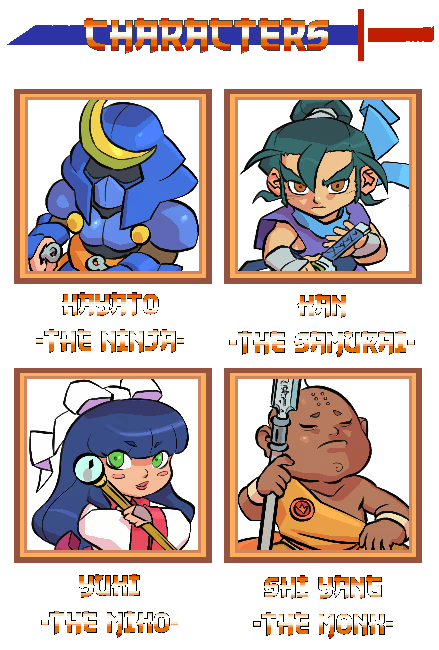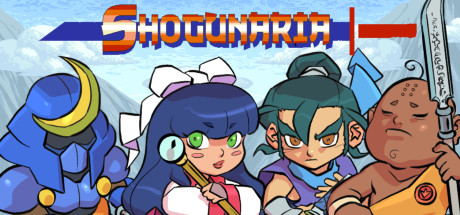
Shogunaria is an action-adventure RPG that takes elements from old school classics like Zelda, YS, Neutopia, Golden Axe Warrior, and Diablo. Select one of the 4 characters and take on a series of dungeons filled with traps and enemies!
Modeled estimate, not a reported figure. How we estimate →
Media
About


Stats
All-time low is the lowest price we've recorded for this game since we started tracking it.
Languages: English, French, Italian, German, Spanish - Spain, Japanese, Portuguese - Portugal
Engagement
Hours played at review time, across 28 reviews with recorded playtime.
Reviews
I had high hopes for SEEP tackling a Zelda-like game, even more so as I realized one of the four playable characters, Kan the Samurai, is none other than the protagonist of [b]Katana Soul[/b] (his intro text makes clear those events already happened), although the completely different art style and atmosphere make him hardly recognizable. It's also full of references to other games of the developers, like the big bad being the Master Ghost from [b]Super BOO Quest[/b]. Even the dev duo themselves are in a hidden room. Unfortunately, it's turned out to have the same problem as others of their less successful titles: no especially glaring issues, playable from start to finish, just very bland and leaving nothing of its passage. I finished it in 3 hours and yet it felt like a slog. That is also due to the choice of having most enemies acting simply as slow-moving homing projectiles towards the player, which forces constant situations of having to strike, retreat, repeat dozens of times. The rotation attack is extremely useful, but the way the enemies work, most times you will also receive some damage because they are hardly staggered by a strike. Oftentimes in dungeons you will have to contend with rooms where after a first group of enemies, four new ones are spawned, several times, making the game quite repetitive even just halfway into the run. The plot is very thin and not important; however, the quality of the English writing is really terrible. Graphics are cute as expected, and portraits really nice (Oscar Celestini's hand is recognizable even when drawing [i]chibi[/i] characters), but the music feels out of place. And as expected from SEEP, bosses are incredibly easy, with the final confrontation being the easiest, as the boss is huge and not moving. After finishing the game once, built-in cheats are made available, but I wish such reward was given by better games, as not even that makes [b]Shogunaria[/b] worth a second playthrough. Not like even the first was worth...
Un bon petit dungeon crawler signé Seep . On y incarne 4 persos différents chacun avec ses qualités et défauts . Il va falloir upgrader ces persos car les ennemis vont devenir de plus en plus coriace . Il y a pas beaucoup de farming et ça c'est très bien . Le jeu est assez court mais on s'y amuse c'est le principal . Un bon jeu que je recommande .
Shogunaria is a retro-inspired action RPG developed and published by SEEP that pays clear homage to classic top-down adventure games of the 8-bit and 16-bit eras. Built around exploration, dungeon crawling, and character-driven progression, it channels the spirit of early console action RPGs while incorporating light Metroidvania elements. From the outset, the game presents itself as a nostalgic journey through pixel-art landscapes filled with monsters, secrets, and steadily escalating challenges. The story centers on a dark force threatening Yuni Country after the villainous Master Ghost unleashes ancient demons by stealing sacred statuettes. While the narrative framework remains relatively straightforward, it provides enough motivation to push players through the overworld and into the game’s major dungeon hubs. Rather than relying on elaborate cinematic storytelling, Shogunaria emphasizes classic environmental storytelling and steady quest progression. Dialogue sequences and character interactions are brief but functional, keeping the focus on gameplay rather than lengthy exposition. One of the most notable features is the ability to choose between four playable characters, each with distinct attributes and combat styles. These differences affect how battles unfold and subtly influence difficulty and pacing. Some characters lean toward balanced offense and defense, while others may prioritize speed, vitality, or special abilities. This design encourages replayability, as a second or third playthrough with a different character can feel meaningfully distinct despite the shared world layout. Combat operates in real time, with players engaging enemies in close-quarters encounters across the overworld and within dungeons. The system is simple but responsive, relying on timing, positioning, and skill usage. As players progress, they unlock new abilities at sacred statues that expand traversal options and combat tactics. These new skills often open previously inaccessible areas, reinforcing the Metroidvania influence. Returning to earlier zones with new abilities creates a satisfying loop of discovery, as hidden paths and shortcuts become available. The game world is structured around interconnected regions leading to six major dungeons. Each dungeon introduces its own enemy patterns, environmental hazards, and puzzle elements. While puzzle design tends to follow classic “switch and unlock” conventions, it remains effective in pacing combat encounters and exploration. Treasure chests, upgrade materials, and randomized rewards add incentive to thoroughly explore every corner. Equipment upgrades, weapon forging, and stat improvements further enhance progression, allowing players to tailor their approach to combat. Visually, Shogunaria embraces a chibi-style pixel art aesthetic that captures the charm of retro console titles. Character sprites are expressive within their minimalist design, and environments are colorful without becoming visually cluttered. The art direction emphasizes readability during combat, ensuring that enemy attacks and obstacles remain clear even during chaotic encounters. While not graphically ambitious by modern standards, the cohesive retro presentation aligns perfectly with the game’s nostalgic ambitions. The soundtrack complements the visual style with retro-inspired compositions that blend adventurous melodies and moody dungeon themes. Music shifts appropriately between overworld exploration and tense boss encounters, enhancing atmosphere without overwhelming the gameplay. Sound effects remain functional and crisp, reinforcing attacks and environmental interactions. Despite its strengths, Shogunaria’s structure can occasionally feel repetitive. Dungeon layouts and enemy encounters follow familiar patterns, and progression remains relatively linear despite the presence of backtracking elements. While character variety and randomized rewards extend replay value, long sessions may reveal the limits of mechanical depth. The game’s appeal relies heavily on its retro design philosophy rather than innovative systems. Ultimately, Shogunaria stands as a heartfelt tribute to classic action RPGs. It offers steady character growth, accessible real-time combat, and a world designed for exploration and return visits. While it may not reinvent the genre, it delivers a cohesive and nostalgic experience that resonates strongly with players who appreciate the structure and charm of old-school top-down adventures. Rating: 7/10
Tal vez no sea la gran cosa y no ofrezca mucho pero es un juego muy divertido que si te lo propones es una aventura magnifica recomiendo comprarlo en descuento ya que el juego no ofrece mucho ademas de la galeria y el modo trampa es una aventura muy corta con personajes interesantes
Good so far! Different character classes, not too difficult
[i] My Experience [/i] Every time I peruse the Steam catalog I look for a few keywords specifically. One of these keywords is "Action RPG." Often, an Action RPG will let me create an interesting "build" while still being rather streamlined (think the [b]Diablo[/b] series, [b]Grim Dawn[/b], etc.). I was drawn to [b]Shogunaria[/b] first of all because I thought it might allow me to create such a build, but also because of its SNES aesthetic and its developer SEEP. I had previously played SEEP's [b]Super BOO Quest[/b] and found it to be a fairly competent and lightweight stealth game. Although [b]Shogunaria[/b] didn't end up providing me with enough options to truly create a build, I ended up enjoying myself enough to come away with a positive impression of the game anyway. I liked the streamlined fast travel and save system, and scouring the game's environments for the golden hammers needed to upgrade my attack. Thorough exploration also rewards the player with little easter eggs, such as guest stars from other SEEP games, the SEEP brothers themselves, and a cave inhabited by aliens. If you're looking for a simple, comfortable, and bug-free action game, [b]Shogunaria[/b] has you covered. SEEP is a [i]workhorse[/i] of a developer (they released four games last year) from whom you can always expect a certain level of competence.
I love this game.
Good game to relax and enjoy your time through discovery It starts very easy, Then difficultly starts to appear slowly But still an easy game (RELAX RELAX)
Eh, it's alright.
ESPAÑOL: Ha sido una grata sorpresa descubrir, entre el catálogo de SEEP, un juego que recuerda al estilo de The Legend of Zelda: A Link to the Past. Lo cierto es que el juego me está encantando. Cuenta con una banda sonora que encaja perfectamente y unos gráficos en pixel art que se ven increíbles, con ese inconfundible toque artístico que SEEP logra imprimir en cada uno de sus títulos. Es un juego accesible y amigable, en el que avanzas de forma pausada pero constante. A medida que progresas, subes de nivel y te enfrentas a nuevos desafíos que añaden obstáculos interesantes en tu camino como héroe. Los jefes finales están muy bien diseñados, y algunos incluso me han hecho sudar, pero con un poco de práctica y paciencia se pueden superar. La canción que más me gusta es la del Pantano Rosa. ENGLISH: It has been a pleasant surprise to discover, among SEEP's catalog, a game that resembles the style of The Legend of Zelda: A Link to the Past. Honestly, I’m loving the game. It features a soundtrack that fits perfectly and pixel art graphics that look amazing, with that unmistakable artistic touch that SEEP manages to infuse into each of its titles. It’s a friendly and accessible game where you progress slowly but steadily. As you advance, you level up and face new challenges that bring interesting obstacles to your hero’s journey. The final bosses are very well designed, and some have even made me break a sweat, but with a bit of practice and patience, they can be overcome. The song I like the most is the one about the Pink Swamp.
Related
Related
Trends
Concurrent players on Steam, sampled daily since tracking started.
Momentum
Pace estimated from the game's recent review growth (our daily snapshots) at its own sales-per-review ratio — a momentum signal, not booked sales.
Audience
Estimated from the language of this game's reviews — a proxy for where players are, not official Steam demographics.
Related
| I Can't Believe It's Not Gambling 2(K) | $4.1K | 78 | 41% | $1.99 |
| Saint Kotar: The Yellow Mask | $4.1K | 345 | 73% | $0.99 |
| Cemetery Warrior 4 | $4.1K | 147 | 69% | $1.49 |
| Killbot | $4.1K | 120 | 39% | $0.99 |
| Museum of Monoliths | $4.1K | 97 | 92% | $2.99 |
| Ody Mos | $4.1K | 58 | 84% | $4.99 |