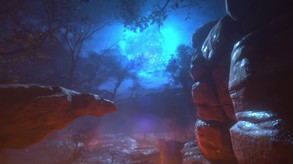
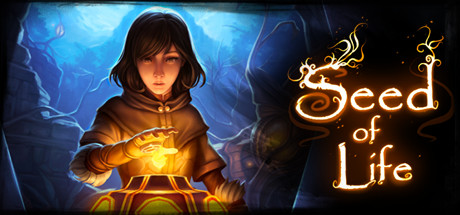
Seed of Life is an epic adventure game about the persistence of life. You're Cora, the last known survivor of Lumia, a dying planet. Your only hope to save your homeworld is to activate the Seed of Life and rekindle the sun once again. Will you be the light that conquers the darkness?
Modeled estimate, not a reported figure. How we estimate →
Prices
The United States storefront in every case, so this compares stores and not countries.
About
Genres
Stats
All-time low is the lowest price we've recorded for this game since we started tracking it.
Languages: English*, French, Italian, German, Spanish - Spain, Russian, Portuguese - Brazil, Simplified Chinese*languages with full audio support
Sums Steam only; PlayStation publishes no volume signal, so the true total is higher by an unknown amount.
| Store | Price | Audience | Score | Chart | Est. revenue |
|---|---|---|---|---|---|
SteamYou are here | $24.99 | 96reviews | 71% | — | $42.2K |
| $19.99 | 12ratings | 43% | — | not modelled |
Matched by title — a reused name can pair the wrong games. * is a critic aggregate. Prices and positions are each store's United States storefront; Epic charts worldwide. Audience and Score too, except Steam's, which is worldwide.
Engagement
Reviews
Themes across 47 recent reviews and how positive each mention is. A keyword signal, not full sentiment analysis.
Reviews
Polecam.
Pros Excellent Graphics Very good puzzles Cons Very annoying that you die all the time after first section of puzzles. If you get it for free its worth playing
;]
Media

Related
Related
Price dynamics, follower growth, revenue and sales trajectories with interactive tooltips
This and every other Pro feature is free until October 20, 2026. A free account is all it takes.
Hours played at review time, across 47 reviews with recorded playtime.
positive critical· bar length = how often the theme comes up
Seed of Life is an enjoyable, yet decent adventure game as you take on the character of Cora on the dying planet of Lumia, which has been overtaken by an alien invasion. Cora must journey through the realms of this planet in hopes to activate the Seed of Life and restore the planet. While the description says that the light conquers the darkness, I have mixed feelings about this game. On the one hand, it definitely meant this game is for those that want to relax and wind down. The gorgeous environment visuals and peaceful, yet ambient nature of the landscape of Lumia definitely provide this. This game suffers from generic-level designs that should have been more innovative. The game’s story keeps to a simple K.I.S.S formula and that works wonders for introducing the world and showing how this world is illustrated by the backdrop of an alien invasion. The story, however, did not achieve the deep potential connection that it was striving to go for, as I did not feel enough of an emotional connection to Cora in the first half, but during the latter half of the story, I did. This game is definitely more family-friendly, and I think they created the story in a way that it did not become ambitious, and it did not reflect the extreme potential it had in making Cora stand out as a character, as she should have. [h1] Story and Gameplay [/h1] The story of the gameplay of Seed of Life is quite simple, and it does a good job of introducing Cora to this world. As Cora, you leave your house and navigate through a myriad of complex canyons and volcanic lands to enter the Seed of Life. Once you pass through these levels, you collect Lumium, which helps with energy. You also have to go to Pedestals to make sure that you recharge your health and Lumium and collect petals. This I felt was the strongest aspect of gameplay because it is giving you directions on how you survive in this world. Another powerful aspect of the game is that when Cora reaches areas, you can feel earthquakes, wood dropping to the deep caves of this world. These moments definitely make the world alive, but it doesn’t add enough immersion. There are no murals, no illustrations written in the caves depicting the fall. Even if Lumia fell to the alien invasion, there would have been survivors that wrote or depicted the event. I think there would have been enough space within the budget to add small touches like this here and there. Once you do this, you can unlock abilities from the Pedestals that will help you in regeneration, increasing your Luium supply, and allow you to recharge often. One of the best parts is the sprinting ability, which I absolutely love, but hate when you have to cross bridges because the minute you fall is when you have to respawn once again when crossing a level. This, I felt, was the strongest aspect of gameplay. One thing that disappointed me about this game was collecting petals. To collect Petals, they are your life force in a way to unlock new abilities once you reach a pedestal and solve a puzzle thereby unlocking that new ability. You must navigate crooks, nannies, and whatnot to collect a petal by going to a purple gate and pressing E. This then activates the shield guarding it to disperse. This sort of focal chokepoints sure adds mystery, but they don’t add enough sense of adventure for me in the game. I didn’t like how you had to climb certain areas when I would have just wanted to climb everywhere, to be honest. Cora doesn’t run quickly enough. I believe that with a bigger budget, the story should and could have been more. I should have had Cora narrating her personal moments to me when she enters parts of a canyon, maybe some more forgotten ruins here and there. For a world that is medieval, from what I saw, I would have wanted to see more medieval ruins dotted around the map here and there. What I felt Seed of Life was essentially a game that was the foundation. Introduce the world, and make the world as simplistic as possible, which is a good thing. The game lacked combat in pretty much most of my gameplay, and in fact, solving the puzzles is an enjoyable challenge. But they are not as good as they should be. As I went from checkpoint to checkpoint, pedestal to pedestal, I came upon these puzzles to solve. Outstanding, you might say. What disappointed me the most was how easy they were to solve. I wanted more mystery. Yes, you talk to a robot named Nar that explains why they destroyed Lumia, but that it was inevitable, yet not a choice of their own choosing. This was quite a weak moment for me, as I would want either free content updates or DLC to expand the story and a better explanation of why the invasion actually occurred. I think the game followed the K.I.S.S formula a little too much. To get to further elements of the story, the Robot advisor Nar does a good job of motivating your character. To unlock further secrets of the story, you need to gain around 2000 Lumium, where you go to these other checkpoints or landmarks in order to deplete your points and listen. I didn’t think this element added much fun to the gameplay. Seed of Life is a game that promises adventure, and where it delivers on the adventure aspect are the environments and the tasks that you need to do to survive. Where it doesn’t fulfill this aspect is by not having challenging puzzles to solve, by having very basic level designs for crossing bridges or going from one end to the other, and it doesn’t have many medieval ruins nor does the story introduce some nuanced, deeper gameplay mechanics that could also be simplified in a way. Seed of Life is begging for more content. [h1] Conclusion [/h1] Seed of Life is a fun, family-friendly game that has decent voice acting, a story that follows the K.I.S.S formula to a great degree, but at the expense of sacrificing deeper lore for more basic gameplay level design and gorgeous environment visuals. However, good visuals cannot disguise the weaknesses of Seed of Life’s major story. For a game like Seed of Life, it needs a strong story, and the story in this game is serviceable, but not deep enough that it got me emotional at the end because it feels like the setup for new content to be added, some DLC or maybe a Seed of Life 2. It lacks much in the innovation department for solving puzzles because the puzzles could have been better designed. It should have motivated me more than often. Yet I often fell from bridges many times, and it made me so frustrated that I almost didn’t like it. Seed of Life should be more engaging with its lore, allowing us to get immersed in the world. It does this at the beginning, but the game then becomes this: Explore the fantastic environment of this world, gain a lot of Luiumn to discover secrets, but not enough content is there yet to immerse the player. However, this game is definitely worth trying out because it is a game that is relaxing and the lack of combat in this game is a prominent feature. I want more puzzles, more content, and more story updates. I believe this will make the game better. You can find the full review here at Sassy Gamers.com: https://sassygamers.com/seed-of-life-an-interesting-adventure-game-that-needs-more-content/ You can also find my review on youtube here: https://www.youtube.com/watch?v=QuZpH3ksrJ4
Jogo muito bom, no início ele parece bem simples porém no decorrer da jogativa você fica emocionado com a história e a jogabilidade
[quote][b]Check out our [url=store.steampowered.com/curator/36364102-Horny-Hentai-Festival/]Steam curator[/url] , [url=www.youtube.com/curatorhhf/]YouTube channel[/url] and [url=twitter.com/hhfcurator]Twitter[/url]![/b][/quote] [Semi open-world/Adventure/Action/Puzzle] You, Cora, a last known survivor of a dying planet, struggle against the end of the world. Beautiful sceneries, tons of mysteries to solve. [ACTPZLアドベンチャー] https://www.youtube.com/watch?v=kyMfW14ixUA
Seed of Life is an atmospheric sci-fi adventure developed by MadLight and published by Leonardo Interactive that tells the story of a dying planet and one young woman’s desperate attempt to bring it back to life. The game follows Cora, the last known survivor on the planet Lumia, a once-thriving world now on the brink of extinction after alien invaders have stolen its life essence known as Lumium. The sun has dimmed, the flora and fauna have withered, and the remnants of civilization lie in ruin. Guided by an artificial intelligence companion named Nar, Cora embarks on a perilous journey to find the mythical Seed of Life, an ancient artifact said to hold the power to restore Lumia’s vitality. It is a tale about resilience, loss, and hope against impossible odds, set in a melancholic world that balances beauty and decay in equal measure. The game blends exploration, light puzzle-solving, and platforming within a semi-open world that encourages curiosity. The environments are designed as interconnected zones filled with ruins, strange alien machinery, and remnants of a lost civilization. Progression is driven by discovery and gradual empowerment. As Cora ventures deeper into Lumia’s wastelands, she unlocks new abilities through energy capsules that expand her capabilities—granting her powers such as sprinting, healing, resisting toxic air, and illuminating dark paths. These abilities not only open new areas but also allow for more dynamic traversal and puzzle interaction. Many of the challenges involve activating ancient devices, redirecting energy flows, and navigating hazardous terrain while managing limited health and energy resources. Toxic air and environmental hazards act as constant threats, pushing players to balance exploration with survival. This creates a rhythmic tension between wonder and danger that defines much of Seed of Life’s atmosphere. The world itself is hauntingly beautiful, rendered in vivid colors that contrast the lush vibrancy of surviving life with the desolation of a world in ruin. The art direction emphasizes glowing luminescent flora, shattered architecture, and surreal landscapes that suggest both natural wonder and technological collapse. Every environment feels like a relic of something greater—evidence of a world once alive but now gasping for breath. Lighting plays a crucial role in conveying mood, with radiant energy sources and warm rays of light breaking through clouds of darkness to symbolize hope. The visual presentation, while not technically groundbreaking, carries an artistic cohesion that elevates the game’s emotional tone. The soundtrack complements this perfectly with ambient electronic melodies and ethereal harmonies that underscore the sense of solitude and quiet perseverance. The combination of art and sound design makes exploration engaging even when the gameplay itself falters. Mechanically, Seed of Life presents a mixture of promise and frustration. The controls, while functional, often feel stiff during movement and jumping sequences, leading to imprecise platforming. The camera can occasionally struggle to keep pace with the action, resulting in awkward angles that obscure paths or make it difficult to judge distances. These issues become especially noticeable during sections that require tight timing or precision, such as when navigating environmental hazards or solving puzzles under time pressure. The puzzles themselves are generally well-integrated but lack variety. Many rely on activating switches or gathering resources in a set order, which can feel repetitive as the game progresses. Still, there is a meditative quality to their design—the sense of restoring broken systems and bringing light to dark places aligns thematically with Cora’s mission. When the mechanics and narrative rhythm align, the experience can be deeply immersive, though inconsistent technical execution sometimes pulls it apart. Narratively, Seed of Life keeps things simple. The story unfolds primarily through short dialogue exchanges between Cora and Nar, environmental storytelling, and collectible notes that fill in the history of Lumia. The writing focuses more on emotional tone than on complex character development or world-building. Cora’s journey is personal and introspective rather than grand in scale, but the sparse dialogue and uneven voice acting occasionally undercut its emotional resonance. Some of Cora’s monologues are delivered with a detached cadence that fails to match the urgency of her situation, and the translation occasionally produces awkward phrasing that disrupts immersion. Despite these shortcomings, the game’s narrative succeeds in creating a sense of isolation and quiet determination. It portrays the struggle of a single soul against the inevitable collapse of her world—a simple but effective premise carried by the strength of its atmosphere rather than its dialogue. The pacing of the game is deliberate, unfolding over roughly six to eight hours depending on how thoroughly players explore. It encourages patient observation rather than frantic action, inviting players to soak in its scenery and uncover the remnants of the planet’s past at their own pace. However, this slow pacing can also work against it. The lack of consistent challenge and the repetition of certain mechanics can make later portions feel sluggish. By the time players reach the final chapters, the novelty of its world may begin to fade, and the narrative resolution—though thematically fitting—feels abrupt. The game ends with a sense of melancholy closure, emphasizing restoration rather than triumph, but it leaves some threads unresolved. This reflective tone may not satisfy those expecting a more dramatic or cinematic conclusion, yet it fits the understated nature of the journey. Seed of Life ultimately feels like a labor of love from a small team with big ambitions. Its heart lies in its mood and world design rather than its mechanics or storytelling depth. The game’s meditative pacing, striking visuals, and emotional concept give it an identity distinct from other indie adventures, even if it struggles to achieve full mechanical refinement. Players looking for a relaxing, atmospheric exploration game that values beauty and mood over complexity will find much to admire here. But those seeking tight gameplay, intricate puzzles, or polished technical execution may find its flaws too prominent to ignore. In the end, Seed of Life succeeds more as an experience than as a traditional game—a visual and emotional journey through a dying world that dares to hope for rebirth, reminding players that even in darkness, light can take root again. Rating: 6/10
Selling now
See how fast this game is selling right now — estimated copies and revenue per day from recent review growth.
Players by region
Where this game's players are, estimated from review languages.
Related
| Game | Estimated lifetime revenue | Reviews | Review score | Price |
|---|---|---|---|---|
| — | 0 | — | — | |
| — | 0 | — | — | |
| $0 | 55 | 80% | Free | |
| $203.6K | 389 | 92% | $19.99 | |
| $167.4K | 308 | 89% | $19.99 | |
| $55.9K | 165 | 78% | $13.99 |
Related
| Game | Estimated lifetime revenue | Reviews | Review score | Price |
|---|---|---|---|---|
| $42.2K | 286 | 90% | $6.99 | |
| $42.2K | 74 | 100% | $14.99 | |
| $42.2K | 73 | 66% | $14.99 | |
| $42.2K | 148 | 71% | $19.99 | |
| $42.2K | 79 | 100% | $13.99 | |
| $42.2K | 992 | 86% | $1.99 |