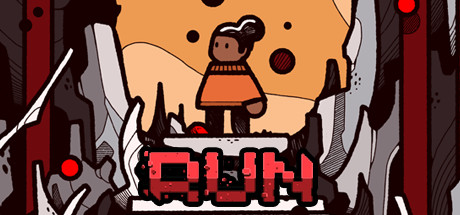
RUN: The World In-Between is a new “Die and Retry” platformer game with a procedurally-generated path. Be fast, jump, and run to unlock new content.
Modeled estimate, not a reported figure. How we estimate →
About
Stats
All-time low is the lowest price we've recorded for this game since we started tracking it.
Languages: English, French, Italian, Spanish - Spain, Japanese, Simplified Chinese, Dutch, Turkish, German, Portuguese - Brazil, Russian
Engagement
Hours played at review time, across 40 reviews with recorded playtime.
Reviews
Themes across 40 recent reviews and how positive each mention is. A keyword signal, not full sentiment analysis.
positive critical· bar length = how often the theme comes up
Reviews
Поначалу игра кажется простенькой, потом черезчур сложной, а потом ты раз за разом несешься на встречу смерти под забойное техно, забыв о времени. Достигается это интересной находкой - фрагменты участков пути при каждом забеге меняются местами, со временем появляются новые и ты сотни раз проходишь вроде бы одни и те же участки, но в разном сочетании они требуют от тебя очень хорошей координации пальцев рук и не прощают ни одной ошибки. Явно такое зайдёт далеко не всем. Я прочувствовал игру только на 3-м часу игры. Кто-то забьёт гораздо раньше и зря, ведь это непередаваемые ощущения, когда ты проходишь этап, на котором до этого умирал раз 100 (без преувеличения). P.S. Видимо из-за эффектов частиц идет излишняя нагрузка на видеокарту, потому что подобные игры на моём ноуте спокойно выдавали 60 FPS, а тут пришлось играть в оконном режиме, чтобы не смотреть слайд-шоу. P.P.S. Поиграв ещё несколько часов в бесконечном режиме и режиме спидрана, осознал, чем меня лично привлекает эта игра. Она заставляет работать мозг, запоминая как нужно действовать на конкретных участках, которые появляются рандомно. Здесь недостаточно просто запомнить куда нужно прыгнуть и где применить ускорение, здесь нужно уметь это применить в постоянно меняющихся обстоятельствах и это заставляет с интересом вновь и вновь начинать забег. Может такое уже и было в играх, но я встретил впервые, поэтому спасибо разработчикам за интересный геймплей.
RUN: The world in-between, developed by Team RUN and published by Team RUN alongside PID Games and Flying Oak Games, is a fast-paced platformer that builds its entire identity around speed, repetition, and mastery. It places players in a surreal, fragmented world where movement is constant and hesitation is punished, creating an experience that feels less like a traditional level-based platformer and more like a continuous test of reflexes and adaptability. From the very beginning, the game makes its intentions clear: this is a challenge-driven experience that expects failure, rewards persistence, and gradually teaches players how to move with precision under pressure. At the center of the gameplay is a tight and responsive movement system designed to encourage fluid motion. Jumping, dashing, and quick directional adjustments form the backbone of traversal, and the game constantly pushes players to string these actions together without breaking momentum. Unlike platformers that allow for cautious progression, RUN: The world in-between thrives on forward motion. Players are often pursued by an encroaching force that eliminates any temptation to slow down, reinforcing the idea that survival depends on maintaining rhythm and committing to each action. This design creates a strong sense of urgency, turning even simple sequences into high-stakes moments where timing is everything. One of the game’s defining features is its use of procedural generation. Rather than presenting fixed levels to memorize, each run introduces new configurations of obstacles and layouts, ensuring that players must rely on skill and adaptability rather than repetition alone. This approach keeps the experience fresh and unpredictable, particularly for those who enjoy replaying runs to improve their performance. However, it also introduces some inconsistency. While many sequences feel carefully balanced and satisfying to navigate, others can feel uneven or less intuitive, occasionally disrupting the otherwise smooth flow of movement. Progression is tied to collecting resources during runs, which can be used to unlock upgrades, abilities, and fragments of narrative. The story itself is deliberately abstract, offering glimpses of meaning through visual symbolism and brief pieces of lore rather than a structured narrative. These elements suggest themes of struggle, perseverance, and personal conflict, but they remain intentionally vague. For some players, this ambiguity adds depth and encourages interpretation; for others, it may feel too distant to provide a strong emotional connection. Visually, the game stands out with its vibrant pixel art and fluid animation. The environments are colorful and dynamic, yet they maintain clarity, which is essential in a game where players must react quickly to hazards. Contrasting tones—bright foregrounds against darker, more ominous elements—reinforce the sense of tension and constant movement. The soundtrack complements this design with a steady, driving rhythm that matches the pace of gameplay, helping to maintain focus and immersion even during repeated attempts. Difficulty is a core pillar of the experience, and it is handled in a way that will appeal strongly to fans of high-challenge platformers. The game expects players to fail frequently, but it also ensures that restarts are quick, minimizing downtime and keeping the focus on improvement. Over time, players develop a better understanding of movement and timing, leading to a satisfying sense of progression that comes from personal skill rather than traditional leveling systems. That said, the difficulty can be intimidating, especially for those unfamiliar with this style of game, and certain sections may feel punishing before they feel fair. Replayability is one of the game’s strongest qualities. The procedural nature of each run, combined with the emphasis on refining performance, creates a loop that encourages repeated play. Whether aiming to complete runs more efficiently or simply survive longer, players are given constant incentives to return. This structure makes the game particularly appealing to those who enjoy mastering mechanics and pushing their limits, though it may be less engaging for players seeking a more varied or narrative-driven experience. Despite its strengths, the game is not entirely without flaws. The reliance on procedural design can occasionally result in awkward or less polished sequences, and while movement is generally precise, there are moments where it can feel slightly inconsistent in tight situations. These issues are not constant, but they stand out in a game where precision is so critical. Ultimately, RUN: The world in-between is a focused and demanding platformer that excels at delivering a fast, skill-based experience built around repetition and mastery. It does not try to appeal to everyone, instead committing fully to its design philosophy and trusting players to meet its challenge. For those who enjoy high-speed platforming and the satisfaction of gradual improvement, it offers a rewarding and engaging experience that remains compelling over multiple sessions. Rating: 8/10
There's about ten levels worth of content, and they are great levels. The controls are fun and the music is great. But it's masquerading as a longer game by stitching together different chunks of these ten levels in different formations over and over again. It isn't using procedural generation, it's using a random number generator to do this. I'm not even sure if there's any rules in place to make sure the sections flow into each other well. I'd love this if it was a short game that takes a few hours long with no procedural generation and the chunks were stitched together in a fun order. As it stands, it gets boring very quickly. The same piece of a level will show up about 20-30 times every 20 minutes of play time. After every death my controller vibrates mildly for far too long, which is just annoying and a waste of my battery, it doesn't seem there is a way to turn off rumble in the game itself, but I suppose it's possible via steam's input settings.
шла 50 минута, я эту игру уже ненавижу. очень напомнила CELESTE
Celeste si c'était bien
o jogo é muito bem polido só acho q a diferença de dificuldade da área de gelo pra área de grama/pedra é muito alta, poderia ter uma área intermediaria entre essas duas ou deixar a grama aparecer depois
Run has great looking art, a cool story concept, cool music, but the GAME part of it is just made to be frustrating for anyone who isn't a 16 year old, FPS pro gamer. I think the devs think the controls for their game art a lot more flexible than they are. A lot of the platforming feel as it has zero margin for error very early on in the game. Often even when I'm not going for the extra collectables that add a extra layer of timing precision and it feel frustrating to have expectations of meeting that margin of precision several times in a row to make progress. If you like beating your head against a wall, this is your game. You'll eventually break through the wall, but is it fun? Not for me.
Sympa
Superbe découverte via le stream d'une cassette ! https://www.twitch.tv/bizzydee ! On s'amuse en try hard et en famille avec les enfants ! merci pour ce jeu simple et efficace !
Praise games that makes you bleed
Related
Related
Trends
Modeled estimate over time, reconstructed from Steam's monthly review histogram.
Momentum
Pace estimated from the game's recent review growth (our daily snapshots) at its own sales-per-review ratio — a momentum signal, not booked sales.
Audience
Estimated from the language of this game's reviews — a proxy for where players are, not official Steam demographics.
Related
| My Escort Company | $37.3K | 120 | 48% | $9.99 |
| 江华号 | $37.3K | 180 | 77% | $9.99 |
| Iron Danger | $37.3K | 1K | 72% | $1.99 |
| Minicology | $37.3K | 72 | 68% | $14.99 |
| Trappist | $37.3K | 72 | 90% | $14.99 |
| Lycans | $37.3K | 365 | 93% | $4.99 |