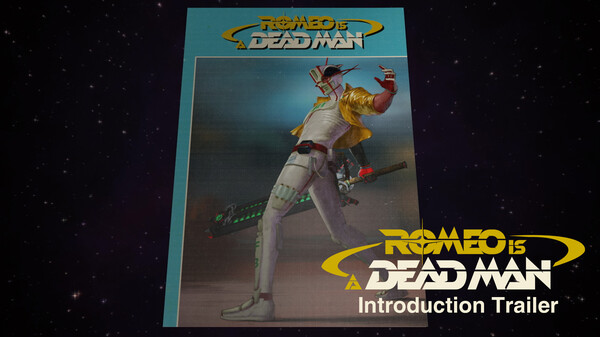
Paint the screen red and travel the cosmos in this bloodstained action adventure game! Witness the latest from Grasshopper Manufacture: the advent of ULTRA-VIOLENT SCIENCE FICTION!
Modeled estimate, not a reported figure. How we estimate →
Each in the currency that store quoted — not converted: the gap between two rows is the publisher's pricing, not an exchange rate.
Every market we collect.
About
About ROMEO IS A DEAD MAN
Take control of the protagonist Romeo Stargazer in this third person singleplayer action adventure, split into various chapters. His story is both unpredictable and littered with intense battles, interspersed with side missions to suit the player's pace.
A story that transcends space-time
This game's story starts with space-time itself being shattered by a certain incident. Romeo, too, on the brink of life and death finds himself revived by a new kind of super technology. Thus he is recruited for the FBI's Space-Time Police as a special agent, and wanders the cosmos in search of criminals who've taken advantage of the situation at hand in an attempt to bring justice back to the universe. At the same time, he looks for clues concerning his missing girlfriend Juliet, and quickly comes to find both her disappearance and the destruction of space may be more linked than he thought. Donning the mask called Deadgear, what awaits Romeo at the edges of space-time?
Fight blood with blood
Romeo switches between swords and guns to fight. Wipe out the waves of enemies that stand in your path to give birth to a new kind of bloody action, and take down the fearsome space-time criminals that await. Absorb the blood of your enemies to unleash Romeo's special attack: Bloody Summer, capable of turning any situation around. Romeo's various weapons can be strengthened and altered as the story moves forward as he takes on even stronger enemies.
Grasshopper Manufacture's brand new title!
ROMEO IS A DEAD MAN is Grasshopper Manufacture's first brand new title in years! Players can expect a brand new unpredictable title that stands atop decades of experience!
Genres
Sums Steam only; PlayStation, Xbox publish no volume signal, so the true total is higher by an unknown amount.
| Store | Price | Audience | Score | Chart | Est. revenue |
|---|---|---|---|---|---|
SteamYou are here | $49.99 | 2.2Kreviews | 88% | — | $3.1M |
| $49.99 | 1.8Kratings | 92% | — | not modelled | |
Updates
Build ids and update times come straight from Steam's PICS — the same source SteamDB reads. Patch history grows as we record new builds.
Engagement
Reviews
Themes across 814 recent reviews and how positive each mention is. A keyword signal, not full sentiment analysis.
Reviews
To quote Suda51 himself, “It’s not made too perfectly, there’s going to be flaws in it, there’s going to be stuff that pisses people off, but it’s funny, it’s interesting, and it’s a break from all the stuff that’s made too well and way more expensive than we could afford to make.”
i REALLY REALLY REALLY want to love this game and i do love this game. I just can't recommend it to anyone who doesn't have super powerful hardware. I've tried to optimize this game so many times and waited for patches and fixes but even now i can't get consistent frames without sacrificing all the visual clarity and detail that made the game identifiable. It's really frustrating as a fan of Suda works but until they either optimize the game, or the prices of hardware drops I unfortunately can't see the point in trying to force myself to finish the game in this state. Video games with artistry like this are more appealing when they are available to all consumers equally.
Media

Related
Related
Price dynamics, follower growth, revenue and sales trajectories with interactive tooltips
This and every other Pro feature is free until October 20, 2026. A free account is all it takes.
Stats
All-time low is the lowest price we've recorded for this game since we started tracking it.
Languages: English*, French, German, Spanish - Spain, Japanese, Korean, Simplified Chinese, Traditional Chinese, Italian, Portuguese - Brazil*languages with full audio support
| $49.99 |
| 283ratings |
| 90% |
| — |
| not modelled |
Matched by title — a reused name can pair the wrong games. * is a critic aggregate. Prices and positions are each store's United States storefront; Epic charts worldwide. Audience and Score too, except Steam's, which is worldwide.
Hours played at review time, across 815 reviews with recorded playtime.
positive critical· bar length = how often the theme comes up
All flash no substance- Before anything else I have played most Suda51 games, so I'm used to his style, so much so that in fact I've already seen all his tricks and none has improved in this game. And I no longer see him as this super creative author, since creativity is not just mashing anything up, and being unique doesn't means being good. By this point I think he is forcing it too much, The 2d art still good but there is no longer an art direction since he is just adding whatever just to make it look different from the other tab/menu disregarding functionality and readability. The camera is as awful as in any of his previous works, no FOV slider, so get used to see just a wall or a screen filled with particles, that have seem to work in distracting people that shiny things must mean is a good game, therefore the very positive rating -ugh, horrible performance with scenarios that seems taken out of the unreal base assets, and don't play the card that he always uses, since the budget clearly is there just put into the wrong things. Gameplay is just killer is dead again, that was a fine ps3 title, but I cant believe that he is making games for around 20 years with almost non existent improvement. The story is whatever he was feeling to make up as he went, ends up on the same tropes as most of his games and leads nowhere. Whiplash tone I can deal with, it is in most of his woks, but this game is just trying too hard to be unique and special. The game also likes to waste your time with useless stuff like waiting for the boss to stop spinning, come down from the roof, etc. or put dialog where is not wanted (like on those tv you are using to navigate the most annoying puzzles). What a let down I was actually hyped for this, didn't expect he would just recycle everything he likes without any thought. I get that most people is just happy because this even exists this day in age, but I don't think we are starving this much for unique games, specially if "unique" is all that this has going for.
TL;DR I was so exhausted at the post-credits scene that I just wanted it to end. There is little to enjoy here. I'm not qualified to call myself a Suda51 superfan, but after playing and enjoying Killer7 and No More Heroes over the past two years, I found myself disappointed with this game's lack of plot. It does not wield its abstract art and narrative as a fine tool to tell a meaningful story, it instead spits out references and non sequitur haphazardly, resounding without the distinctly memorable moments common in the two aforementioned titles. I held out hope until the very last level that SOMETHING interesting could happen, but my hope was crushed as the final boss entered the frame. The gameplay is fun most of the time but leaves a lot to be desired. The "bastard" function lets you summon zombies with special powers to spice up battles. Unfortunately, nearly all of them die in one hit. This means that they are restricted to bossfights, as any stray shot in a large combat encounter will put them back on their 1-2 minute cooldown. Because bastards are the game's main gimmick, there's very little to explore in the other combat. Each weapon and firearm is fun to use, but your choice of weapon feels broadly unimpactful. Not a single enemy or encounter requires you to change weapon. Some might be easier to fight with a gun, but you can clear all of those enemies with the starter pistol just fine. I didn't want to do the boring and story-less side dungeons all the time (I was too excited to see the story and characters to want to do randomly generated dungeons) so I never had enough materials to upgrade all of my weapons. Because I could only upgrade one weapon at a time, and because no enemy requires you to change weapons, I stuck with the fists for the whole game and rarely had the reason (let alone opportunity) to use the greatsword or spear. I really wanted to know what they felt like to use, but it would probably take 1-2 hours of grinding the dungeons to get enough upgrade materials to get them on-pair with the weapon you dumb all of your materials into. The game also stops giving you the basic upgrade materials once you get the higher-level upgrade materials. This meant that at the final level I had my fists nearly maxed but I couldn't level up my machine gun unless I stopped playing the level entirely and did random dungeons. That's not fun or interesting. To fix this, the game should start giving you 2-3x as much emerald flowsion around the time you start getting ruby flowsion (is that what it's called? I already don't remember) As a last note, the performance on the game is *abysmal*. My desktop is a few years old now (specs attached), but I struggled to keep 60fps @2160p at all times with the game's settings on Low. The frame drops were not helped by the overwhelming amount of particles obscuring most combat encounters. This leads to what should be hype moments in gameplay coming to a crawl as you have to get your bearings again after clearing hordes. It's a shame that the game is made in UE5, a better engine could've done wonders for performance and visual quality. All of the little issues in the gameplay are brought to a head in the dismal final level. It's a slog where dying to fall damage is as easy as dodging in the wrong direction. The plot comes off the rails as an easy-to-see twist (JEH, spoilerlessly) is shoved in your face and promptly ripped away and never addressed again. I did not complete the level in triumph, I simply ran past most of the enemies because they were too big to fight on the narrow bridges. The ending of the game feels like a half-baked joke. Am I supposed to take it super seriously? Am I supposed to laugh at the final boss? I can't even defend the game as being about Suda's attempt to find meaning because it completely drops the main plot to advance those themes, something that NMH and K7 never had to do. to not be too negative, here are some things I liked: Fused Reanimated has a good theme The stealth horror level was kinda fun The zombies were fun to hit but they shouldn't have been the only enemy type (why not make the final level filled with enemies based on the final boss?) The bastards are fun but I never wanted to wait for so long to get all of the varieties I can't recommend spending your money on this game, but it's not the worst thing ever made. 5/10
Remember when games could be weird just because the director/writer felt like being weird? And it didn't have to be a roguelike or anything trendy to be made? God bless Suda 51. His games are all insane for different reasons, but I love them all. And honestly, this is one of his best. Play it for the vibes. Play it because it's fun.
making the review here cause I am a fully functioning grown adult with bills, taxes, and a family. play this if you love yourself. also play this if you don't love yourself. worstpink is bestpink
How to correct a Suda51 LARPER in public: Ask why ROMEO IS A DEADMAN is mechanically a damn near perfect Suda51 game. If they disagree, allow them to explain why. Be ready with the flamethrower when they say "It's just so weird and doesn't make sense". Collect the ashes for personal use. ROMEO is a DEADMAN is a solid 9/10 and no one can take that OR your personal use ashes from you. Know your rights.
The finest consolation is that once the universe ultimately ends, so too will the miserable existence of Romeo. He will ♥♥♥♥♥♥♥ die. And as love rends us apart, so shall it rend Romeo; as he is destined for this. Romeo is dying to just see what will be there. I do not generally care for thrusting subtextual interpretations upon others, but Romeo as a game is already a dying man. It is full of vision, full of wisdom, full of aphorism... but it is aging and, quite frankly, aching. Grasshopper has generally excelled at differentiating its titles, even when the structural backbone remains consistent across them. The writing bears familiar signatures of the studio: pop-culture references, themes bleeding into mechanics, nonlinearity, and a tone that, while somewhat lighthearted, leans this time more toward the poetic than the overtly comedic. Once again, you play a law enforcer, a role reminiscent of Travis/Mondo. There is something extraordinary about a creator, and, by extension, their collaborators - remaining so faithful to a singular vision that it coalesces into a recognizable signature; that commitment deserves respect. Yet that vision is increasingly drowning in its own self-indulgent wankfest, in a manner that recalls nothing so much as the late cinema of del Toro. Only a cult of personality. But then... Am I angry at the game? Absolutely. Does Suda have a counterpart akin to Carmack in terms of gameplay design? Not remotely. But his writing is suffused with passion and meaning; you can lick it. Even the loading screen carries significance tied to Juliet. Her surname, Dendrobium, is not merely a mecha shout-out but also signifies the novel purity of Romeo and Juliet's love, the recklessness of Juliet's character, and the gradual unfolding of the story - or, in other words, who Juliet truly is, revealed petal by petal. Generally speaking, the man in question understands how to deploy symbolism, metaphor, and double entendre to their maximum. Is this a retelling of Romeo and Juliet within a whimsical sci-fi framework? Perhaps it is (indeed, it is). Despite being more narratively straightforward than some of Suda’s earlier catalogue, Romeo remains submerged beneath a cast of characters who ultimately fail to signify. The game has the audacity to inform us of their fates during the credits, yet to the player they are merely the vendors one shops from, the quest-givers one tolerates, the maker of katsu curries (who, it transpires, is actually the protagonist’s mother), or simply the voices one skips past. This is a shame because, strip away all those distractions, and what remains is, precisely, Romeo and Juliet. Oh! And, please, do not play the nerd by informing me that some of these characters hail from older games; simply return to the fourth paragraph and read it again, ok? Not that I anticipated another Shadows of the Damned-style satire or a lighthearted romp in the vein of Lollipop Chainsaw; Romeo does, to its benefit, locate a plausible middle ground. Nevertheless, the narrative is simply too polluted, too oversaturated. It seems inevitable, moreover, to interpret Romeo’s journey through iterations of Juliet as a subtext for impossible love - or, perhaps more accurately, for Romeo’s own inability to recognize that each of these iterations is, in essence, simply "Juliet." We know [spoiler] that Juliet breaks space-time to lure and torture Romeo. [/spoiler] Typical woman. But frankly, it is both genuine and brilliant to render such a trope in this manner, only to leave the player fighting her ♥♥♥♥♥♥♥ "pet," The Last of the Famous Intergalactic Naked. Holy. A jaw-dropping name. And then... a very fitting Gainax ending. I swear I cannot help but feel that Suda operates with a "tropes to fill in" checklist. For all my disappointment with the script and its characters, I must concede that the game exhibits a range of visually distinct styles that exceeds the entire catalogues of some studios. The art department deserves mad respect. It is all the more regrettable, then, that the majority of the game remains mired in conventional UE5, scarcely playable without frame generation, within a project that also features a 16-bit hub world, anime cutscenes, comic book panels, and more. The irony is acute: Suda himself has revealed that such stylistic heterogeneity was forced by budgetary constraints. Perhaps, after all, hard times breed better men, for I could only register a loss of appeal whenever the game reverted to its default UE5 aesthetic, becoming virtually indistinguishable from Chainsaw RePOP, albeit marginally better-looking. The gameplay is, at best, confused. It is stiff, blunt, and hampered by unexceptional camera work. The screen frequently becomes overly cluttered, notably during a sequence in which mobs dance through a dim, red-hued room, rendering combat frustratingly opaque. Annoying, certainly, but not irredeemably bad. It is erratic, as Climax was erratic. With more careful curation, it might have worked splendidly; as implemented, it trivializes into yet another chore-fight to battle through. There is a rhythm to the combat, ostensibly set by its creator, but it lacks the depth that Grasshopper might hope to achieve. I recognize that this criticism remains somewhat abstract, yet conceptualizing Suda's work has its own intrinsic merits. The game oscillates between playing like Dead Rising or State of Decay where you fight through hordes and resembling a B-tier soulslike or a forgotten jRPG that borrows heavily from the worst decisions of the respective genres. The result feels noisy. The levels are some of the weakest parts of the game. There’s a whole asylum section that could have been easily nominated to one of the most meaningless levels of all time. A loop shtick with the most unbearable gameplay tropes. Most of the levels outside that are mostly soulless narrow corridors that are often blocked after a point as they are intertwined with the progression in subspace (another shoutout to sci-fi tradition or... it’s just BDSM idk) a geometrical space filled in with cube blocks and... mushrooms that you can walk over to regain HP and some upgrade items and key hunt so you can progress. It’s incredibly empty, shallow and boring as it was meant to be. You are able to cultivate your own bastards which would help you in your fights. The wheel of fortune is spun to generate a personalized epithet and name, such as ‘No Longer Makes Good Games’ Goichi. Should they be dismissed from your roster, they leave you a heartbreaking farewell letter. And speaking of that damn wheel, you spin it after each time you die, and you mostly either get resurrected or gain defense/attack/blood UP. Coming from Prey (2006), where you are quite literally immortal, this was something. Not that I find 'cheating death' to be surprising, but it's not maintained in any interesting way. You just use it as a shortcut to overcome attrition fights. I will not be apologetic in stating this: I do not believe most of Suda's followers even attempt to understand him even though he's much of an acquired taste. No, they are the "vibes" people. I may not comprehend how they perceive the "raw" and "intimate" fun nature of the game, as I clearly cannot, and I am frustrated by that. But as important a merit as that may be, I can forgive the game for not being sufficiently fun or even for feeling disjointed in its anachronistic design philosophy, because I can clearly tell that Romeo leaked into my life, even if I decide never to play it again. And for the sake of individuation, I would rather have a daredevil who pushes some people away than a dastard. Rome remains a tragedy. Gets a thumbs up to die another day. [b] ★ ★ ★ ½ ☆ ☆ [/b] [url=https://steamcommunity.com/groups/theDeusExFox/curation] Please take a moment to check out my curator for more in-depth reviews [/url] [url=https://thertn.substack.com/p/romeo-i-mean-deadman] Full Review [/url]
It's very hard for me to accurately judge my own thoughts on this game. Usually I can pretty quickly assess whether I'm enjoying a game, these days I rarely force myself to play through anything, I know myself and I know how games usually run that if I'm not enjoying it pretty quickly, it's not going to get any better for me. ROMEO IS A DEAD MAN is a game that I am still trying to decipher if I actually enjoy. What I know for sure is that it's doing a collection of things I've never really seen together in a game before. Suda51's obsession with aesthetics is the obvious driving force behind much of his work, and while that was lightning in a bottle for The Silver Case/25th Ward, Flower Sun Rain, and Killer7, much of his later work didn't work for me. No More Heroes being a big one, while I enjoy it's critiques on the state of modern video games (at the time), it emphasizes those critiques by forcing you to do the exact thing it's critiquing. Creating a video game talking about how boring, repetitive, and similar modern western titles were at the time, and then forcing the player to do the boring repetitive grinds in order to access the actually fun and interesting levels of the game is certainly a choice. Following that he did Killer Is Dead which has somewhat similar gameplay bones to ROMEO and NMH but it's nigh impossible to play on PC due to 2010s ports being completely unworkable on modern computers, probably also computers from the 2010s. Bad port. I digress. The struggle I have with ROMEO is that on paper, going through the beginning of the game, there's so much whiplash. It seems to take itself pretty seriously, with the Chapter title cards being these great looking little pieces with the flower and all that, and having a pretty interesting opening cutscene happen just after. Feeling a bit Kill The Past-ish in it's Tonality and overall Vibe (aka, taking itself seriously), only to immediately have to say "oh right, Suda loves movies. big movie guy. LOVES Back To The Future" into "was that enemy called The White Devil" and before you really have time to get your bearings you're getting 3 page tutorials on what Emerald Flowsion is and how to shoot the weakspots on the zombies that look like they're from 964 Pinocchio. Through waves and waves of tutorialization happening directly after I falsely believed this game would share some of it's Tone with something akin to Silver Case or Killer7, it started feeling like ROMEO was a group project where everyone decided to start the project on their own without consulting anyone else in the group, and once realizing what they had done, they grabbed pieces of everyone's beginning and mashed it into something resembling a Completed project. And while I did feel this within the first few hours, it's worth noting that as far as I've seen from behind the scenes posts online from Grasshopper, my hunch might be pretty close to what actually happened. It seems like everyone at Grasshopper had an idea that got added to the game to some extent, be it a random 5 second minigame to fry chicken or the very overwhelming upgrade system that feigns being an old 80s arcade machine (the arcade definitely being a Suda idea, granted). Part of me wonders if Suda knows he doesn't have many more games left in him and wanted to include everything he could from everyone at Grasshopper for this one. More than a game developer, I've found that Suda51 is a graphic designer who happens to make games, and whatever he creates, he finds a spot for in his game. Running through the menus at the beginning of the game, as well as the genuinely baffling amount of tutorial cards present, gave me a much more clear understanding of that than any of his previous work. His early work all had a theme with it's design, intentional and precise; this has mostly entirely gone out the window with ROMEO, but the mish-mash hodge-podge of 80 different clashing design aesthetics, one for each menu in the game, somehow works out and is at most something you would notice in the background while all of the more insane Suda stuff is happening directly in front of you. While it is overwhelming and a bit insane feeling to play, I do appreciate Suda being the type of artist to make exactly the thing he wants with no regard for the audience whatsoever, and I especially appreciate him trying to share that with the other young artists who work at Grasshopper as well. The gameplay can be genuinely fun, granted I'm ignoring everything other than the machine gun and the spear weapon because the others weren't too interesting to me, and for the most part I'm just spamming the light light heavy combo because it does more damage with less recovery than anything else I've found, but there are definitely brick walls I feel when playing. I seem to have about a 2 hour play limit before, regardless of whether I'm winning hard or losing to a boss 8 times, I have to close the game, I'm just done for the night entirely. But I wake up the next day thinking, 'damn, i kinda wanna play ROMEO and just like, farm Bastards for a little bit'. ROMEO being on UE5 is a major downside but I'm not gamedev-y enough to really know what other option they had, seems like any double or triple A game these days is being forced on UE5 because it's all any young devs know anymore. It runs like garbage through and through. Unreal Engine 5 just should never have been created and I genuinely find it baffling that everyone in the industry is just okay with their games looking like hot garbage no matter what. Either everything is melting or the textures are 4k while the edges of the same exact textures are 144p because turning on TSR/FSR makes everything look like it's melting. That or you turn off Temporal Whatever to get some framerate in a forest area and suddenly every leaf on every tree is flickering and flashing at you so you go Oh Jesus Turn That Temporal Thing Back On and it's back to 40 frames a second on a computer that shouldn't be getting outscaled by the average triple A title for another 8 years. Whatever. I set everything to Medium and just deal with the fact that somehow a modern game that released this year is this blurry but I can open up any source game from 2004 and it looks better and I'm not stuck at 80 frames max. Regardless, I still find myself conflicted on this game and whether I truly think it's Good or not. I think for the most part I am enjoying the ride in the same way I enjoyed Francis Ford Coppola's Megalopolis. Was it a good movie? Not sure. Was it something entirely unique that makes me tilt my head like a dog that heard it's own name? Yea pretty much. ROMEO has me feeling basically the exact same way. Did I hate Chapter 5? Yes also. Would I buy it for 50 dollars again? Probably not! but maybe like, 30? 35? I look forward to finishing this game up and finding out if any of the 120 repetition-in-the-dialogue-and-plot things have a pay off or if they're just more classic Suda eccentricities. Update: Having completed the game now there are several things I would love to say, but they come at the cost of sometimes being a spoiler. For starters, I don't think any of the Suda Eccentricities I was referred to in the last paragraph actually had a payoff, aside from maybe one. The story does a lot without meaning much, but the ending does confirm in my mind that SUDA51 knows this is probably the last game he'll make. And with that, I think the off-kilter nature of this game, with all of it's strange little quirky minigames and design changes, makes sense, and to some extent makes me a bit emotional that SUDA wanted to make something with his team one last time.
[h1]Romeo is Deadman. Existir é sobreviver em um mundo que já decidiu que você não pertence[/h1] [b]“Algumas pessoas vivem para encontrar seu lugar, outras vivem sabendo que nunca terão um.”[/b] [h2]1. Um homem morto em um mundo que continua sem ele[/h2] Romeo não é um herói, ele é um erro. Romeo is Deadman começa com uma contradição existencial simples e brutal, você está morto, mas continua existindo, o mundo seguiu em frente, as pessoas não esperam você, a realidade não precisa de você, ainda assim, você continua ali, essa é a base emocional do jogo, Romeo não luta para salvar o mundo, ele luta para justificar sua própria presença nele, o jogo constrói constantemente essa sensação de deslocamento, ambientes parecem familiares, mas nunca acolhedores, personagens falam com você como se você fosse um estranho, mesmo quando deveria haver intimidade, o próprio fluxo da narrativa reforça a ideia de que você não está retornando, você está invadindo algo que não é mais seu, você não está vivo, você não está morto, você está preso entre estados e esse limbo é o verdadeiro cenário do jogo. [b]“Romeo não está tentando vencer. Ele está tentando existir.”[/b] [h2]2. Jogabilidade como expressão de instabilidade existencial[/h2] A jogabilidade de Romeo is Deadman reflete diretamente sua narrativa fragmentada, o combate é rápido, brutal e muitas vezes desconfortável, com movimentos que parecem deliberadamente “quebrados” ou imprevisíveis, isso não é falha técnica, é linguagem emocional, Romeo não é um guerreiro treinado, ele é um sobrevivente improvisado, seus movimentos carregam desespero, não confiança, cada ataque parece uma tentativa de afirmar presença, não de demonstrar domínio, o mundo reage a você com hostilidade não porque você é uma ameaça, mas porque você não deveria estar ali, isso cria uma sensação rara, você não se sente poderoso, você se sente deslocado, até mesmo os momentos de silêncio carregam peso, caminhar é tão importante quanto lutar, existir é tão importante quanto vencer. [h2]3. A filosofia do pertencimento e o horror de nunca encontrá-lo[/h2] O tema central de Romeo is Deadman não é morte, é pertencimento, Romeo não busca redenção, ele busca um lugar ou alguem, ao longo do jogo, fica cada vez mais claro que o verdadeiro conflito não é físico, mas ontológico, ele não está lutando contra inimigos, ele está lutando contra a ideia de que sua existência é irrelevante, o jogo constantemente levanta questões dolorosamente humanas, "O que significa pertencer?", "Você precisa ser reconhecido para existir?", "Memórias são suficientes para manter alguém real?" ou "pertencimento é algo que o mundo precisa conceder?". Romeo existe em um estado onde ninguém confirma sua identidade e isso o transforma em algo profundamente solitário, ele não está tentando voltar para casa, ele está tentando provar que ainda tem uma, essa é uma das formas mais puras de horror existencial: não ser odiado, mas ser irrelevante. [h2]4. Goichi Suda (Suda51), o autor que transforma alienação em arte[/h2] Goichi Suda, conhecido como Suda51, sempre foi um criador obcecado por personagens deslocados, desde Killer7 até No More Heroes, seus protagonistas são indivíduos que existem à margem do mundo, Romeo é talvez sua expressão mais pura dessa ideia, Suda51 não cria heróis tradicionais, ele cria pessoas que não se encaixam, pessoas que vivem em realidades que não as querem, pessoas que continuam existindo apesar disso, seu estilo é imediatamente reconhecível, narrativa fragmentada, simbolismo pesado, quebras de lógica, realidade e delírio se misturando, mas por trás de toda a estética e estranheza, existe algo profundamente humano, Suda51 não está interessado em contar histórias sobre salvar o mundo, ele está interessado em contar histórias sobre sobreviver a ele, Romeo não é um personagem projetado para ser admirado. Ele é projetado para ser compreendido. [b]“Suda51 não cria heróis, ele cria sobreviventes do próprio significado.”[/b] [h2]5. O mundo como reflexo da mente, realidade como extensão do trauma[/h2] O mundo em Romeo is Deadman não funciona como um espaço físico tradicional, ele funciona como uma extensão psicológica do protagonista, ambientes mudam de tom sem explicação. Espaços parecem existir fora do tempo. A lógica causal é frequentemente quebrada, isso cria a sensação de que você não está explorando um lugar, você está explorando um estado mental, o mundo não é hostil porque é perigoso, ele é hostil porque não reconhece você, essa é uma das marcas mais fortes do estilo de Suda51: o mundo não é um cenário neutro. Ele é uma manifestação emocional, Romeo não está tentando escapar de um lugar físico, ele está tentando escapar de um estado de não pertencimento. [b]“O mundo não rejeita Romeo com violência, ele o rejeita com indiferença.”[/b] [h2]6. Identidade como construção, quem você é quando ninguém está olhando[/h2] O jogo constantemente questiona a natureza da identidade, Romeo é definido por suas memórias? Por suas ações? Ou pelo reconhecimento dos outros? Se ninguém o reconhece, ele ainda é ele mesmo? Essa é a tragédia central do personagem, ele não perdeu apenas sua vida, ele perdeu seu contexto e sem contexto, identidade se torna algo frágil, o jogador começa a perceber que Romeo não está tentando recuperar o passado, ele está tentando impedir que ele desapareça completamente. [b]“Existir não é apenas respirar, é ser lembrado.”[/b] [h2]7. Os personagens secundários, fragmentos de humanidade em um mundo que já acabou[/h2] Se Romeo representa o vazio existencial, os personagens secundários representam os ecos do que ainda resta de humano dentro dele, eles não existem apenas como suporte narrativo, eles existem como âncoras emocionais, pequenas provas de que, mesmo em um mundo que rejeita sua existência, ainda há conexões possíveis. O exemplo mais poderoso disso é o Vovô Benjamin, cuja presença não é física, mas simbólica, ele existe como uma consciência incorporada à jaqueta de Romeo, um objeto que deveria ser apenas proteção, mas que se torna memória viva, Benjamin não é apenas um guia, ele é um lembrete de um tempo em que Romeo pertencia a algo, sua voz não é autoritária, nem heroica, é íntima, cansada, humana, ele não fala como alguém que quer salvar o mundo, ele fala como alguém que quer que Romeo sobreviva a ele, essa escolha é profundamente significativa, Benjamin não existe no mundo, ele existe em Romeo, ele é prova de que pertencimento não depende de presença física, depende de memória. Outro exemplo marcante é Worstpink, cuja presença no date simulator é ao mesmo tempo absurda e dolorosamente sincera, o minigame, à primeira vista, parece uma paródia, uma simulação artificial de intimidade em um mundo onde a intimidade real se tornou impossível, mas é exatamente isso que o torna tão poderoso, Worstpink não representa um romance tradicional, ela representa a tentativa desesperada de Romeo de se conectar com algo, qualquer coisa, mesmo que seja artificial. A relação não é sobre amor, é sobre proximidade. O jogador percebe que o simulador não é escapismo, é terapia emocional, é Romeo tentando experimentar algo que o mundo real não oferece mais, reciprocidade, Worstpink é menos uma personagem e mais um reflexo do desejo de não estar sozinho. [b]“Às vezes, não precisamos de alguém para nos salvar, precisamos apenas de alguém que nos veja.”[/b] [h2]8. Conclusão[/h2] Romeo is Deadman é um jogo sobre continuar existindo em um mundo que não precisa de você, é uma obra sobre alienação, sobre identidade, sobre pertencimento, sobre o medo de ser esquecido e sobre a coragem silenciosa de continuar existindo mesmo assim, Romeo não luta porque acredita que pode vencer, ele luta porque parar significaria aceitar que nunca existiu. [b]“Algumas pessoas vivem para encontrar seu lugar, Romeo vive para provar que ele ainda tem um.”[/b]
Players by region
Where this game's players are, estimated from review languages.
Players also reviewed
The games this title's players most often review too — audience affinity.
Related
| Game | Estimated lifetime revenue | Reviews | Review score | Price |
|---|---|---|---|---|
| — | 0 | — | — | |
| $2.9M | 7K | 90% | $19.99 | |
| $371 | 3 | 0% | $5.99 | |
| — | 0 | — | — | |
| $0 | 6 | 67% | Free | |
| — | 0 | — | — |
Related
| Game | Estimated lifetime revenue | Reviews | Review score | Price |
|---|---|---|---|---|
| $3.1M | 6.2K | 71% | $19.99 | |
| $3.1M | 4.5K | 89% | $29.99 | |
| $3.1M | 3.9K | 95% | $44.99 | |
| $3.1M | 23.6K | 86% | $7.87 | |
| $3.1M | 4.2K | 52% | $39.99 | |
| $3.1M | 2.7K | 64% | $29.99 |