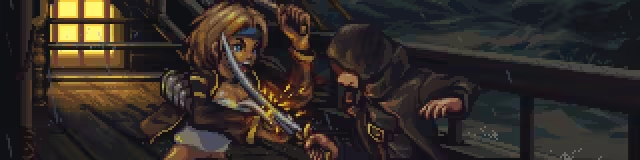
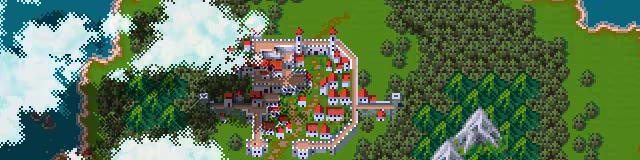
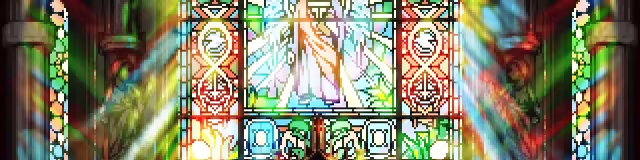
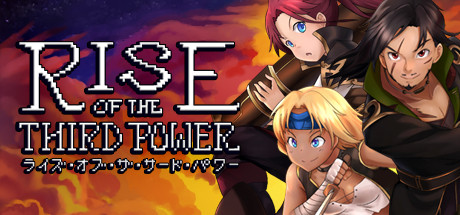
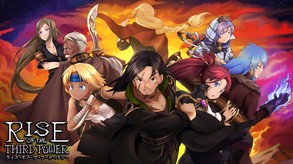
Rise of the Third Power is a retro-themed, console-style roleplaying game, loosely based on the political climate of Europe in the late 1930's. The story takes place in the land of Rin during the height of the Age of Sail, following the events that would lead to the greatest war in human history.
Modeled estimate, not a reported figure. How we estimate →
Media

About


Genres
Stats
All-time low is the lowest price we've recorded for this game since we started tracking it.
Engagement
Hours played at review time, across 43 reviews with recorded playtime.
Reviews
Themes across 43 recent reviews and how positive each mention is. A keyword signal, not full sentiment analysis.
positive critical· bar length = how often the theme comes up
Reviews
Great story and fun gameplay. Not overly complex. Battles don't get repetitive, nor interrupt as you try to move on the map, which often happens with JRPGs.
Overall, a decent FF6-like SNES-style JRPG. You play a band of [strike]Returners[/strike] Resistance who are fighting to stop the evil Empire, all while battling its demonic lieutenant, [strike]Kefka[/strike] Viktoriya over the course of the game. Your quest takes you across several continents and many cities on quests to undermine the Empire's plot. The game is set with 18th century level technology + magic. As my opening implies, the game pretty much lifts FF6's backstory wholesale, minus the whole Esper bit, with a much vaguer and under-explored magical religion taking its place. The combat is decent; it does a unique take on this sort of game whereby magical abilities are much more heavily utilized. This has advantages and disadvantages- yes, you're doing less button mashing of "Attack". But on the other hand, it means MP basically has to quickly regenerate, and combined with the lack of items or elemental affects- it ultimately leads to you finding an optimal party layout and just repeating the same queue of actions over and over and over again in battle after battle. Pros: + Beautiful pixel art + Large map with a lot to explore and do for a JRPG + Story is decently told, if not very original + Unique combat; nice to see a new take on this sort of combat + Decent music and sound effects + Great length for the price Cons: - Ending is awful. A couple mediocre boss fights (not particularly hard or interesting), followed by a story that just kind of ends without resolving anything. The epilogue just reiterates information you already knew about events that already happened. The story was intentionally not given an ending so they could make a sequel, which I think is in bad taste. A story should stand on its own- not as an ad for a sequel. - Leveling system is not my favorite. You auto-level up, which increases only your health. To increase your abilities you use a shared pool of Talent Points that are used through your whole party- meaning its very easy to starve one or two characters in favor of another. The game relies on "Reset Talent" item so you don't screw yourself over too badly. You also "craft" items get automatically and permanently equipped- which serve as leveling up your other core stats. This isn't "crafting" in any real sense of the word as far as crafting gameplay typically goes. - The "items" part of the gameplay is strangely underdeveloped. Despite status effects playing a substantial role in combat, especially later game, there are no items to cure status effects. Which basically means you MUST keep your primary healer character with you in every major battle. - Combat stretches can get very very long and samey- fighting the same exact creatures over and over and over again using the same exact strategies. Forebearers like FF6 and Chrono Trigger did a better job breaking up the action with cutscenes or story or varying enemy types. - Several unfinished parts of the game- you blow up a pirate's lair- but if you later return it is fully intact, minus all the NPCs. There's also a fort in the desert you're told has some faction it in, but is in fact totally devoid of NPCs (though still has items in it). There is no story reason for this- it's just clearly unfinished. The game also has a "team ability" feature whereby two PCs can attack together (a la Chrono Trigger). However, strangely many of the character combinations do not have a team ability- this just feels unfinished. - Game is uber-woke. Game does the typical modern trope of pretending there are no differences between men and women and makes the women that are in the game universally act like men. Almost all of the leaders you meet across the world are women or become women. Naturally, the game smacks you across the face with unskippable homosexuality and even sneaks pronoun propaganda in at one point. As we all know, the 18th century was a beacon of wokeness so this tracks perfectly and doesn't break immersion at all.
Me: "Mom, can we have Final Fantasy 9?" Mom: "We have FF9 at home" : Rise of the Third Power MC literally gets cucked. Hard pass. Character portraits are so awful - CalArt style. Utterly Immersion breaking.
one of the best indie RPG
softlocked 3 hours into the game with no way to heal and a mandatory boss fight next.
Loved this game. Combat is engaging. The inter-party dynamics are interesting from the beginning of the game till the end. Extremely well balanced between challenging and rewarding mechanics. The story and the writing are excellent. The characters are well developed. The music slaps. Because you can use all characters in meaningful ways each battle, may not have the best replayability. If you like this genre, this is a must play.
Close to excellence - faster movement speed would be nice, among other nitpicks.
Rise of the Third Power, developed by Stegosoft Games and published by DANGEN Entertainment, is a deliberate throwback to the golden era of 16-bit role-playing games, but one that tries to do more than simply replicate nostalgia. It takes familiar structural elements—turn-based combat, a party-driven journey, a world in turmoil—and frames them within a story that leans more heavily into political tension and personal stakes than many of its inspirations. The result is a game that feels rooted in tradition while still attempting to carve out its own identity. The narrative is the strongest and most distinctive aspect of the experience. Rather than focusing on a singular hero’s destiny, it builds its story around a group of characters caught in the middle of a fragile geopolitical situation. What begins as a relatively contained mission gradually expands into a broader conflict involving nations, ideologies, and the consequences of past wars. The writing places significant emphasis on dialogue, allowing characters to express their personalities, disagreements, and evolving relationships over time. There is a noticeable effort to balance humor with more serious themes, creating a tone that shifts naturally between lighthearted exchanges and weightier moments. This approach helps make the cast feel grounded, even when the overarching plot follows familiar genre beats. Combat follows a traditional turn-based system but incorporates enough nuance to remain engaging. Each character has a defined role within the party, and success depends on understanding how these roles interact. Buffs, debuffs, and status effects play a central role, often determining the outcome of encounters more than raw damage output. The ability to swap party members during battle adds flexibility, encouraging players to adapt their strategy based on the situation. While the system is not overly complex, it rewards thoughtful play and makes each encounter feel purposeful rather than routine. That said, the pacing of combat can become an issue over time. Battles tend to last longer than expected, particularly as enemy durability increases in later sections of the game. This can slow the overall rhythm, especially during extended dungeon sequences where multiple encounters occur in succession. While some players may appreciate the added challenge and strategic depth, others may find that it disrupts the flow of exploration and narrative progression. Exploration is structured in a largely linear fashion, but the game includes enough optional content and branching paths to create a sense of discovery. Towns and dungeons are designed with a clear sense of scale, offering enough detail to feel lived-in without becoming overly complex. Progression is tied closely to crafting and upgrading equipment rather than simply purchasing new gear, which adds a layer of resource management to the experience. This system integrates well with exploration, as materials gathered from enemies and environments directly contribute to character growth, though it can occasionally lead to minor grinding when specific resources are needed. Visually, the game embraces a pixel-art style that pays homage to classic RPGs while incorporating modern touches. Character portraits add personality to dialogue sequences, and environments are varied enough to keep the world visually engaging. The presentation is polished and cohesive, even if it doesn’t push technical boundaries. The soundtrack complements the experience effectively, providing a mix of energetic and atmospheric tracks that enhance both combat and storytelling moments. One of the game’s defining strengths is how its various elements come together to form a cohesive whole. The story, characters, and gameplay systems are closely linked, each reinforcing the others. Even when the narrative follows familiar patterns, the strength of the character interactions and the consistency of the design help maintain engagement. The game doesn’t attempt to reinvent the genre, but it demonstrates a clear understanding of what makes it appealing and builds on those foundations with care. However, it is not without its shortcomings. Certain aspects of the design, such as occasional backtracking or repetitive dungeon layouts, can feel more dated than nostalgic. Additionally, while the story is engaging, it doesn’t completely avoid predictability, particularly for players who are well-versed in RPG conventions. These issues don’t undermine the overall experience, but they do highlight the balance the game tries to strike between honoring tradition and moving beyond it. In the end, Rise of the Third Power is a well-crafted and character-driven RPG that succeeds in delivering a compelling journey built on familiar foundations. It offers a satisfying blend of strategic combat, thoughtful storytelling, and classic design sensibilities, making it a strong entry in the modern retro RPG space. While its pacing and reliance on genre conventions may limit its appeal for some, it stands as a solid and engaging experience for players who appreciate the style and structure of classic role-playing games. Rating: 8/10
Cool story, amazing visuals during battles for where it was made in, very much likeble crew of playable characters. Shame that the sequel may never come due to circusmtances, but it was a worth journey :) 10/10 for me, liked every aspect of it.
So far, so good. Decent story and combat. I really dig the soundtrack. This game comes pretty close to scratching that Chained Echoes itch.
Related
Related
Trends
Modeled estimate over time, reconstructed from Steam's monthly review histogram.
Audience
Estimated from the language of this game's reviews — a proxy for where players are, not official Steam demographics.
Languages: English, Japanese