Restart Mode is a 2D psychological detective about a single day that keeps rewinding to the beginning.
Modeled estimate, not a reported figure. How we estimate →
Media

About
Restart Mode is a 2D psychological detective about a single day that keeps rewinding to the beginning. The city is frozen on one day. You try different routes, different words, different actions—until you find the ones that lead to another day. But remember: attempts aren’t infinite, and you’ll need to break the loop as soon as you can. No one knows what will happen if you can’t escape.
Key features:
An open world where you relive the same day;
Choices with consequences: your words and actions change access, dialogue, and events;
An interesting and exciting story;
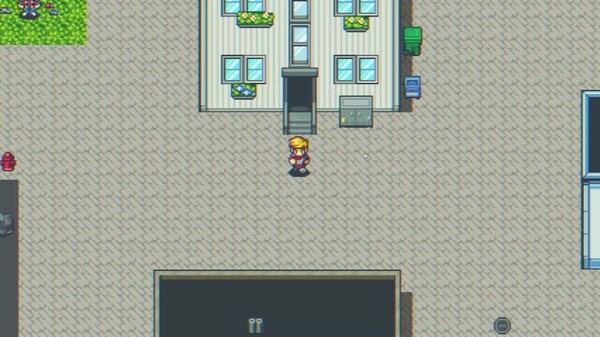
Pixel art: immerse yourself in a stylish retro world.
Genres
Stats
All-time low is the lowest price we've recorded for this game since we started tracking it.
Languages: English, Russian
Engagement
Reviews
Restart Mode, developed and published by Gamesforgames, is a compact but thought-provoking indie adventure that leans heavily into psychological storytelling and repetition-driven design. At its core, the game revolves around a single day that endlessly resets, trapping both the protagonist and the surrounding city in a looping state of suspended time. Rather than presenting this as a purely mechanical gimmick, Restart Mode treats the time loop as the foundation of its narrative identity, using repetition, altered choices, and subtle variations to create a sense of unease and curiosity. From the opening moments, the game establishes a quiet, introspective tone that invites players to observe, question, and experiment rather than rush toward conventional objectives. Gameplay in Restart Mode is deliberately restrained, favoring exploration, dialogue, and choice over action or complex systems. Each loop encourages players to wander familiar locations, speak with recurring characters, and test different decisions to see how the day unfolds. While the environment itself remains largely unchanged, the context surrounding interactions evolves as new dialogue options, story beats, and revelations become available across resets. This gradual unveiling of information is central to the experience, rewarding attentiveness and memory rather than mechanical skill. The limitation of actions within each loop adds a subtle layer of tension, encouraging players to think carefully about what they prioritize before the day inevitably restarts. The narrative structure is where Restart Mode finds its strongest footing. The repeating day creates an almost dreamlike atmosphere, blurring the line between routine and meaning as players attempt to piece together why the loop exists and how it can be broken. Conversations take on new weight as familiar dialogue gains additional context over multiple resets, transforming seemingly mundane exchanges into important narrative clues. The game leans into ambiguity, allowing players to interpret motivations and themes rather than spelling everything out explicitly. This approach gives the story a psychological edge, prompting reflection on agency, inevitability, and the consequences of choice within constrained systems. Visually, the game adopts a minimalist pixel art style that complements its themes of repetition and introspection. The environments are intentionally modest in scale and detail, which reinforces the feeling of being stuck within a small, self-contained world. While the art may appear simple at first glance, it proves effective in establishing mood, using subdued color palettes and consistent visual language to maintain immersion across multiple loops. The familiarity of revisiting the same spaces again and again becomes a feature rather than a drawback, subtly reinforcing the narrative tension of being unable to escape the cycle. Sound design and music further support the game’s reflective atmosphere. The soundtrack is understated, often fading into the background while maintaining a slightly melancholic tone that mirrors the protagonist’s situation. Audio cues and ambient sounds help ground the player in the world without overwhelming the experience, allowing the story and player decisions to remain the focal point. The restrained use of sound contributes to the sense of isolation and repetition, making each reset feel both expected and emotionally charged. In terms of pacing and scope, Restart Mode is a relatively short experience, but its design ensures that the limited length feels intentional rather than incomplete. The repetition inherent in the loop structure naturally pads playtime, but more importantly, it deepens engagement by encouraging players to revisit scenes with a new understanding. The game doesn’t attempt to offer sprawling content or endless variation; instead, it focuses on delivering a tightly controlled narrative experiment that respects the player’s time while still leaving a lasting impression. Overall, Restart Mode succeeds as a focused indie narrative experience that prioritizes mood, choice, and thematic cohesion over traditional gameplay complexity. It is a game that asks players to slow down, pay attention, and reflect on the meaning behind repeated actions rather than chase constant novelty. While it may not appeal to those seeking fast-paced gameplay or extensive systems, players who enjoy introspective adventures, time-loop storytelling, and psychological themes will find Restart Mode to be a quietly compelling journey. Gamesforgames delivers a thoughtful, understated title that uses its limitations as strengths, crafting an experience that lingers long after the final reset. Rating: 6/10
Related
Related
Trends
Concurrent players on Steam, sampled daily since tracking started.
Hours played at review time, across 21 reviews with recorded playtime.
Audience
Estimated from the language of this game's reviews — a proxy for where players are, not official Steam demographics.
Related
| Cloudy Valley | $8K | 66 | 77% | $6.99 |
| Fell in love with the Nobility girl As a member of the rebel organization | $8K | 60 | 88% | $6.99 |
| Bottle (2016) | $8K | 472 | 63% | $0.99 |
| Orten Was The Case | $8K | 162 | 95% | $3.74 |
| Roto Force | $8K | 134 | 92% | $3.19 |
| Hexa Turn | $8K | 113 | 89% | $2.99 |
Related
| Planet Coaster | $109.4M | 72K | 91% | $44.99 |
| House Flipper | $65.8M | 110.8K | 94% | $24.99 |
| SPORE™ | $45.8M | 72.2K | 93% | $19.99 |
| Train Simulator Classic | $29.3M | 29.3K | 72% | $5.99 |
| Golf With Your Friends | $23.7M | 74.7K | 87% | $14.99 |
| Jurassic World Evolution | $18.8M | 55.2K | 87% | $12.49 |