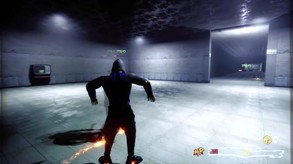
You wake up in an obscure room, a voice on the TV says that it is just a quest where you have to find the way out. Brute force is not enough to survive to get out of the room you will have to be patient, use your brain and have grit.
Modeled estimate, not a reported figure. How we estimate →
Media

About


Genres
Stats
All-time low is the lowest price we've recorded for this game since we started tracking it.
Languages: English*, Korean, Japanese, Russian, Simplified Chinese*languages with full audio support
Engagement
Hours played at review time, across 40 reviews with recorded playtime.
Reviews
Themes across 40 recent reviews and how positive each mention is. A keyword signal, not full sentiment analysis.
positive critical· bar length = how often the theme comes up
Reviews
Es una basura.
達成感!
チャプター2までフレンドと無事クリアできました!ワイワイ楽しくできますw
Good game:)
フレンドとやったら最高に楽しかったよ!!!!!(^ω^)
Quest Rooms, created by The Spiteful Games, is a cooperative puzzle experience that tries to fuse escape room logic with a more ominous, survival-leaning atmosphere. It begins with a familiar setup—players find themselves trapped in a mysterious environment with little explanation and are tasked with solving a sequence of rooms to progress—but it quickly reveals an intention to be more than a straightforward puzzle game. There is a constant undertone of danger, as if the rooms are not just challenges to overcome but tests designed with consequences, giving the experience a darker edge than typical escape room titles. The core gameplay is centered on observation and experimentation. Each room presents a collection of objects, clues, and mechanisms that must be understood and manipulated in the correct way to move forward. Some puzzles rely on logic and pattern recognition, while others lean into more abstract interactions that require players to try different approaches until something works. When the design aligns well, solving a room feels genuinely satisfying, as if you have decoded a carefully constructed system. At other times, however, the lack of clear feedback can make progress feel uncertain, with solutions that seem more discovered by chance than by deduction. The cooperative element is one of the game’s defining features, allowing players to tackle challenges together. In a group, the experience becomes more dynamic, as players can share ideas, divide responsibilities, and piece together clues more efficiently. Communication becomes an essential tool, and the sense of achievement is amplified when a difficult puzzle is solved collectively. That said, not every part of the game fully supports multiple participants. Some rooms or mechanics are inherently linear, meaning that one player may end up doing most of the interaction while others wait, which can reduce engagement in larger groups. Progression is structured around a series of rooms that increase in complexity as you advance. Early sections introduce basic mechanics, but later areas layer multiple puzzle elements together, demanding more attention and coordination. This escalation creates a sense of growth, though it is not always smooth. Difficulty spikes can appear unexpectedly, interrupting the flow and forcing players to spend extended periods stuck on a single challenge. Hidden areas and optional secrets add an extra layer for those who enjoy exploring beyond the main path, rewarding curiosity but sometimes requiring a level of persistence that not all players will find appealing. Atmosphere plays a significant role in shaping the overall experience. The environments are deliberately minimal and somewhat oppressive, creating a feeling of isolation that complements the game’s themes. Sound design contributes to this tension, though it can be inconsistent, occasionally enhancing the mood and at other times fading into the background. The game aims to create a sense of unease rather than outright horror, and while it does not always fully achieve that goal, the intention is clear throughout. From a technical standpoint, the game shows signs of being a work in progress. Controls can feel imprecise, and interactions are not always as smooth as they need to be for a puzzle-focused experience. Performance issues and a general lack of polish can interrupt immersion, particularly during moments that require careful timing or precise movement. These elements highlight the game’s current state and suggest that it has not yet reached its full potential. Ultimately, Quest Rooms is a game built on strong ideas that are not always fully realized. Its combination of cooperative puzzle-solving and a more serious tone gives it a distinct identity, and there are moments where that vision comes together in a satisfying way. However, inconsistencies in design, pacing, and technical execution hold it back from being as engaging as it could be. In the end, it offers an experience that can be enjoyable, especially when played with friends who are willing to work through its rough edges. It is a game with clear ambition and a foundation that could grow into something more refined, but in its current form, it feels uneven despite its potential. Rating: 6/10
이게임 하지 마세요 그냥 리셋 기능이 말 안되고 노잼임 100원 주면 할듯
suck
재밌는데?
진짜 개 조읏같습니다.
Related
Related
Trends
Modeled estimate over time, reconstructed from Steam's monthly review histogram.
Momentum
Pace estimated from the game's recent review growth (our daily snapshots) at its own sales-per-review ratio — a momentum signal, not booked sales.
Audience
Estimated from the language of this game's reviews — a proxy for where players are, not official Steam demographics.
Related
| Breath of Life | $38.2K | 99 | 77% | $14.99 |
| Girls Like Robots | $38.2K | 288 | 70% | $6.99 |
| Rainbow Reactor | $38.2K | 106 | 93% | $14.99 |
| Leaving DNA | $38.2K | 197 | 86% | $11.99 |
| Packing Life | $38.2K | 99 | 76% | $9.99 |
| TWINKLE STAR SPRITES | $38.2K | 201 | 74% | $7.99 |