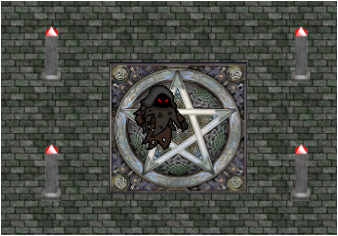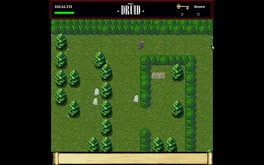
Find the key and solve the maze. Oh yeah stay alive!
Modeled estimate, not a reported figure. How we estimate →
Media
About


Stats
All-time low is the lowest price we've recorded for this game since we started tracking it.
Languages: English, Turkish
Engagement
Hours played at review time, across 40 reviews with recorded playtime.
Reviews
Themes across 40 recent reviews and how positive each mention is. A keyword signal, not full sentiment analysis.
positive critical· bar length = how often the theme comes up
Reviews
yürürken sürekli takılıp duruyor istediğin kadar yaratık çldür sürekli spawn oluyorlar bitmiyıor karakter görüntüde koşuyor ama yürümenin yarısı kadar hareket ediyor
Project Druid – 2D Labyrinth Explorer is a retro-inspired maze adventure developed by Cemil Tasdemir and published by Back To Basics Gaming. Designed as a deliberately simple and nostalgic experience, the game draws inspiration from early computer titles that emphasized exploration and navigation within complex labyrinths. Rather than pursuing modern trends such as cinematic storytelling or elaborate progression systems, the game focuses on straightforward mechanics built around navigating mazes, avoiding enemies, and solving environmental challenges. The result is a minimalist project that attempts to capture the spirit of early dungeon exploration games while presenting it through a clean two-dimensional format. The premise places players in control of a druid-like adventurer who must explore a series of labyrinths filled with hostile creatures and hidden passages. Each level is structured as a maze that must be navigated carefully in order to locate a key and reach the exit. While the narrative remains extremely light, the overall theme suggests a journey through mysterious underground ruins populated by monsters and guarded by powerful bosses. Instead of relying on story sequences to move the game forward, progression is driven entirely by gameplay, encouraging players to focus on the challenge of mastering each labyrinth. The core gameplay revolves around exploration and spatial awareness. Each labyrinth is filled with twisting corridors, dead ends, and narrow pathways that must be carefully investigated. The player moves through these environments searching for the key required to unlock the exit, all while avoiding or confronting enemies that roam the maze. Because the levels are designed to be confusing and sometimes disorienting, players must develop a strong sense of direction and gradually memorize the layout of each stage. This emphasis on navigation mirrors the design philosophy of classic dungeon exploration games, where discovering the structure of the environment was part of the main challenge. Enemies scattered throughout the labyrinths create additional tension during exploration. While combat mechanics remain relatively simple, encounters can still become dangerous when monsters block narrow corridors or appear unexpectedly while searching for the key. Players must carefully decide whether to engage these enemies or avoid them entirely in order to preserve their progress. The confined layout of the mazes means that positioning and timing are often more important than raw combat ability, reinforcing the game’s focus on careful movement and planning. The game contains a small set of levels that gradually increase in complexity and difficulty. Early stages introduce players to the basic mechanics of exploration and enemy avoidance, while later labyrinths become more intricate and dangerous. Boss encounters also appear at certain points in the progression, offering a break from the usual maze navigation by introducing enemies that require more focused attention and strategy. These encounters help create moments of intensity within an otherwise methodical exploration experience. Visually, the game adopts a deliberately retro aesthetic built around simple two-dimensional graphics. The environments consist of tile-based labyrinths that evoke the style of early computer games from the 1980s and 1990s. Character sprites and enemy designs are relatively basic, but they clearly communicate their roles within the game world. While the visuals may appear dated compared to modern indie titles, the simplicity of the presentation reinforces the developer’s intention to create a nostalgic experience that prioritizes gameplay over graphical sophistication. The audio design follows the same minimalist approach. Basic sound effects accompany movement, combat, and enemy interactions, providing immediate feedback for player actions. Background music is subtle and unobtrusive, helping establish an atmosphere without distracting from the exploration. Although the sound design is not particularly elaborate, it fits the game’s retro style and supports the overall tone of the experience. One of the defining characteristics of Project Druid – 2D Labyrinth Explorer is its intentionally modest scope. The game was developed largely by a single creator and reflects the constraints and creativity of independent development. Rather than attempting to build a large open world or complex systems, the developer focused on delivering a small but functional experience centered on classic labyrinth gameplay. This design philosophy makes the game feel closer to an experimental tribute to older titles than a fully modernized adventure. However, the simplicity that defines the game can also become its greatest limitation. Because the gameplay loop revolves almost entirely around exploring mazes and avoiding enemies, the experience can begin to feel repetitive over time. The relatively small number of levels also means that the overall length of the game is limited. Players expecting deep progression systems, varied mechanics, or an expansive storyline may find the experience somewhat shallow compared to more ambitious indie projects. Despite these shortcomings, the game still offers a certain charm for players who appreciate retro gaming traditions. Its focus on exploration and navigation provides a type of challenge that is rarely seen in modern titles, where fast action and complex systems often dominate. For players interested in experiencing a simple maze adventure reminiscent of early computer games, Project Druid – 2D Labyrinth Explorer can provide a brief but nostalgic experience. Overall, Project Druid – 2D Labyrinth Explorer stands as a small but sincere homage to classic labyrinth exploration games. While its limited scope and repetitive gameplay prevent it from achieving broader appeal, it succeeds in delivering a straightforward retro challenge that highlights the fundamentals of maze-based game design. Players who enjoy minimalist indie experiments or nostalgic gameplay may appreciate what the game attempts to accomplish. Rating: 5/10
Boring gameplay complete with sluggish controls and unfair enemies.
Aún si este juego costase 0€, me parecería caro para lo que es. Un simulador de fuerza gravitacional, con el movimiento random propio del juego menos jugado en minijuegos.
No vale la pena, ni gratis.
trading caards!
insgesamt sehr schlecht gemacht das spiel. ich empfehle es nicht.
♥♥♥, кривая ♥♥♥♥♥♥, просто за текстуру можно улететь, в обычных углах застревает и т.д. Кое как прошёл.
i guess it's alright.
for medal
Related
Related
Trends
Concurrent players on Steam, sampled daily since tracking started.
Momentum
Pace estimated from the game's recent review growth (our daily snapshots) at its own sales-per-review ratio — a momentum signal, not booked sales.
Audience
Estimated from the language of this game's reviews — a proxy for where players are, not official Steam demographics.
Related
| Under A Star Long Cold | $6.4K | 103 | 81% | $2.99 |
| Island Cities - Jigsaw Puzzle | $6.4K | 245 | 94% | $1.99 |
| FATAL ERROR - RTS | $6.4K | 65 | 95% | $4.99 |
| Horror Tale 1: Kidnapper | $6.4K | 73 | 85% | $4.99 |
| 7th Floor | $6.4K | 56 | 98% | $4.99 |
| Lost Circus VR - The Prologue | $6.4K | 76 | 83% | $4.99 |