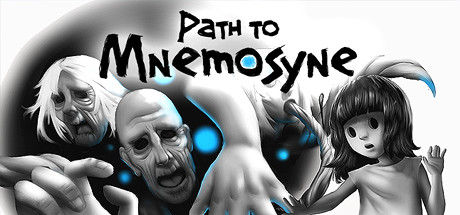
Path to Mnemosyne, developed and published by DevilishGames, is an experimental puzzle adventure that feels more like a journey through the subconscious than a conventional game. Drawing inspiration from Greek mythology and surrealist art, it immerses the player in a haunting exploration of memory, perception, and self. The title refers to Mnemosyne, the Greek goddess of memory and mother of the Muses, whose name has long been associated with the act of remembering. This mythological foundation gives the game its philosophical undertone: you are not simply solving puzzles or walking down a path—you are venturing into the labyrinth of the human mind. What emerges is an experience that is at once hypnotic, unsettling, and strangely introspective, relying on minimal storytelling and an overwhelming sensory atmosphere to convey meaning.
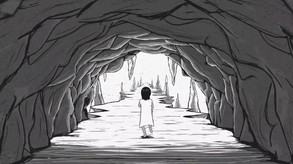
The game opens with a young girl awakening in an endless corridor that stretches into infinity. This corridor, constantly shifting and looping in impossible ways, serves as both the physical and symbolic backbone of the experience. The player’s only task is to move forward, advancing deeper into the void as fragmented memories manifest in strange and unsettling forms. The camera’s continuous zooming effect gives the illusion of falling endlessly inward, creating a disorienting sense of movement that evokes the feeling of descending into one’s own psyche. As you progress, abstract shapes, pulsating organic patterns, and unsettling imagery fill the path—eyes watching from the darkness, silhouettes twisting into bizarre figures, and dreamlike architecture that defies logic. The result is a surreal and immersive psychological landscape that reflects the instability of memory itself.
Path to Mnemosyne’s gameplay is intentionally minimalist, focusing on environmental puzzles that blend seamlessly with the visual design. There are no inventory systems or dialogue trees; instead, puzzles emerge naturally from the environment as part of the flow of the journey. Players might need to manipulate symbols, recall patterns, activate switches, or follow sequences of visual cues to unlock the way forward. These challenges are generally intuitive rather than difficult, designed to keep players engaged without disrupting the hypnotic rhythm of movement. Each puzzle feels like a fragment of recollection, as if the act of solving them represents reconstructing lost memories piece by piece. The controls are simple—move forward, interact, and occasionally sidestep or jump—and this simplicity reinforces the game’s meditative quality. The focus is not on mastering mechanics, but on surrendering to the slow, deliberate unraveling of the experience.
The most striking aspect of Path to Mnemosyne lies in its presentation. The visual design is a masterclass in minimalism and surrealism, rendered entirely in black and white with occasional splashes of muted color. The art style resembles a series of charcoal drawings or pen sketches brought to life, with organic lines that twist and morph unpredictably. This sketchbook aesthetic gives the world a tactile, dreamlike texture, blurring the boundary between the real and the imagined. The continuous zooming effect is one of the game’s defining features—it creates the illusion that the entire world is folding inward, as though you are being pulled through layers of thought and memory. This visual trick not only establishes a distinct identity for the game but also enhances its psychological depth, suggesting that every step forward brings you closer to the truth, yet further from reality.
Sound design plays a vital role in sustaining the game’s atmosphere. Instead of a conventional musical score, Path to Mnemosyne uses ambient soundscapes, whispers, and abstract noise to evoke unease and introspection. Footsteps echo in the void, distorted murmurs drift in the distance, and occasionally a faint melody cuts through the silence like a half-remembered dream. These auditory elements complement the visuals perfectly, grounding the experience in a constant state of tension and mystery. The absence of dialogue reinforces the theme of isolation, leaving players to interpret the meaning of events through their own intuition. This combination of sparse sound and abstract imagery results in a sensory experience that is unsettling yet oddly soothing, drawing players into a state of trance-like focus.
Despite its originality, Path to Mnemosyne is not without its shortcomings. The puzzles, while elegantly integrated, can feel repetitive over time, and the lack of variation in mechanics may leave some players yearning for greater complexity. The game’s brevity—lasting only a few hours at most—further emphasizes its experimental nature rather than offering a full narrative arc. The story remains deliberately vague, offering little explicit explanation for the protagonist’s journey or the imagery encountered along the way. For some, this ambiguity may feel frustrating, while for others, it will enhance the sense of mystery and personal interpretation. What the game lacks in traditional storytelling, it compensates for with atmosphere, using visual metaphor and emotional tone to communicate ideas about memory, trauma, and self-discovery.
In the end, Path to Mnemosyne stands as a haunting example of how games can serve as interactive art. It is less concerned with challenge or progression and more focused on sensation and introspection. The experience is brief but memorable, leaving players with the impression of having wandered through a living dream—a space where thought, memory, and imagination converge. DevilishGames has crafted a work that defies easy categorization: part puzzle game, part art installation, and part psychological meditation. It asks players not to conquer or escape, but to contemplate. For those who appreciate abstract storytelling, minimalist design, and a willingness to explore the boundaries of what interactive media can evoke, Path to Mnemosyne offers a journey that lingers long after the final scene fades—a descent into memory itself, both beautiful and disquieting.
Rating: 7/10