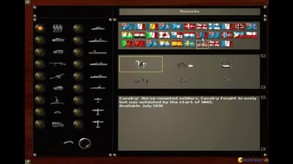
Pacific General explores the Pacific front of the Second World War. Taking control of Axis or Allied forces, you must strategically battle your way through the Eastern and Western front of the Pacific war, using a wide array of land, air and naval forces.
Modeled estimate, not a reported figure. How we estimate →
Media

About

Genres
Stats
All-time low is the lowest price we've recorded for this game since we started tracking it.
Languages: English*, German*languages with full audio support
Engagement
Hours played at review time, across 41 reviews with recorded playtime.
Reviews
Themes across 41 recent reviews and how positive each mention is. A keyword signal, not full sentiment analysis.
positive critical· bar length = how often the theme comes up
Reviews
Last time I played this game, it was 1997. I was a young lad and my dad brought me Su-27 Flanker by Strategic Simulations Inc (SSI) as my 2nd video game to play. It was complicated with a textbook manual with all the flight controls. Attached to the game were demos of Pacific General, Imperialism. What a throwback... Runs well on Windows 10.
Klasyczek z lat 90tych, nic dodać.
Yes.
SSi <3
Selbst im leichtesten Modus ist die Kampagne nicht zu gewinnen. Die KI ist immer viel stärker als die eigenen Einheiten und somit sind die Missionsziele nicht erreichbar. Absoluter Fehlkauf :-(
Κλασσικό παιχνίδι στρατηγικής με εξάγωνα με πολύ ενδιαφέροντα σενάρια
Thrown together! Its not very player pleasing...you cannot restart a mission easily, you cannot select single missions, you dont see your mission objectives. I know its old, but also back then some developers knew what is important for players.
Good classic tile based strategy wargame
runs great on windows 11 for me. no bugs or crashes. its a little retro but still very playable in 2026. the best thing abt these strategy games is the never really become that outdated. simple? sure. ugly? eh, to some. but still as good as any other "hex-hopper" as i call them lol personally i think the old graphics have a certain charm to them :)
Pacific General, developed by Strategic Simulations and published by SNEG, represents one of the most polished and confident evolutions of the classic “General” formula. Set against the backdrop of the Pacific theater during World War II, it takes the accessible, turn-based design of its predecessors and expands it into a broader, more layered strategic experience. Rather than radically reinventing the series, it refines its systems and introduces new dimensions—most notably naval warfare—resulting in a game that feels both familiar and meaningfully expanded. The core gameplay revolves around a hex-based battlefield where units move and engage in a deliberate, turn-by-turn structure. Infantry, armored units, aircraft, and naval forces all play distinct roles, and success depends on understanding how these elements interact. Positioning is critical, as terrain, supply lines, and unit type all influence combat outcomes. The pace is methodical, encouraging players to think several moves ahead rather than react impulsively. Each decision carries weight, whether it’s committing to an attack, repositioning for defense, or conserving strength for future engagements. What distinguishes Pacific General from earlier entries is its emphasis on naval operations and the interplay between land, sea, and air forces. Carrier groups, battleships, and transport fleets are not just supporting elements but central components of many scenarios. Controlling the seas often dictates the outcome of land battles, while air superiority can shift the balance across entire regions. This interconnected design adds a layer of strategic depth, as players must coordinate across multiple domains rather than focusing on a single front. It gives the game a broader sense of scale, capturing the complexity of the Pacific theater in a way that feels both engaging and manageable. The campaign system is one of the game’s strongest features, offering a series of interconnected scenarios where performance directly influences progression. Success in one battle can open new paths or alter the direction of the campaign, allowing for alternate historical outcomes. Playing as either the Allied forces or Japan provides different perspectives on the conflict, with each side presenting its own challenges and strategic considerations. This branching structure not only enhances replayability but also creates a sense of continuity, making each victory or defeat feel like part of a larger narrative. A key element that reinforces this continuity is the persistent core force. Units that survive missions gain experience and can be upgraded, becoming more effective over time. This system encourages players to value their forces beyond individual battles, as seasoned units become critical assets. The attachment that forms with these units adds an emotional layer to the gameplay, making losses more impactful and victories more satisfying. It also introduces long-term planning, as decisions made early in a campaign can influence outcomes much later. Despite its many strengths, the game does show its age in certain areas. The mechanics, while refined, remain closely tied to the established formula, which may feel predictable to those familiar with the series. The artificial intelligence can sometimes lack adaptability, relying on straightforward tactics rather than complex strategies. Additionally, the pacing, while deliberate, can become slow during longer scenarios, particularly for players accustomed to faster-paced modern strategy games. Visually, Pacific General adopts a clean and functional presentation that prioritizes clarity over detail. Units are represented with simple sprites, and the interface is designed to provide all necessary information without unnecessary complexity. While it lacks the visual flair of contemporary titles, this straightforward approach ensures that the battlefield is easy to read, allowing players to focus entirely on strategy. What ultimately makes Pacific General stand out is its balance. It manages to offer meaningful strategic depth without becoming overly complicated, making it accessible to newcomers while still engaging for experienced players. The addition of naval mechanics and branching campaigns gives it a distinct identity within the series, elevating it beyond a simple continuation of earlier ideas. In the end, Pacific General succeeds as a refined and enduring strategy experience. It captures the scale and intricacy of its historical setting while maintaining a clear and approachable design. For fans of turn-based wargames, it remains a rewarding and highly replayable title that demonstrates how thoughtful iteration can be just as effective as innovation. Rating: 7/10
Related
Related
Trends
Modeled estimate over time, reconstructed from Steam's monthly review histogram.
Momentum
Pace estimated from the game's recent review growth (our daily snapshots) at its own sales-per-review ratio — a momentum signal, not booked sales.
Audience
Estimated from the language of this game's reviews — a proxy for where players are, not official Steam demographics.
Related
| Where's My What? | $2.3K | 136 | 47% | $0.99 |
| Mortos | $2.3K | 102 | 48% | $0.99 |
| 斩毒:黑与白(Narcotics Police:Black and White) | $2.3K | 153 | 59% | $0.99 |
| SudoKube | $2.3K | 53 | 77% | $1.99 |
| Skidaddle Skidoodle | $2.3K | 99 | 91% | $1.49 |
| Into A Dream | $2.3K | 76 | 91% | $2.39 |