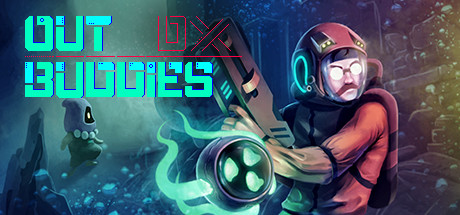
Run, gun and explore an open undercity in this otherworldly non-linear Metroidvania adventure about the Old Gods, strange creatures and the remnants of a lost world!
Modeled estimate, not a reported figure. How we estimate →
Media

About


Stats
All-time low is the lowest price we've recorded for this game since we started tracking it.
Languages: English, French, German, Japanese, Korean, Russian, Simplified Chinese, Portuguese - Brazil
Engagement
Hours played at review time, across 40 reviews with recorded playtime.
Reviews
Themes across 40 recent reviews and how positive each mention is. A keyword signal, not full sentiment analysis.
positive critical· bar length = how often the theme comes up
Reviews
I really wish I could like this game. It looks pretty and polished, and it's very obvious a lot of care and effort was put into it, but it fails horribly at the most fundamental things, mostly the controls. The controls are a mile wide and an inch deep for no reason. For example, why do I need to hold down an unrelated trigger to shoot upwards while moving? This was figured out all the way back in 1986 with Metroid 1, it shouldn't be that hard to make it so you can simply hold up on the dpad while moving left and right to do that. Jumping feels like rocket thrusters in the sense that your jump starts really really slow before speeding up at the apex of your jump. Generally you want the opposite kind of behavior in a platformer where your upwards velocity starts fast and slows down towards the apex of your jump since it makes dodging by jumping far easier. Your run button also has no reason to exist either. Normally when a platformer has a run button it comes with some compromises to your handling, but you can still stop and change directions on a dime when running, so what's the point? You've got no reason to not keep that button held down at all times. Combine that with a buttload of input lag, and it makes for a character that feels utterly miserable to control. I can't be bothered to play past the first boss, even if the level design and overall content is nice, all because your character controls are so butchered. Oh yeah, and the music is really boring and repetitive. I don't care that you change the intensity of the instruments when you're in heavy combat. Dynamic music is only cool when the composition is interesting from the start.
Very solid Metroidvania but doesn't deviate a whole lot from the formula. The one added wrinkle of your buddy's hacking abilities is unfortunately not super-easy to get a grip on but thankfully, it's not hard to pull off. You also can't increase your health like many other Metroidvanias, which mostly results in bosses you can't just spam attacks on and be ok. In most ways, it's about as close to a Metroid clone in atmosphere and weapons within largely original assets. But as long as you're not expecting anything new and like a nice challenge, Outbuddies should entirely satisfy.
the game seemed like it would be great but what tied me up was the controls. its like too many inputs overwhelm the game and its a real damn shame because it made something that could of been amazing into a poor experience. i might revisit it to see if i can work around it but i wouldnt count on it.
Controls are bizarre and not fun. Too many weird input combos for basic moves like a long jump. A number of keys are hard coded and can't be mapped to inputs, so the result is a very clunky and unergonomic control scheme.
The game is completely underrated. It's a fantastic metroid-like game! And all this with splendid graphics from an indie team.
Неплохой метройд. Нужно привыкнуть к управлению. Без использования бега герой ощущается неповоротливым, отчасти это можно списать на громоздкий водолазный костюм, который носит наш протагонист. Больше всего поначалу будут раздражать прыжки, т.к. герой норовит оттолкнуться от стен там, где это совсем не нужно, и прилететь в объятия противников или сесть задом на шипы. Потом, когда дадут двойной прыжок и ранец для коротких полётов, станет гораздо проще. Во второй половине игры, по заветам Самус Аран, мы сможем перемещаться в виде шара почти по всем поверхностям, и надобность к акробатике отпадёт. Нет прокачки. Совсем. Забудьте об увеличении здоровья или очках навыков. Максимум, что может предложить игра - это один обвес для каждого из орудий главного героя: увеличенный боезапас для ракетницы и усиленные выстрелы для других. Зато все виды оружия нужны, одни помогают открывать запертые двери, другие служат перемещением по локации. Есть ещё мины, при помощи взрывов которых мы открываем пути к разным секретам и срезкам на другие уровни. Особняком стоит пузырестрел, сначала я им почти не пользовался и удивлялся, зачем его разработчик добавил в игру. Но потом я начал перепроходить игру за короткое время на достижение, и пузырестрел действительно пригодился: он обездвиживает на время врагов, и мы, не отвлекаясь на уничтожение, несёмся дальше по уровню. А ещё у вас есть спутник-дрон, умеющий взламывать некоторых противников. И давать подсказки к простым головоломкам. А самое важное - он умеет сканировать местность на предмет секретов, не нужно как в метройде, ракетами разносить каждую стену. Слабая часть игры - это биомы. Внешне они не сильно друг от друга отличаются, в основном палитрой и набором противников, которых мало видов и часть просто перекрашена в другой цвет. Здесь незачёт. Картой пользоваться неудобно. Она не масштабируется, нельзя поставить свои отметки. Карта плохо читается, она вся исполосована линиями, указывающими пути телепортов. Восклицательные знаки говорят, что здесь есть что-то важное, но при этом не факт, что вам нужно туда именно сейчас, это тоже сбивает. Боссы - это украшение данной игры. Внешне они похожи на древних богов, которых описывал Говард Лавкрафт. К каждому требуется свой подход. Не всех нужно нашпиговывать пулями, иногда надо подумать головой. Самое сложное достижение связано с ними. В игре есть режим босс-раш, где нужно победить каждого из девяти боссов без получения урона. Это очень не просто, я кучу попыток потратил на финального супостата, вспоминая всех родственников до десятого колена. По заверениям разработчика, игру делали в свободное время семь лет. Глядя на неудовлетворительный результат в Стиме, задаёшься вопросом: а стоила ли овчинка выделки? Или потраченное на разработку время автор игры лучше бы посвятил жене и ребёнку? Многие конкуренты по жанру в магазине выглядят гораздо интересней, OUTBUDDIES DX мало, что может предложить уникального. Неудивительно, что она затерялась среди подобных. Но мне в целом игра понравилась с оговорками и потраченного времени не жаль. P.S. На деке игра чувствует себя прекрасно, ни одного вылета за всё прохождение. Частота кадров упала лишь раз, когда заряд моей батареи ушёл в красную зону.
I usually don't review games, but I felt the need to review this one because at the time of writing it has mixed reviews on Steam, so I wanted to help it get closer to positive. I will admit immediately that the early game felt rough: there were too many controls and the movement felt janky. Early game is one of the most important parts of the game to get right and this game's reception shows that, more often that not you lose a player early and never get them back. Run button also felt completely unnecessary and I felt the game would be better if running speed was just the default. As I got deeper though, I enjoyed the game more and more. I liked exploring this world, and the abilities were fun to play around with. I absolutely loved the atmosphere, though I'm biased because I love deep underwater vibes in general. The boss fights were really good aside from the sheep and the fish. Boss rush mode (which is pretty oddly named - usually that name implies beating all bosses in a row, but here it's individual boss rematches hitless) was a real treat.
thought i get a kind of metroid clone, but the clunky controls ruined it for me. the map sucks too. movement and leveldesign seemed kindah weird to me after a while.
I honestly think this was one of the most fun metroid-based metroidvanias, specially the middle sections. The exploration was great, but I'd appreciate better locations for teleporters/shortcuts . Some of the boss fights were very cool too, though I feel like other bosses seemed to favour a going-berserk playstyle too much. My main complaints are: - In the later sections there are too many instant deaths and traps. Even though deaths are not punishing (at least on normal difficulty, I don't know about anything else) they get annoying. - The way secrets are hidden is way, way too basic. It's strange to have a lot of badly hidden things, a lot of times following the same patterns - The controls are strange and counter-intuitive. But also you will easily learn them on the first sections without much pressure. The learning curve is quite fine, in my opinion. The game also seems to throw some things at you to remind you of some of the mechanics
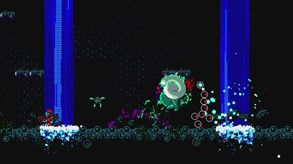
Outbuddies DX, developed by Julian Laufer and published by Headup, is a dark, atmospheric Metroidvania that carries both the spirit of classic exploration games and the creative ambition of a deeply personal indie project. Set deep beneath the ocean’s surface, the game casts players as Nikolay Bernstein, a maritime archaeologist who awakens after a shipwreck to find himself trapped 36,000 feet below sea level in a mysterious ancient undercity called Bahlam. With only a floating robotic companion known as “Buddy” for company, Nikolay must uncover the secrets of this ruined world, face its monstrous inhabitants, and find a way back to the surface. It’s a premise steeped in mystery and isolation, and the game embraces it fully—delivering a brooding, intricate experience that feels both familiar and alien, both mechanical and organic. From the outset, Outbuddies DX establishes a tone of deep unease and wonder. The pixel art style is lush and meticulously detailed, painted in dark blues, purples, and greys that evoke a haunting subterranean world lit only by faint bioluminescence. The environments feel ancient and alive, a network of half-ruined temples, flooded caverns, and decaying machinery that suggest a civilization long lost to time. The atmosphere is heightened by an ambient soundtrack that shifts from unsettling drones to hypnotic melodies, immersing the player in the oppressive stillness of the deep. It’s a world that invites exploration not just through visual design, but through a sense of slow discovery—the kind of place where every corner might reveal a relic, a hidden chamber, or a fragment of lore that expands the mystery of Bahlam. It’s clear that Laufer took inspiration from the mood and tone of early Metroid titles, but he adds a sense of cosmic melancholy that makes the experience distinctly his own. Mechanically, Outbuddies DX blends traditional Metroidvania exploration with innovative ideas that alter the player’s relationship to the environment. The defining feature is the Buddy system—a small, drone-like companion that can be controlled independently to manipulate objects, scan areas, move obstacles, or even hack certain enemies. This dual-character dynamic creates a unique rhythm of play, requiring players to think about puzzles and combat from two perspectives. Some areas can only be accessed by sending Buddy ahead, while others demand coordination between both entities to solve environmental challenges. This feature gives the game a layer of tactical depth uncommon in most 2D exploration titles and makes problem-solving a central component of the experience. In combat, the mechanics are demanding but fair: each weapon and tool has weight and timing, and boss battles, though sometimes punishing, are skillfully designed to test adaptability as much as reflex. The structure of Outbuddies DX follows the traditional Metroidvania formula—non-linear exploration, backtracking with new abilities, and environmental storytelling—but with a distinct emphasis on complexity. The world of Bahlam is vast and interconnected, with multiple zones that feel distinct in both layout and mood. However, this ambitious design sometimes becomes a double-edged sword. The in-game map, while functional, can feel opaque, occasionally misrepresenting paths or failing to mark key areas. It’s easy to get lost in the labyrinthine corridors, especially since many environments share a similar aesthetic palette. While this confusion contributes to the game’s sense of being lost in an alien world, it can also lead to frustration during extended play sessions. The sparse use of fast-travel points and limited navigational assistance make retracing your steps a time-consuming process, and the lack of clear direction in early stages can overwhelm players unfamiliar with the genre’s trial-and-error approach. Despite these frustrations, the sense of discovery remains rewarding. Each upgrade feels meaningful, not just as a gameplay enhancement but as a new key to understanding the environment. Gaining the ability to swim freely, survive in hostile conditions, or manipulate new mechanisms opens previously inaccessible spaces and reveals hidden layers of Bahlam’s design. The pacing of these discoveries feels carefully curated, encouraging players to experiment and think laterally about how to progress. The world’s inhabitants—both monstrous and sentient—add a sense of continuity to the setting, as if the city’s long decline has left behind remnants of a culture still clinging to life. Through environmental clues and subtle interactions, you piece together the civilization’s downfall, and this gradual storytelling gives the game a quiet, introspective power. Where Outbuddies DX truly shines is in its atmosphere and tone. Every visual and auditory element works toward the goal of immersion. The ambient soundtrack evokes a constant sense of pressure and solitude, like the echo of being trapped beneath the weight of an ocean. The pixel art, detailed to a remarkable degree for a solo-developed project, captures both the beauty and decay of a dying world. Light sources shimmer faintly in the darkness, mechanical remnants hum with forgotten energy, and water drips rhythmically in the distance. Even the enemy designs—mutated sea creatures and biomechanical horrors—reinforce the feeling that Bahlam is both a tomb and a living organism. It’s a hauntingly cohesive world that rewards patience and curiosity rather than quick reflexes alone. Not everything in Outbuddies DX works perfectly. The controls can feel heavy or awkward during precise platforming sections, particularly when wall-jumping or switching rapidly between Nikolay and Buddy. Some boss battles rely on patterns that can feel overly punishing without clear visual telegraphs, requiring multiple attempts before their logic becomes clear. The lack of early-game guidance can alienate those who prefer tighter progression systems. Yet these flaws, while noticeable, are products of ambition rather than neglect. Laufer’s design philosophy clearly favors depth and freedom over accessibility, and that choice gives the game a distinctive identity in a genre often crowded with safer, more streamlined entries. Ultimately, Outbuddies DX is a work of passion—a singular vision realized through years of meticulous craftsmanship. It captures the essence of classic Metroidvania design while introducing enough originality to stand apart from its influences. Its haunting art direction, layered world-building, and inventive dual-character system create a deep and memorable experience for players willing to invest time and patience. For those who crave atmospheric exploration, demanding platforming, and the thrill of uncovering secrets in a world that feels ancient and alive, Outbuddies DX offers a journey unlike any other. It is imperfect, challenging, and occasionally disorienting, but also deeply rewarding—a true labor of love that reminds players why the Metroidvania genre continues to endure. Rating: 6/10
Related
Related
Trends
Modeled estimate over time, reconstructed from Steam's monthly review histogram.
Momentum
Pace estimated from the game's recent review growth (our daily snapshots) at its own sales-per-review ratio — a momentum signal, not booked sales.
Audience
Estimated from the language of this game's reviews — a proxy for where players are, not official Steam demographics.
Related
| 7 Days to Die | $425.3M | 403.5K | 87% | $44.99 |
| Mount & Blade II: Bannerlord | $309.8M | 293.9K | 88% | $49.99 |
| Palworld | $279.6M | 445.8K | 94% | $20.99 |
| The Forest | $254.8M | 678.5K | 96% | $19.99 |
| Clair Obscur: Expedition 33 | $243.3M | 273.2K | 95% | $47.99 |
| Ready or Not | $238.1M | 338.9K | 78% | $49.99 |
Related
| Joe Danger | $8.9K | 236 | 80% | $1.49 |
| Dig Night | $8.9K | 103 | 99% | $3.99 |
| Block Tower TD | $8.9K | 87 | 84% | $4.99 |
| Putin Life | $8.9K | 323 | 89% | $0.99 |
| The Dolls: Reborn | $8.9K | 310 | 46% | $0.84 |
| Claire | $8.9K | 420 | 65% | $0.99 |