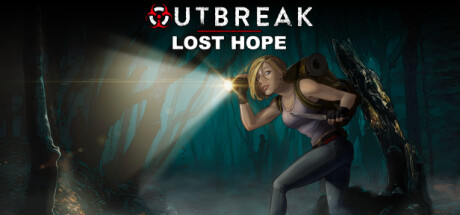
Outbreak: Lost Hope is a third-person survival horror title developed and published by Dead Drop Studios LLC that wears its genre inspirations openly while striving to tell a more intimate, emotionally grounded story. Set during a devastating zombie outbreak, the game follows Gwen, a mother separated from her young daughter Hope during the early chaos of the epidemic. This personal motivation immediately sets the tone, framing the horror not just around monsters and violence, but around desperation, guilt, and the instinct to protect family at any cost. Rather than focusing on global catastrophe, the narrative narrows its scope to one woman’s struggle to survive long enough to make things right.
The atmosphere is one of the game’s strongest elements. Environments are dark, confined, and deliberately oppressive, drawing heavily from classic survival horror design where tension comes from limited visibility and constant uncertainty. Abandoned streets, decaying interiors, and blood-stained corridors are arranged to make exploration feel risky, with every corner potentially hiding danger. The over-the-shoulder camera reinforces this unease by restricting awareness, forcing players to rely on sound cues and cautious movement rather than full situational control. The result is a persistent feeling of vulnerability that aligns well with the game’s survival-focused design philosophy.
Resource management plays a central role in shaping the experience. Ammunition, healing items, and inventory space are all tightly limited, making every encounter a calculated risk. Combat is rarely empowering; instead, it is something to be avoided when possible. Players must constantly decide whether an enemy is worth the cost of bullets or whether retreat and evasion are the smarter options. Inventory management, including the use of limited save items, adds another layer of tension, turning progress itself into something that must be carefully earned rather than freely granted.
Exploration is methodical and deliberate, rewarding players who take their time to search environments thoroughly. Locked doors, keys, environmental puzzles, and hidden items encourage backtracking and careful observation, reinforcing a sense of place rather than funneling players down a single path. Environmental storytelling fills in the gaps of the world’s collapse, with notes, audio logs, and visual details hinting at the lives disrupted by the outbreak. These moments help ground the horror in human tragedy rather than abstract disaster, strengthening the emotional weight of the journey.
Combat encounters are tense but uneven. The undead enemies are dangerous in groups and unpredictable in tight spaces, which reinforces the survival horror feel, but enemy variety and behavior can feel repetitive over time. Firearms and melee weapons are functional but lack the responsiveness and impact seen in higher-budget titles, sometimes making encounters feel more frustrating than thrilling. Still, the game’s design discourages constant fighting, and when combat is approached strategically, it succeeds in maintaining pressure and reinforcing the feeling that survival is never guaranteed.
Pacing is another area where the game shows both ambition and inconsistency. Quiet exploration and puzzle-solving sections effectively build suspense, but these moments are occasionally interrupted by stretches of repetitive combat or resource scavenging that slow narrative momentum. The emotional core of Gwen’s story remains compelling, but its delivery can feel fragmented, with key developments sometimes buried beneath routine gameplay. When the story and mechanics align, the experience is engaging and immersive; when they drift apart, the game’s rough edges become more noticeable.
Visually and technically, Outbreak: Lost Hope reflects its indie scale. Character animations and environmental detail are serviceable but lack polish, and certain interactions can feel stiff or dated. These limitations do not undermine the game’s atmosphere entirely, but they do prevent it from achieving the smoothness associated with more refined survival horror experiences. Sound design, however, does much of the heavy lifting, using ambient noise, distant groans, and sudden audio cues to maintain tension even when visuals fall short.
Ultimately, Outbreak: Lost Hope is a heartfelt and earnest survival horror game that prioritizes atmosphere, resource management, and emotional stakes over flashy presentation or action-heavy gameplay. Its strengths lie in its mood, its personal narrative focus, and its commitment to classic survival horror principles. While technical limitations, uneven pacing, and repetitive combat keep it from fully realizing its potential, it still delivers a tense and often affecting experience. For players who appreciate slower, methodical horror games with an emphasis on vulnerability and story rather than power fantasy, Outbreak: Lost Hope offers a grim but meaningful journey through loss, fear, and determination.
Rating: 5/10