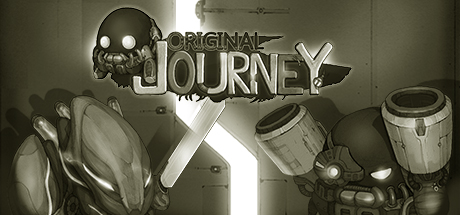
Original Journey, developed by Bonfire Entertainment and published by Another Indie, is an ambitious and visually distinct 2D action game that combines elements of platforming, shooting, and roguelite progression into a hand-drawn science fiction adventure. It presents a world both strange and melancholic, where you play as a member of the Ato, a race of sentient plant-like beings who set out to the mysterious Planet Shadow in hopes of finding an artifact that can save their dying home world. What follows is a journey that balances whimsy and gloom, wrapped in a sketchbook aesthetic that immediately sets it apart from the usual indie action fare. From its art style to its tone, the game strives to blend charm and sorrow into a tale of survival, ambition, and quiet desperation.
The first thing that stands out about Original Journey is its visual design. Every environment, enemy, and character is drawn in a monochrome pencil-sketch style, accented occasionally with subtle shades of color to highlight important features like energy or weapon effects. The result is an aesthetic that feels raw and organic, as though the world itself was scribbled into being by the protagonist’s imagination. This distinctive art direction gives the game a strong identity, making it instantly recognizable. The style contributes to the story’s atmosphere—a planet that feels both alive and decaying, mysterious yet hostile. It’s a striking approach that makes exploration a visual pleasure, even when the environments themselves begin to blur together in layout. Unfortunately, the same artistic commitment that makes the game beautiful also introduces some functional challenges: during combat-heavy moments, the dense monochrome visuals can make it difficult to distinguish enemies and projectiles, creating moments of visual confusion.
Gameplay in Original Journey blends several familiar systems into a hybrid experience. Each expedition begins at the Ato base, where you can craft and upgrade gear, improve your mech’s components, and prepare for missions. Once launched onto Planet Shadow, the game transitions into a looping structure of short, combat-focused levels set on floating islands. Every encounter pits you against waves of alien enemies in self-contained arenas, with an emphasis on mobility and quick decision-making. You can equip two weapons at a time, combining firearms, energy rifles, rocket launchers, and melee options to suit your playstyle. Between waves, you can deploy turrets for support or retreat to the base to invest resources into new upgrades. The roguelite element comes from this risk-reward structure—venturing deeper yields more valuable loot but increases the risk of losing it all if you die before returning. It’s a satisfying loop in concept, and when the combat clicks, the game delivers bursts of excitement and tactical satisfaction.
However, while the framework is solid, the execution can feel uneven. The level design tends toward repetition, with each new area reusing the same arena structure and similar enemy types. Combat encounters rely more on attrition than strategy, with many fights boiling down to avoiding overlapping bullet patterns in confined spaces. The aiming system, restricted by limited shooting angles, can make certain enemies frustrating to deal with—particularly flying foes or those positioned just beyond reach. This limitation adds challenge but sometimes feels like an artificial barrier rather than an intentional design choice. Over time, the repetition of level objectives, coupled with minimal environmental variation, begins to wear down the game’s sense of momentum. What initially feels like an engaging grind soon risks slipping into monotony, especially for players seeking strong progression or narrative rewards.
The story, though built upon a creative premise, serves more as a backdrop than a driving force. Dialogue exchanges between the Ato characters hint at themes of desperation, loyalty, and the ethical cost of survival, but the writing doesn’t dig deeply into them. Still, the melancholic tone is effective, enhanced by the haunting score and the desolate visuals. There’s a subtle sadness in exploring a dying world filled with both wonder and hostility, and the contrast between the cute, plantlike protagonists and their grim mission gives the game an emotional texture that lingers. The presentation conveys a sense of earnest ambition—even if the story never quite rises to match the intensity of its concept, it maintains a quiet sincerity that makes it hard to dismiss.
From a mechanical perspective, Original Journey’s strength lies in its upgrade and customization systems. The ability to enhance weapons, armor, and deployable tools provides a sense of progression that keeps players engaged through the repetition. Collecting materials and refining builds adds a satisfying layer of depth, encouraging experimentation between runs. The game’s structure rewards persistence more than perfection, making it approachable even when its difficulty spikes. The soundtrack complements the action nicely, mixing atmospheric tracks with bursts of intensity during combat, further grounding the experience in its alien melancholy.
Still, for all its creativity, Original Journey struggles to maintain consistent pacing and polish. Its ambition sometimes outstrips its refinement—controls feel stiff at times, aiming lacks precision, and the repetition of combat zones and objectives lessens the sense of discovery. Yet despite these flaws, there’s an undeniable charm to the game. It possesses a handmade quality, the kind of earnest craftsmanship that defines many indie projects. You can sense the developers’ affection for their creation in every visual detail and narrative hint, even when the mechanics don’t fully cohere.
Ultimately, Original Journey is a game of strong ideas and imperfect execution—a beautiful sketch of a larger masterpiece that never quite gets fully painted. Its distinct art style, moody atmosphere, and blend of genres make it stand out, and for players who appreciate experimental indie titles with emotional undercurrents, it’s an experience worth exploring. While it may not satisfy those craving tight combat or flawless pacing, it offers a glimpse into a world that feels both imaginative and heartfelt. Original Journey might not achieve greatness in every aspect, but it carries enough soul and originality to make its trek across Planet Shadow a memorable one.
Rating: 6/10