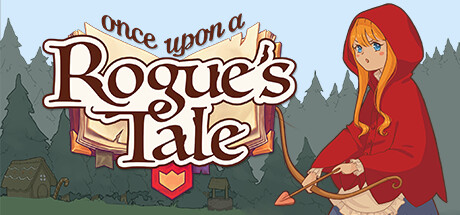
Once Upon a Rogue's Tale is a storybook-inspired roguelike deckbuilder that blends tactical card play, dice-driven decision-making, and branching narrative choices into a playful yet strategic experience. Developed by PolyPirates UG in collaboration with Lizard Child and published by PolyPirates UG, the game sets out to reinterpret classic fairy tales through the lens of a constantly shifting adventure, where familiar characters and motifs are reshaped by player choices and procedural structure. From the outset, it establishes a tone that is lighthearted and imaginative while still demanding thoughtful planning and adaptability from the player.
At the heart of the game is its turn-based combat system, which combines traditional deckbuilding mechanics with an added layer of dice management. Cards represent attacks, defenses, abilities, and special effects, but their effectiveness is often tied to how players manipulate and spend dice values during each turn. This fusion introduces a meaningful element of randomness that must be actively managed rather than passively endured. Instead of relying purely on optimized decks, players are encouraged to weigh risk versus reward, deciding whether to trade dice, save them for later turns, or trigger powerful effects at just the right moment. This keeps combat dynamic and ensures that even well-established strategies require constant adjustment.
The roguelike structure strongly supports experimentation. Each run unfolds across procedurally generated paths filled with combat encounters, narrative events, and branching decisions that influence both gameplay and story outcomes. Loss is an expected part of progression, but each attempt provides new insights into card synergies, enemy behavior, and event consequences. Over time, players learn how different builds interact with the dice system, encouraging creative approaches rather than rigid optimization. This loop of discovery and adaptation gives the game strong replay value and keeps repeated runs feeling distinct.
Narrative presentation is woven directly into gameplay through interactive story events rather than long, linear cutscenes. The game frames each run as a living storybook, where choices subtly reshape the tale being told. Well-known fairy tale figures appear in unexpected roles, sometimes as allies, sometimes as antagonists, and often with motivations that challenge their traditional portrayals. These encounters add personality and context to the journey, reinforcing the sense that the world reacts to player decisions. While the narrative is not deeply scripted, it succeeds in creating a sense of continuity and thematic cohesion across procedurally generated runs.
Visually, Once Upon a Rogue’s Tale adopts a colorful, hand-drawn style that draws from anime influences and illustrated storybooks. Character designs are expressive and immediately readable, which helps maintain clarity during combat while also reinforcing the game’s playful tone. Environments are stylized rather than detailed, but this simplicity works in the game’s favor by keeping the focus on mechanics and narrative beats. The interface is clean and intuitive, making it easy to understand card effects, dice interactions, and enemy intentions without overwhelming the player.
Progression systems beyond individual runs are present but intentionally restrained. Unlocks and new content expand the pool of cards, events, and possibilities rather than dramatically increasing player power. This design choice helps preserve the balance between challenge and accessibility, ensuring that success still depends on decision-making rather than sheer accumulation of upgrades. As an early access title, the game already feels mechanically coherent, while also leaving room for future expansion in terms of characters, story arcs, and deeper meta progression.
The pacing of the experience strikes a comfortable balance between strategy and storytelling. Combat encounters are engaging without being overly long, and narrative events provide breaks in intensity that reinforce the game’s fairy tale atmosphere. Difficulty scales gradually, allowing new players to grasp the mechanics while still offering enough complexity to keep experienced deckbuilder fans invested. Occasional spikes in randomness can lead to unexpected losses, but these moments tend to feel like part of the roguelike identity rather than unfair setbacks.
Overall, Once Upon a Rogue’s Tale stands out as a charming and thoughtful entry in the roguelike deckbuilding genre. Its combination of card play, dice management, and narrative choice creates a distinctive gameplay identity that feels both accessible and strategically rich. While still evolving, it already offers a solid foundation built on creativity, replayability, and thematic cohesion. For players who enjoy tactical deckbuilders with a narrative twist and a whimsical aesthetic, it provides a satisfying and imaginative journey that rewards experimentation and repeated play.
Rating: 8/10