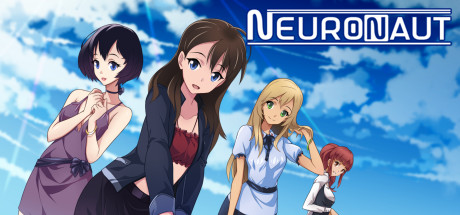
The protagonist of this story is an office clerk who has the ability to leave his body for the astral plane and put his consciousness into other people.
Modeled estimate, not a reported figure. How we estimate →
Media

About
Stats
All-time low is the lowest price we've recorded for this game since we started tracking it.
Languages: English, Russian
Engagement
Reviews
Themes across 40 recent reviews and how positive each mention is. A keyword signal, not full sentiment analysis.
Reviews
why cant you seggs the cat
крутая игра, всем советую только играйте одни +-, а то меня спалили на постельной сцене((((
Yes.
Related
Related
Trends
Concurrent players on Steam, sampled daily since tracking started.
Hours played at review time, across 40 reviews with recorded playtime.
positive critical· bar length = how often the theme comes up
[h1][b]🎮 Reseña de Neuronaut[/b][/h1] [h2]Resumen del Juego[/h2] Neuronaut es una mezcla de Aventura + Casual + Indie que se disfraza de “viaje mental” pero en el fondo sabe exactamente a qué viene: una novela visual estilo anime con contenido adulto (sí, de ese que Steam te advierte para que después finjas sorpresa). La propuesta es simple: leer, elegir (a veces), y dejar que el juego te lleve por una ruta más “neuronal” que espacial. La primera impresión es la clásica: interfaz limpia, avance por texto, y un ritmo pensado para que no te canses… porque tampoco te exige. Es un juego para una sesión relajada, con Steam Cloud para que tu “progreso” esté a salvo (por si te da amnesia selectiva) y 13 logros que te dicen “felicidades, seguiste respirando mientras hacías clic”. [h2]Lo Bueno y lo No Tan Bueno (con el cerebro en modo avión)[/h2] Lo Bueno: ✅ 🏆 13 logros: suficientes para rascar dopamina sin volverte loco ✅ ☁️ Steam Cloud: tu partida vive en la nube, como tus decisiones cuestionables ✅ 👤 Un jugador: perfecto para no tener que explicar nada a nadie ✅ 👨👩👧👦 Préstamo familiar: comparte “cultura” con la familia… si te atreves ✅ 📈 187 recomendaciones: algo hizo bien para que la gente lo defienda sin sonrojarse (demasiado) Lo No Tan Bueno: ❌ 🧍♂️ 0 jugadores actuales: el lobby está tan vacío que hace eco (y eso que es singleplayer) ❌ 📖 Enfoque de novela visual: si esperabas “aventura” con gameplay, aquí la aventura es decidir cuándo parpadear 😴 ❌ 🔞 Contenido sexual y desnudos: si no es lo tuyo, esto no te “convierte”; solo te incomoda ❌ 🎯 Experiencia casual al extremo: exige tan poco que a ratos parece que el juego juega contigo, no al revés ❌ ⏳ Rejugabilidad incierta: en este tipo de experiencia, si la historia no te atrapa, no hay “segunda vuelta” que la salve [h2]Tabla de Evaluación[/h2] [table] [tr][th]Aspecto[/th][th]Puntuación (0-10)[/th][th]Comentario[/th][/tr] [tr][td]Jugabilidad[/td][td]5[/td][td]Más lectura y clics que mecánicas; cumple, pero no sorprende.[/td][/tr] [tr][td]Dificultad / IA[/td][td]3[/td][td]No hay mucha IA que evaluar; el reto es mantener la atención.[/td][/tr] [tr][td]Contenido[/td][td]6[/td][td]Tiene “lo que promete” para su público, pero no se siente amplio.[/td][/tr] [tr][td]Gráficos / Video[/td][td]6[/td][td]Estética anime funcional; no parece revolucionario.[/td][/tr] [tr][td]Historia[/td][td]6[/td][td]Correcta para una experiencia narrativa; depende de si conectas con el tono adulto.[/td][/tr] [tr][td]Ambientación[/td][td]6[/td][td]Sostiene el viaje casual/indie sin desmoronarse.[/td][/tr] [tr][td]Efectos (VFX)[/td][td]5[/td][td]Discretos; no es un juego que viva de sus fuegos artificiales.[/td][/tr] [tr][td]Música[/td][td]5[/td][td]Acompaña, pero difícil que la tararees después.[/td][/tr] [tr][td]Voces[/td][td]4[/td][td]No destaca; en este formato se nota cuando falta impacto.[/td][/tr] [tr][td]Diversidad[/td][td]4[/td][td]El enfoque es bastante específico; no parece buscar amplitud de miras.[/td][/tr] [tr][td]Rendimiento[/td][td]7[/td][td]Al ser una experiencia ligera, debería ir fluido en casi cualquier PC.[/td][/tr] [tr][td]Rejugabilidad[/td][td]4[/td][td]Si ya viste el “show”, no hay mucho gancho para repetir.[/td][/tr] [tr][td][b]Total Puntuaciones (Aceptable)[/b][/td][td][b]5.0[/b][/td][td]Una VN adulta decente: cumple, pero no enamora.[/td][/tr] [/table] [h2]Conclusión (Aceptable)[/h2] Neuronaut es ese juego que algunos van a llamar “experiencia narrativa” y otros “hacer clic con estilo”. Si te gustan las novelas visuales casuales con estética anime y contenido adulto, probablemente encuentres una sesión entretenida y sin complicaciones, con logros para sentir que “avanzaste” en la vida. Pero seamos controversiales: 0 jugadores activos es un silencio que se siente. Sí, es un jugador, pero esa cifra igual grita “esto no está en la conversación”. Aun así, 187 recomendaciones indican que tiene su nicho bien alimentado. ¿Vale la pena? Solo si entras con expectativas realistas: historia ligera, interacción limitada y el contenido adulto como parte central del paquete. [h3]Recomendación de Compra (Solo si eres del nicho)[/h3] Puntuación Total: 5.0/10 Número de jugadores activos al momento de hacer esta review: 0 Descuento máximo registrado: N/A Veredicto: [i]Aceptable, pero con el piloto automático puesto[/i] Si buscas una aventura con gameplay, aquí vas a encontrar más “pasar texto” que jugar. Si lo tuyo es una novela visual indie casual con contenido adulto y solo quieres desconectar el cerebro un rato, Neuronaut cumple… sin hacer mucho ruido, como sus jugadores actuales.
[quote][b]Check out our [url=store.steampowered.com/curator/36364102-Horny-Hentai-Festival/]Steam curator[/url] , [url=www.youtube.com/curatorhhf/]YouTube channel[/url] and [url=twitter.com/hhfcurator]Twitter[/url]![/b][/quote] [18+ VN] You're astral projection man and could have romances with 4 girls. Several choices, multi ending. You can change 18+ on/off by F9 key instantly. [18+ ADV] 幽体離脱できる主人公となり、女の子とえっちな関係を持とう。マルチED。
um clássico caso de ideia boa, execução ruim, além de uma falta de dinamismo que chega a ser triste, as CGs são ok, mas a soundtrack é inexistente e a escrita é tão enrolada ao ponto de parecer que você está ouvindo um sermão da igreja, terrível
Интересная завязка. Читать было интересно. Особенно понравились анекдоты и архитектура города. а ну и 18+ сцены годные. Особенно с Ани.
Art is so-so, and there aren't many unique postures/poses. However the story is very good, I really enjoyed the plot and character development.
Neuronaut is an erotic visual novel in which you play a guy whose life hasn't been to rosy. Thinking how dull and grey his life has been, he comes across an old man handing him a thin book. Though he's declaring the old man a scammer, he decides to read the book that appears to be about spiritual techniques. Just before passing them off as humbug, he decides to try to separate his mind from his body... and it works! He then proceeds to hone this ability until he is ready to enter other people. And that's where his life slowly begins to regain color. This visual novel has several endings, though all except one end in death one way or another. Along the way you meet four different girls which you can "seduce", as the game says, at least once each, leading into a sex scene. The art style is not too simple and pretty nice. The story feels coherent, though there are some minor issues in a few places that make it a bit unclear or hard to follow. There also some good music to enjoy while reading through the story. All in all, not much to say other than it being a solid visual novel.
Neuronaut, developed by GUT.GAMES in collaboration with 7DOTS and published by GUT.GAMES, is an atmospheric narrative adventure that delves into themes of consciousness, identity, and moral choice. It places players in the shoes of an unassuming office worker who suddenly discovers the extraordinary ability to project his mind into the thoughts and bodies of others. This premise, both simple and conceptually rich, forms the backbone of an experience that is less about action and more about introspection. Through this unusual gift, the protagonist is forced to navigate not only the hidden emotions and motives of the people around him but also the moral consequences of trespassing into their private inner worlds. The result is a story that plays out as a philosophical exploration of what it means to understand another person—and where the boundaries of the self truly lie. The gameplay in Neuronaut operates at the intersection of a visual novel and an interactive psychological drama. It unfolds primarily through dialogue, internal monologues, and contextual choices that slowly piece together the mystery surrounding the protagonist’s newfound power. Each decision shapes not only how characters perceive you but also how you come to perceive yourself. The structure is linear for the most part, though the narrative occasionally offers choices that can slightly alter dialogue outcomes or perspectives on key events. These moments of agency are subtle rather than transformative; the game’s goal is to immerse the player in emotional nuance rather than to encourage mechanical experimentation. The pacing is deliberate, encouraging reflection over reaction, and while the playtime is relatively short—around two hours on average—it makes efficient use of its runtime to establish tone, setting, and thematic weight. Visually, Neuronaut embraces a minimalist aesthetic that suits its introspective nature. The art design relies on clean compositions, subdued color palettes, and subtle visual effects to distinguish the real world from the mental spaces the protagonist explores. When you enter another person’s mind, the shift is felt immediately: the environments take on an ethereal glow, edges blur, and the soundtrack deepens into ambient soundscapes that suggest both beauty and disquiet. These transitions are simple but effective, reinforcing the sensation of crossing into fragile psychic territory. The user interface complements this focus on immersion by keeping the screen uncluttered, allowing the narrative and dialogue to command attention. Music and sound design play a particularly important role in maintaining atmosphere. A faint hum, a distorted melody, or a low-frequency pulse often underscores moments of revelation or unease, subtly amplifying the psychological tension without breaking the quiet rhythm of the experience. The narrative itself is Neuronaut’s true centerpiece. What begins as a mysterious gift gradually becomes a burden as the protagonist grapples with the ethical implications of entering other minds. Some individuals you inhabit reveal trauma, secrets, or desires they have long suppressed, and each new encounter adds complexity to the story’s moral landscape. The writing doesn’t rely on shock or spectacle; instead, it draws power from its restraint. The tone is introspective and melancholic, with the game often inviting you to question not just what you are doing, but why. There is a recurring sense of voyeurism in the gameplay, an awareness that understanding others comes at a personal and moral cost. Though the script occasionally leaves certain ideas unexplored, its strongest moments come when it allows the player to sit in discomfort—to feel both the power and guilt of intrusion. The result is a game that prioritizes emotional truth over narrative completeness, allowing meaning to emerge from the spaces between its lines. However, Neuronaut is not without its limitations. Its brevity, while lending focus to the experience, also leaves some of its ideas underdeveloped. The story introduces intriguing psychological and philosophical concepts—questions of free will, empathy, and manipulation—but often resolves them only partially. Similarly, while the act of inhabiting different minds provides variety in tone and perspective, the lack of significant mechanical evolution can make the gameplay feel static by the final act. Players expecting multiple branching paths or dramatically divergent endings may find themselves wishing for greater interactivity. Yet, these constraints also give the game a sense of cohesion. Neuronaut is not trying to be a sprawling narrative; rather, it’s a contained reflection on human connection and moral consequence, designed to leave the player thinking rather than simply entertained. From a technical standpoint, Neuronaut runs smoothly and performs well even on lower-end hardware. Its simplicity is both an aesthetic and functional choice—load times are nearly nonexistent, transitions between scenes are seamless, and there are no intrusive menus or performance hiccups to disrupt the flow of the story. The developers clearly aimed for an accessible experience that draws players in with atmosphere rather than spectacle. While the presentation may lack the polish of larger productions, its sincerity and focus more than compensate. It’s the kind of game where the minimalist visuals become an asset, inviting the player to project their own imagination into the spaces the story leaves open. In the end, Neuronaut succeeds as a quiet, contemplative experience that rewards patience and emotional engagement. It’s not a game about grand choices or elaborate systems; it’s about entering the human mind—literally and metaphorically—and confronting the fragility and complexity found there. Its short length and restrained gameplay make it best suited for players who appreciate narrative-driven art games that emphasize mood, theme, and introspection over mechanics or challenge. For those who value storytelling that blurs the line between empathy and intrusion, Neuronaut offers a compelling, if fleeting, journey. It leaves behind a sense of haunting curiosity—a feeling that even after stepping away, parts of its world still linger in the corners of your mind, echoing questions that resist easy answers. Rating: 8/10
Audience
Estimated from the language of this game's reviews — a proxy for where players are, not official Steam demographics.
Related
| Slobbish Dragon Princess 2 | $25.1K | 127 | 98% | $14.99 |
| Astrodle | $25.1K | 224 | 89% | $5.99 |
| SNK 40th ANNIVERSARY COLLECTION | $25.1K | 321 | 81% | $4.49 |
| Slip 'n Slime | $25.1K | 85 | 94% | $9.99 |
| Elevator Action™ -Returns- S-Tribute | $25.1K | 86 | 87% | $14.99 |
| Kinky Fight Club | $25.1K | 119 | 77% | $7.99 |