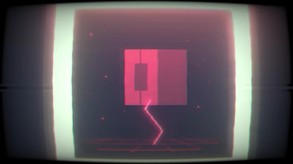
Become symphonic in Narita Boy! A radical action-adventure as a legendary pixel hero trapped as a mere echo within the Digital Kingdom. Discover the mysteries behind the Techno-sword, lock swords with the corrupt and tainted Stallions. Save the world!
Modeled estimate, not a reported figure. How we estimate →
Discounts
Every price cut of more than 20% we have observed, in each market that quoted one, with this game's chart position on either side of it. These are episodes, not a model: a sale is one event, and one event cannot tell you what the next one will do.
Reviews, worldwide (the counter carries no country): 0/day in the week to Aug 18 → 0.86/day in the week after.
About
Flashback to the 80s. The Creator, a genius of his time, creates a video game console called Narita One with its flagship title being a game called Narita Boy.
Narita Boy becomes a tremendous hit! Copies of cartridges are flying off physical shelves worldwide. Within weeks Narita Boy is the best-selling video game of all time, critically acclaimed for its power-fantasy wielding Techno-sword and taking players on a journey like no other.
Meanwhile, inside the binary code, the digital realm connects with reality. Him has returned and deleted The Creator’s memories. Supervisor program, Motherboard, and her agents have activated the Narita Boy protocol.
The Stallions are coming, and the Digital Kingdom needs a hero.
Become symphonic in Narita Boy! A radical action-adventure as a legendary pixel hero trapped as a mere echo within the Digital Kingdom. Discover the mysteries behind the Techno-sword, lock swords with the corrupt and tainted Stallions. Save the world!
Pixel perfectionist – The shining example of a perfectionist at work. Experience the visuals of a retro-era brought to life with hand-drawn animations.
Explore the mysteries of the Digital Kingdom – Venture up, down, left, and right to discover the darkest depths of the broken binary code in this never-ending story*.
Max out the Trichroma – Equipped with the only weapon able to defeat the Stallion threat, take the Techno-sword and plunge it into the digital hearts of your enemies. Do not let this empire strike back, be the true blade runner.
Diehard enemies – Face foes only imagined from your darkest fever-dreams!
Show those bosses the bytes – Face-off against tons of totally radical and awesome bosses. Become the boss terminator, by overcoming the deadly Crab, DragonBot, Black Rainbow, and so much more!
Sounds of the retro-grade-times - Feel fresh waves of synth wash over you while travelling the Digital Kingdom. With kickin’ beats that will send you back to the future.
*there is an end to the story.
Sums Steam only; Xbox, PlayStation, GOG, Epic, Nintendo publish no volume signal, so the true total is higher by an unknown amount.
| Store | Price | Audience | Score | Chart | Est. revenue |
|---|---|---|---|---|---|
SteamYou are here | $24.99 | 1.9Kreviews | 78% | — | $498.8K |
| $4.99−80% | 1.1Kratings | 84% | — | not modelled | |
Engagement
Reviews
Themes across 69 recent reviews and how positive each mention is. A keyword signal, not full sentiment analysis.
Reviews
Amazing atmosphere and music, can't believe it's been five years now since I've played this on xbox, the gameplay is fun but for the sequel a map and maybe abandoning the screen locked waves of enemies would make it a perfect game, also Big Narita needs more love calling all 80s/synthwave connoisseurs
There is hardly a single aspect of this game that works. As a platformer, it is abysmal — if it can even be called a platformer. Ninety percent of the time, you simply walk left or right across a flat surface. Actual platforming is almost nonexistent, limited to the occasional jump across a few platforms or climbing a couple of walls. As an action game, it fares no better. Only two enemy types require anything beyond mindlessly mashing the basic attack button. Every other enemy can be defeated with the simplest attacks, and most of their own attacks can be avoided by merely stepping out of range. The color-switching mechanic is equally uninspired. Not only is the idea of color-coded enemies painfully overused, but the implementation is frustrating as well. Switching colors takes just long enough to make encounters with mixed enemy groups feel clumsy rather than challenging. Boss fights are equally forgettable. Each boss has only a handful of attacks, all of which can be learned within a minute or two, leaving the rest of the fight devoid of tension or excitement. The story is as generic as they come: fight through endless waves of bad guys, help the good guys, defeat the final villain, roll the credits. The secondary storyline about an overworked game developer — presumably inspired by the creators' own experiences — is meant to add emotional weight, but instead comes across as self-indulgent and completely fails to evoke any sympathy. Even the presentation has nothing to offer. The 8-bit visuals and soundtrack rely entirely on nostalgia, yet contribute nothing original or memorable. There is simply nothing here that justifies spending your time on this game.
Media

Related
Related
Price dynamics, follower growth, revenue and sales trajectories with interactive tooltips
This and every other Pro feature is free until October 20, 2026. A free account is all it takes.
Reviews, worldwide (the counter carries no country): 0.29/day in the week to Jul 30 → 0.29/day in the week after.
For scale, across Steam · Top Sellers · Brazil over the last 30 days: the 25 chart moves that followed a price cut of more than 20% went a median of 10 places towards #1, and the 2,413 moves with no price cut behind them went 2 away. One store, one chart, one country — it is the only place we have enough observations to say even that.
Prices outside the United States have been collected since 6 August 2026 and chart positions since 19 July 2026, so a cut older than that has no market to compare and a market that joined later has no history yet. Nothing here is converted between currencies.
Genres
Stats
All-time low is the lowest price we've recorded for this game since we started tracking it.
Languages: English, French, German, Spanish - Spain, Japanese, Korean, Portuguese - Brazil, Russian, Simplified Chinese, Traditional Chinese
| $24.99 |
| 653ratings |
| 88% |
| — |
| not modelled |
| $4.99−80% | 120ratings | 70% | — | not modelled |
| $24.99 | — | — | — | not modelled |
| $24.99 | — | — | — | not modelled |
Matched by title — a reused name can pair the wrong games. * is a critic aggregate. Prices and positions are each store's United States storefront; Epic charts worldwide. Audience and Score too, except Steam's, which is worldwide.
Hours played at review time, across 69 reviews with recorded playtime.
positive critical· bar length = how often the theme comes up
A 2D platformer with absolutely godawful controls and platforming that - to give you an idea of how far up its own ass it is - opens with a two and a half minute cutscene and then expects you to read (I counted) SIXTY-EIGHT dialogue windows before you embark on your first real "mission." Give me a break. Overall a hamfisted cringe vibe, too. Perfect example of this is the death screen: Every time you die it displays an (aesthetically incongruous) image that says "REST IN FORCE" and speaks it out loud. Brutally lame stuff.
Aesthetic is great and normally that's enough for me to love a game but the combat and everything else was so lack luster that I couldn't be bothered.
Narita Boy é um jogo difícil de recomendar por alguns dos motivos que inclusive me chamaram atenção para querer jogar. O gráfico é o principal destaque, ele é extremamente brilhante, joguei durante a noite e eu me senti numa injeção infinita de dopamina com o brilho na minha tela comendo meu cérebro enquanto eu arrebentava os inimigos andando reto (e isso foi um problema). No começo eu não prestei atenção na história, só queria sair batendo em tudo igual os outros jogos do gênero (em sua grande maioria). Depois de uns dias voltei e recomecei o save pra fazer a platina com atenção na história e nos detalhes. Por gráfico e história é uma recomendação fácil, mas a jogabilidade tem instabilidades bem chatinhas.
Nearly a 10/10 game for me. Amazing art style, combat is fun, and story is engaging.
I was suprised how good this actually was. Can recommend this to anyone who appreciates a bit of retro charm and ideally is a little bit familiar with those games personally. Looking back, I have nothing but fond memories of this game. The gameplay might have a few quirks, but is totally fine in the end for what it does. Has a lovely and emotional backstory. All in all a really nice little experience, I do not want to have missed.
fun! the story is enticing and the art and graphics are really awesome.
Narita Boy is an ambitious action-adventure that combines retro computer culture, science-fiction fantasy, platforming, exploration, and fast-paced combat within an exceptionally distinctive digital universe. Developed by Studio Koba and published by Team17, the game embraces the aesthetics and technological imagination of the 1980s without simply attempting to recreate an old arcade title. Instead, it transforms vintage computers, programs, circuitry, and video game terminology into the foundations of an elaborate mythology. The result is an adventure that feels nostalgic while still establishing a personality of its own, particularly through its unusual world design and striking pixel-art presentation. The story revolves around the fictional Narita One console and its brilliant programmer, known as the Creator. After developing Narita Boy as the system's flagship game, the title becomes an enormous cultural phenomenon. However, the digital universe created within the program is far more than ordinary software. The Digital Kingdom has effectively become a living realm populated by its own inhabitants, guardians, creatures, and dangerous forces. When a malicious entity known as Him returns and damages the Creator's memories, the kingdom faces a serious threat. The Narita Boy protocol is activated, placing the player in the role of a legendary digital hero who must enter this strange world and confront the corrupted Stallions. What makes this premise particularly memorable is how seriously the game commits to its digital mythology. Computer concepts are transformed into places, characters, rituals, weapons, and historical events. Technology is treated almost like magic, while memories and code become important parts of the world's history. The writing can occasionally become dense because the game introduces a substantial amount of fictional terminology, and some conversations explain the mythology at considerable length. This can slow the pace, especially for players primarily interested in combat and platforming. Nevertheless, the extensive lore gives the Digital Kingdom considerably more identity than a typical retro-themed setting. Visually, Narita Boy is its greatest success. Its handcrafted pixel artwork combines detailed animation with an intentionally old-fashioned computer aesthetic. Environments can resemble enormous electronic temples, forgotten computer systems, surreal landscapes, or strange technological ruins. The use of screen effects and retro-inspired presentation makes the world appear as though it exists inside an aging computer display, yet the animation is far more elaborate than what actual hardware from that era could normally produce. Characters and enemies also feature memorable silhouettes and expressive movement, allowing the relatively small sprites to communicate considerable personality. Exploration takes players across different regions of the Digital Kingdom while gradually revealing additional information about the Creator and the circumstances surrounding the conflict. Narita Boy contains several characteristics associated with Metroidvania games, including interconnected environments, new abilities, revisiting locations, and access to previously unreachable areas. However, it is considerably more narrative-driven and directed than many traditional examples of that genre. Players expecting an enormous nonlinear map filled with optional paths may therefore find its structure somewhat restrictive. The advantage is stronger narrative momentum, since most areas have a clear purpose within the overall journey. Combat centers on the Techno-sword, a powerful digital weapon that becomes increasingly versatile as the adventure continues. Basic attacks are supplemented by additional abilities that provide more options when fighting the Stallions and other hostile creatures. Battles encourage players to move aggressively while still paying attention to positioning, dodging, and enemy attack patterns. The combat is responsive and satisfying, although it is not quite as mechanically sophisticated as the game's elaborate presentation might suggest. Its systems work effectively, but the artistic direction and world-building ultimately leave a stronger impression than the depth of the fighting itself. Boss battles provide some of the most entertaining demonstrations of the game's creativity. Strange opponents such as Crab, DragonBot, and Black Rainbow reinforce the idea that practically anything can exist within this corrupted digital universe. These encounters are generally larger and more theatrical than standard battles, giving players opportunities to use the abilities they have accumulated while learning distinctive attack patterns. The bizarre enemy concepts also complement the surreal atmosphere, ensuring that major confrontations rarely feel visually ordinary. Platforming, traversal, and environmental challenges provide additional variety between combat encounters. Movement is generally approachable rather than designed around extreme precision, making exploration accessible to players who may not specialize in difficult platformers. Puzzles and navigation challenges also appear throughout the adventure, helping prevent the experience from becoming a continuous sequence of fights. These mechanics are rarely revolutionary individually, but they fit together effectively and allow the game's environments and narrative to remain central. The soundtrack is another major strength. Synthesizer-heavy compositions reinforce the 1980s inspiration while creating an atmosphere appropriate for the Digital Kingdom. Rather than functioning purely as nostalgic decoration, the electronic music gives many locations and dramatic moments a dreamlike technological quality. Combined with the pixel artwork and screen effects, the soundtrack helps Narita Boy feel like an idealized memory of an old computer game that never actually existed. Narita Boy does have weaknesses. Its fictional terminology can become overwhelming, lengthy exposition sometimes interrupts the natural momentum of the adventure, and its exploration is more linear than its Metroidvania influences initially suggest. Combat is enjoyable without reaching the complexity of the strongest games in the genre, and players attracted exclusively by challenging mechanics may find that style and storytelling receive greater emphasis. These limitations are noticeable, but they do not undermine the qualities that make the game distinctive. As a complete experience, Narita Boy succeeds because Studio Koba commits completely to its unusual concept. The Digital Kingdom is memorable, the pixel artwork is frequently beautiful, the electronic soundtrack complements the setting exceptionally well, and the combination of technology, fantasy, memories, and 1980s culture gives the adventure a recognizable identity. Team17's publication of the game brought a remarkably creative independent project to a wider audience, and although its mechanics are not equally exceptional in every area, the overall journey remains compelling. For players who value imaginative worlds, atmospheric pixel art, narrative-driven action, retro-futuristic music, and unconventional science fiction, Narita Boy offers an adventure that is difficult to mistake for anything else. Rating: 8/10
I came for the amazing visuals, great soundtrack, and solid gameplay but stayed for the emotional narrative.
Players by region
Where this game's players are, estimated from review languages.
Players also reviewed
The games this title's players most often review too — audience affinity.
Related
| Game | Estimated lifetime revenue | Reviews | Review score | Price |
|---|---|---|---|---|
| — | 0 | — | — | |
| $1.1M | 3.6K | 90% | $19.99 | |
| $157.4K | 492 | 88% | $7.49 | |
| $123.8K | 286 | 76% | $19.99 | |
| $35K | 513 | 79% | $3.59 | |
| $25.4K | 68 | 72% | $19.50 |
Related
| Game | Estimated lifetime revenue | Reviews | Review score | Price |
|---|---|---|---|---|
| $498.9K | 179 | 85% | $79.99 | |
| $499.1K | 1.3K | 98% | $14.99 | |
| $499.1K | 3.2K | 84% | $4.49 | |
| $498.4K | 1.3K | 82% | $19.99 | |
| $499.2K | 1.8K | 94% | $7.99 | |
| $499.3K | 3.1K | 93% | $3.49 |