Teach the gods to create a better universe - or mess it all up in Mythic Ocean, a narrative exploration game where your choices shape the fate of the cosmos.
Modeled estimate, not a reported figure. How we estimate →
About
Stats
All-time low is the lowest price we've recorded for this game since we started tracking it.
Languages: English
Engagement
Hours played at review time, across 40 reviews with recorded playtime.
Reviews
Themes across 40 recent reviews and how positive each mention is. A keyword signal, not full sentiment analysis.
positive critical· bar length = how often the theme comes up
Reviews
Cozy politic game very well written.
While I wouldn't rate it as perfect since I have a few personal criticisms, I really enjoyed this game overall. I didn't know at all what to expect going into it, but I was pleasantly surprised by the underlying themes and became quickly attached to the characters. It's mildly tedious if you plan to 100% it and go in blind but with some planning and slight effort you can minimize the playthroughs while maximizing the viewable endings through save scumming (which the game basically seems to encourage as well with the addition of the crown system). I played it 5 times but could have cut that down to 3-4 if I had left things less up to fate/didn't make a stupid mistake in my hasty clicking. I think my original playthrough was about 2 hours long and I didn't initially obtain all of the pages out of pure laziness based on the fact of already knowing that I was planning to go for all of the endings. Once you bother to find the pages once though they're much easier to scoop up in subsequent playthroughs because they're always in the same place. Especially on sale, I would recommend Mythic Ocean to anyone who enjoys cozy games that are low stakes in terms of what it requires from you gameplay-wise but appreciate a little bit of nuance/mild tension in the form of the kinds of ethical dilemmas and cause-effect scenarios that are typically found in "choose your own adventure stories." It obviously has some degree of replayability as a feature due to the fact that it has multiple different endings, but there's also a lot of overlap in said endings and generally rehashing a lot of the same dialogue over and over, so if you're inclined to 100% it over the course of 1-2 gaming sessions like I did then there's no real reason to ever touch it again after that. So as long as you don't set overly unrealistic expectations for the replayability factor based on the premise, then it's a solid buy for anyone who just wants to immerse themselves in a beautiful world with interesting storytelling for a day or two.
The characters do different things based off of what you do, which makes replying it fun. This game really makes you feel the weight of your actions at the end. It also has a healthy dose of secrets and lore to uncover.
Can't rebind keys.
This is a really wonderful game. I've had it on my wishlist but my partner gifted it to me. This game made me think a lot about some of my beliefs (in a great way!) and as someone who isn't much of a gamer, it was easy to get the hang of. I would buy it myself at full price! Super lovable characters and I look forward to exploring further ...
Bro this game genuinely bangs, the lore was well made and the story was well written, I love all the different endings you can get.
1/10 super boring. Dialogue doesn't save it
有汉化补丁了,一个休闲逛海底的视觉小说,有一些有趣的npc
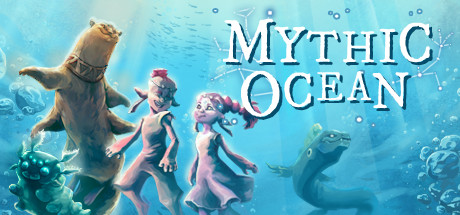
Mythic Ocean, developed by Paralune LLC and published by Untold Tales, is a narrative exploration game that leans almost entirely on dialogue, atmosphere, and player choice rather than traditional gameplay systems. Set in a surreal, dreamlike ocean that exists between cycles of creation, the game places you in a quiet but influential role: guiding a group of young, evolving gods who will eventually shape the next universe. It’s a premise that immediately separates it from more conventional adventures, signaling that this experience is less about action and more about reflection, personality, and consequence. Instead of structured missions or challenges, the game unfolds through freeform exploration and conversation. You move through a series of open underwater environments, encountering different deities and engaging them in branching dialogue. These interactions form the heart of the experience, as each god has a distinct temperament, worldview, and internal conflict. Your role is not to command them, but to influence them—nudging their perspectives, encouraging certain traits, or questioning their decisions. Over time, these conversations shape who they become, and ultimately determine what kind of world they will create. What makes this system engaging is its subtlety. The game avoids obvious morality systems or clearly labeled “good” and “bad” choices. Instead, it presents situations where each response carries its own implications, often without immediate feedback. Encouraging one god’s confidence might foster leadership, but it could also lead to arrogance. Supporting another’s caution might prevent disaster, but it could also stifle growth. This ambiguity gives weight to your decisions, making the experience feel more personal and less mechanical than many choice-driven games. Exploration, while secondary to dialogue, contributes to the overall tone. The underwater world is vibrant and abstract, filled with colorful landscapes, unusual creatures, and remnants of past cycles. Movement is intentionally slow and fluid, reinforcing the game’s relaxed pace. There are collectibles and bits of lore scattered throughout, but they serve more as context than objectives. The focus remains on immersion and discovery rather than completion, allowing players to drift through the environment at their own pace. The writing is one of the game’s strongest elements. The gods are portrayed not as distant, all-knowing beings, but as curious and often uncertain personalities trying to understand themselves. Their conversations range from lighthearted and humorous to introspective and philosophical, touching on themes like responsibility, identity, and the nature of creation. These interactions give the game its emotional core, making each decision feel like a meaningful contribution to a larger narrative rather than a simple branching path. Visually, Mythic Ocean embraces a stylized aesthetic that complements its tone. The environments are colorful and imaginative, leaning into a slightly whimsical design that makes the world feel both alien and inviting. While the graphics are not technically complex, the art direction carries a sense of charm that supports the game’s focus on atmosphere. The soundtrack and ambient audio further enhance this feeling, creating a calm, almost meditative experience that encourages reflection. However, the game’s minimalistic approach to mechanics may not resonate with everyone. There is no combat, no resource management, and very little in the way of traditional gameplay systems. Interaction is largely limited to movement and dialogue, which can make the experience feel thin for players who prefer more active engagement. Navigation can also feel somewhat imprecise due to the floaty movement, occasionally making exploration less smooth than intended. The relatively short length of the game reinforces its identity as a focused narrative experience. A single playthrough can be completed in a few hours, though multiple endings provide some incentive to revisit the story and explore different outcomes. Even so, the core structure remains consistent, meaning that replay value depends largely on how invested you are in the characters and their development. In the end, Mythic Ocean stands out as a thoughtful and quietly ambitious game that prioritizes dialogue and emotional nuance over traditional gameplay. It offers a unique perspective on choice-driven storytelling, where influence is subtle and outcomes are shaped by conversation rather than action. While its simplicity may limit its appeal to a broader audience, those who appreciate reflective, narrative-focused experiences will find it both engaging and memorable. Rating: 8/10
This game is too dialog-heavy, has too much backtracking to the same few small areas and it's too hard to figure out who to talk to or what to do to advance the "plot" (if you can even call it that). The free prologue is almost the entire game once you remove all the backtracking and dialog so just play that instead
Related
Related
Trends
Modeled estimate over time, reconstructed from Steam's monthly review histogram.
Momentum
Pace estimated from the game's recent review growth (our daily snapshots) at its own sales-per-review ratio — a momentum signal, not booked sales.
Audience
Estimated from the language of this game's reviews — a proxy for where players are, not official Steam demographics.
Related
| Stray Cat Crossing | $27.6K | 542 | 93% | $2.99 |
| Game Store Simulator | $27.6K | 237 | 75% | $4.99 |
| Digital Mate | $27.7K | 379 | 73% | $3.99 |
| Bored Wife | $27.7K | 52 | 58% | $13.99 |
| Golden Record Retriever | $27.6K | 50 | 64% | $15.99 |
| Akumi Wars | $27.7K | 73 | 90% | $14.99 |
Related
| 7 Days to Die | $425.3M | 403.5K | 87% | $44.99 |
| Euro Truck Simulator 2 | $421.6M | 932.1K | 97% | $19.99 |
| Mount & Blade II: Bannerlord | $309.8M | 294K | 88% | $49.99 |
| Palworld | $279.6M | 447.5K | 94% | $20.99 |
| Clair Obscur: Expedition 33 | $263.7M | 178K | 95% | $47.99 |
| The Forest | $254.8M | 678.6K | 96% | $19.99 |