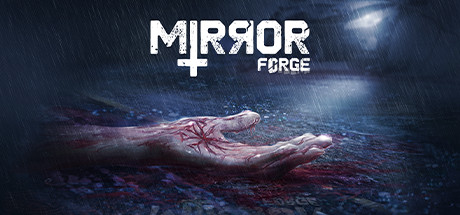
Mirror Forge, developed by MystiveDev and published by DreadXP, is a first-person psychological horror game that leans into surrealism and emotional storytelling while drawing clear inspiration from genre classics. It follows Thomas Jackson, a man searching for his missing ex-wife, but what begins as a grounded investigation quickly spirals into a fragmented journey through distorted realities. The game positions itself firmly within the tradition of introspective horror, where the external world reflects the inner turmoil of its protagonist, and much of the experience is built around unraveling that connection.
Gameplay centers on exploration and puzzle-solving, with a structure that moves players through a series of interconnected locations that gradually become more abstract and unsettling. Early environments feel relatively grounded—apartments, streets, and industrial spaces—but these areas shift over time, becoming warped versions of themselves filled with strange imagery and disorienting layouts. Progression is tied to interacting with objects, uncovering clues, and solving environmental puzzles that are generally straightforward but serve to maintain momentum. There is no direct combat, and encounters with hostile entities are handled through avoidance or limited defensive mechanics, reinforcing a sense of vulnerability.
One of the more notable aspects of the gameplay is a device that allows players to manipulate their surroundings or briefly repel threats. While this adds a layer of interaction beyond simple exploration, it is used sparingly and does not significantly expand the core mechanics. As a result, the overall loop remains fairly consistent throughout the game, which can lead to repetition over longer sessions. The lack of mechanical variety is noticeable, especially when compared to the ambition of the game’s narrative and visual design.
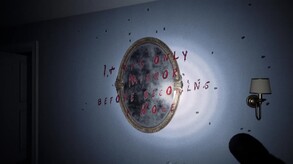
Atmosphere is where Mirror Forge stands out most. The game excels at creating environments that feel both familiar and deeply unsettling, using subtle distortions and shifting perspectives to keep players off balance. Lighting and sound design play a crucial role in this, with dimly lit spaces and ambient audio cues building tension even when nothing immediate is happening. The world feels unstable, as if it could change at any moment, and this unpredictability becomes a key part of the experience. Rather than relying heavily on jump scares, the game often builds unease through anticipation and environmental storytelling.
The narrative is presented in a fragmented manner, requiring players to piece together events through scattered clues and observations. Themes of personal trauma, addiction, and mental instability are woven into the story, giving it an emotional weight that goes beyond surface-level horror. While the premise is compelling, the execution is somewhat uneven. The story occasionally leans on familiar tropes, and its abstract delivery can make it difficult to fully grasp without careful attention. For some players, this ambiguity adds depth; for others, it may feel underdeveloped or lacking in clarity.
Pacing varies throughout the experience. Certain sections are effective at building slow, creeping tension, while others shift more abruptly into direct encounters or chase sequences. These moments can provide contrast, but they do not always integrate smoothly with the rest of the game. Enemy interactions, while functional, often feel secondary to the overall atmosphere and do not add significant depth to the gameplay.
From a technical standpoint, the game shows the limitations of its scope. Occasional performance issues, minor bugs, and inconsistencies in mechanics can interrupt immersion. These problems are not constant, but they are noticeable enough to affect the overall polish. Combined with some uneven level design, they contribute to a sense that the game is reaching for something more ambitious than it fully achieves.
Despite these shortcomings, Mirror Forge remains an engaging experience for fans of psychological horror. Its strength lies in its atmosphere and its commitment to creating a world that feels like an extension of the protagonist’s psyche. The environments are memorable, and the tone is consistently unsettling, even when the gameplay itself becomes repetitive.
Ultimately, Mirror Forge is a game driven more by mood and concept than by innovation in mechanics. It delivers a solid, atmospheric journey through a distorted reality, supported by strong visual and audio design. While it does not fully realize all of its ideas, it offers enough depth and intrigue to leave a lasting impression, particularly for players who appreciate narrative-focused horror.
Rating: 7/10