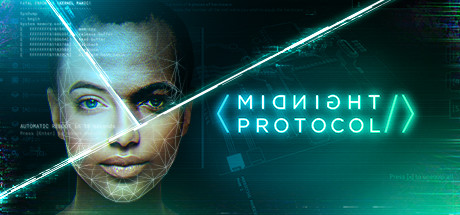
Midnight Protocol, developed by LuGus Studios and published by Iceberg Interactive, is a masterfully constructed cyberpunk hacking RPG that forgoes the flashy aesthetics of most games in its genre in favor of tension, intellect, and immersion. It tells the story of a hacker known as Data, who is drawn back into the digital underworld after being doxxed and exposed. The narrative unfolds through encrypted emails, terse chat messages, and system logs, building a world of espionage, distrust, and digital warfare without ever showing a single human face. The game’s story is deeply personal, portraying the isolation and moral grayness of living behind the screen, where every keystroke carries risk and consequence. What begins as a simple act of self-defense quickly evolves into a web of political intrigue, corporate corruption, and cyber rebellion, all told through the restrained, text-based aesthetic of a command-line interface.
The most striking element of Midnight Protocol is its complete commitment to its design philosophy. Every action is performed through the keyboard—no mouse, no icons, just commands typed into a digital terminal. This approach is not merely a stylistic choice but a fundamental part of the experience. It places the player directly in the mindset of a hacker, forcing you to think in terms of efficiency, logic, and spatial reasoning. Networks are depicted as interconnected nodes, each representing firewalls, data caches, security systems, or hidden traps. Your goal varies from mission to mission: infiltrate corporate systems, extract sensitive data, disable rival programs, or manipulate information to your advantage. Each network functions as a puzzle, requiring you to manage limited resources, stay ahead of traces, and decide how far you can push before the system locks you out. Every move carries tension, and the thrill of narrowly escaping detection provides a constant pulse of adrenaline.
What makes these mechanics so engrossing is how they combine strategic planning with improvisation. Each mission feels like a high-stakes chess match played against invisible opponents. You have a library of programs at your disposal—some for stealth, others for brute-force attacks—and choosing the right combination is crucial. The trace system, which measures how close the authorities are to locating you, ensures that every decision feels urgent. Some players might find the reliance on randomness in the trace and detection mechanics slightly frustrating, as even well-planned strategies can fall apart under bad luck. Yet, this unpredictability mirrors the nature of hacking itself—controlled chaos within an unstable system. As your reputation grows and your alignment shifts between white-hat idealism, gray-hat pragmatism, and black-hat ruthlessness, the missions, tools, and story outcomes evolve to reflect your choices. This morality system adds replayability and depth, as it allows players to craft a hacker identity that aligns with their philosophy.
The game’s progression system is intricately tied to its tone of calculated mastery. Through black markets and secret contacts, you acquire new software, upgrade existing tools, and refine your build into a precise digital arsenal. Different playstyles emerge naturally—one player may rely on stealth programs to bypass ICE unnoticed, while another might embrace aggressive, virus-based attacks to dismantle defenses entirely. The learning curve is smooth but demanding, gradually pushing players toward mastery without resorting to handholding. It’s the kind of game that rewards patience and experimentation; every failure is a lesson in systems thinking. The world expands organically through your own initiative: new missions arrive via encrypted emails, hidden coordinates, or anonymous requests. Even the mundane act of checking your in-game inbox feels immersive, as if you are living within a network of digital conspiracies.
Visually, Midnight Protocol is minimalist yet elegant. The interface is clean, the color palette subdued but purposeful—shades of neon blue, black, and red evoke the cold pulse of cyberspace. Despite its simplicity, the design feels immersive, capturing the essence of a digital battlefield through pure abstraction. Every flicker of light and distortion effect contributes to the illusion that you are operating from the edge of legality. The sound design amplifies this immersion with sharp beeps, data pulses, and the low hum of electronic machinery that underscore each command you enter. There is no voice acting or cinematic interlude, but this absence enhances the sense of isolation and authenticity. You are a ghost in the network, unseen and unheard, communicating only through code and action.
The pacing of Midnight Protocol is deliberate, structured around cycles of tension and relief. Missions can be completed in short bursts, yet each one feels meaningful. There are no filler objectives; everything you do contributes to the unraveling of the narrative or your personal evolution as a hacker. While the game never overstays its welcome, some players may wish for a broader scope or more diverse mission environments. The story’s intimate scale, however, fits the tone—this is not about saving the world but about surviving it, carving your path through the static and deceit of a system that’s stacked against you. The writing is terse and precise, and though the characters are only ever seen through text, they feel real, shaped by ideology and consequence rather than cliché.
Midnight Protocol succeeds because it understands exactly what it wants to be—a cerebral, atmospheric strategy game that thrives on immersion, tension, and mechanical purity. It captures the loneliness and allure of the digital frontier, where information is power and morality is fluid. Its stripped-down design and keyboard-driven gameplay make it a niche experience, but within that niche lies something exceptional: a game that makes you feel like a real hacker, navigating systems not through spectacle, but through intellect. It’s a rare experience that balances narrative intrigue with strategic complexity, one that demands attention and rewards mastery. For those who crave precision, immersion, and the thrill of the unknown, Midnight Protocol is a digital labyrinth worth exploring line by line, command by command.
Rating: 8/10