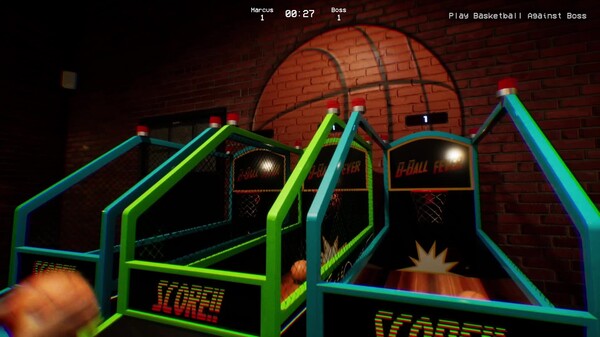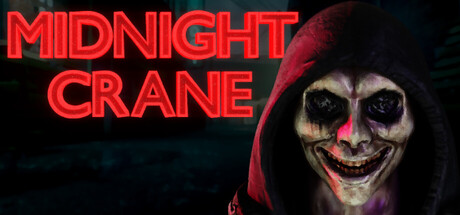
A psychological horror game where you spend a night in the shoes of an arcade worker named Marcus. Win prizes on the crane machine and shoot some hoops. Just make sure to keep the doors locked.
Modeled estimate, not a reported figure. How we estimate →
Media

About
A psychological horror experience where fun turns to fear.
Spend one long night in the shoes of Marcus, a lone arcade worker tasked with earning prizes after hours. Play the games. Collect the toys. And whatever you do, keep the doors locked.
Your boss promises a bonus if you win enough crane game prizes before morning.
Determined to meet the required amount of prizes, you decide to stay after hours in order to complete it.
But be wary of what lurks behind. Don't just look. Listen.
Every sound matters.
The masked man will try to enter from multiple points around the arcade.
Use your ears to track his movements and each noise is a clue to where he’s breaking in.
React fast:
Block the doors.
Check the cameras.
Tighten the vents.
Pray he doesn’t find you.
First-person psychological horror set in a nostalgic arcade.
Sound-based survival mechanics — listen carefully or die trying.
Interactive dialogue and light narrative choices.
Playable arcade machines — crane games, basketball, ice hockey, and more.
Dark, atmospheric environments designed to keep you on edge.
Wishlist now and prepare to clock in for the night shift.
Genres
Stats
All-time low is the lowest price we've recorded for this game since we started tracking it.
Languages: English**languages with full audio support
Engagement
Hours played at review time, across 40 reviews with recorded playtime.
Reviews
Themes across 40 recent reviews and how positive each mention is. A keyword signal, not full sentiment analysis.
positive critical· bar length = how often the theme comes up
Reviews
Midnight Crane, developed and published by Dekaizen Studios LLC, takes an ordinary setting and quietly twists it into something deeply unsettling. You step into the role of a night-shift worker in a dim, aging arcade, tasked with something almost trivial—playing machines, winning prizes, and finishing out your shift. At first glance, it feels like a low-stakes, almost cozy simulation of late-night routine. But the game wastes little time in revealing that beneath the neon glow and mechanical hum lies a constant, creeping danger that transforms every mundane action into a potential risk. The gameplay is built around a careful balance between distraction and vigilance. On one hand, you’re engaging with arcade machines—claw games, basketball shooters, and other familiar activities that require focus and timing. On the other, you’re responsible for monitoring the environment, listening for subtle audio cues, and responding quickly to signs of intrusion. A masked figure stalks the arcade, attempting to breach entrances, and your survival depends on reacting before it’s too late. What makes this system effective is how it forces you to divide your attention; every second spent focusing on a game is a second you might be missing something important happening elsewhere. Sound design plays a central role in shaping the experience. Rather than relying heavily on visual prompts, Midnight Crane pushes players to listen carefully—footsteps, distant noises, and small irregularities become critical indicators of danger. This approach creates a different kind of tension compared to typical horror games. Instead of reacting to what you see, you’re constantly interpreting what you hear, which makes the threat feel more unpredictable and harder to control. The result is a sustained sense of unease, where even silence can feel ominous. The pacing is one of the game’s strongest aspects. Much of your time is spent performing repetitive, almost soothing tasks, which creates a rhythm that lulls you into complacency. That calm is what makes the interruptions so effective. When the routine is broken—when something feels off or a threat emerges—it hits harder because you’ve been conditioned to expect normalcy. The game doesn’t rely on frequent jump scares; instead, it builds tension gradually, letting anticipation do most of the work. This restraint gives the experience a more psychological edge, where fear comes from uncertainty rather than shock. Visually, the game leans into a nostalgic yet slightly uncanny aesthetic. The arcade is lit in a way that feels both familiar and isolating, with glowing machines casting uneven light across empty spaces. It’s not a large environment, but it doesn’t need to be. The confined setting enhances the sense of vulnerability, making it clear that there’s no real escape—only the ability to react quickly enough to survive. The simplicity of the space works in tandem with the gameplay, ensuring that players remain focused on sound, movement, and timing. There are also subtle narrative elements woven into the experience, though they remain deliberately understated. Small details and bits of dialogue hint at a larger context, giving the game a touch of story without pulling focus away from its core tension. It’s enough to add intrigue and a sense of purpose, but not so much that it disrupts the pacing or overwhelms the minimalist design. However, the game’s tight focus can also be limiting. Once you become familiar with its systems, the experience can feel somewhat short, and there isn’t a great deal of variation to extend replayability. The core loop remains largely the same throughout, and while it is effective, it may not hold attention for extended sessions. Players looking for deeper mechanics or a more expansive world may find it lacking in scope. Even with these constraints, Midnight Crane succeeds because it understands exactly what it wants to be. It delivers a concentrated, atmospheric experience that turns a simple premise into something tense and memorable. By combining routine tasks with constant underlying threat, it creates a unique rhythm that keeps players engaged from start to finish. In the end, Midnight Crane stands out not through complexity, but through execution. It takes a small idea and refines it into a focused horror experience that relies on mood, sound, and timing rather than spectacle. It may not be long or endlessly replayable, but it leaves a strong impression, offering a distinct kind of tension that lingers well beyond its runtime. Rating: 8/10
Game is different in a good way. Lots of fun and scares to be had with this one
Tremendous indie horror game. Great concept, great jump scares. Funny in parts too. Always a pleasure with creative indie gems like this one. 10/10.
Midnight Crane absolutely surprised me in the best way possible. I was expecting a short and janky sorta game, but it goes beyond my expectations. I felt completely drawn into its atmosphere — how eerie it was and how you never really knew when the bad guy was actually gonna get you. AMAZINGLY done jumpscares too that had me at the edge of my seat ahahaha, there were times I swear I peed a little. xD The whole game was a really fun and capativating experience! 10/10! Really hope to see more from this dev. :D Full playthrough here: https://www.youtube.com/watch?v=zPfZ75JUwQ0&t=2534s
현실에서 못뽑았던 인형들 여기서 다 뽑음 근데 빵 인형은 집지 마세요 자꾸 갈고리에 끼여서 안 뽑힘;; 한글패치: 코스노우 블로그
본격 공포 디펜스 인형뽑기 방탈출 게임
I Really Enjoyed This Game 100%.
Good spoops
CORTO pero intenso, vale bastante la pena
spook
Related
Related
Trends
Concurrent players on Steam, sampled daily since tracking started.
Audience
Estimated from the language of this game's reviews — a proxy for where players are, not official Steam demographics.
Related
| Ingression | $23.7K | 103 | 84% | $9.99 |
| Nowhere Patrol | $23.7K | 235 | 97% | $4.99 |
| Possessed | $23.7K | 235 | 66% | $4.99 |
| Cybermotion | $23.7K | 88 | 80% | $7.99 |
| Last Horizon | $23.7K | 260 | 81% | $4.01 |
| Embers of the Night | $23.7K | 118 | 79% | $5.21 |