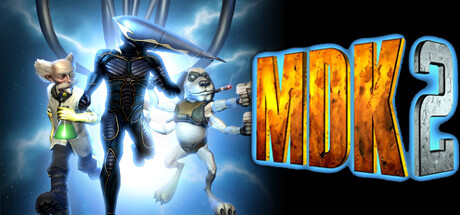
3 Unlikely Heroes, 1 Ultimate Goal Kurt Hectic is back to save the universe. This time he is teamed with the genius Dr. Hawkins and the 6-legged gun-toting robotic dog, Max. Together they must out-sneak, out-blast and out-think their enemies as they attempt to reclaim earth from a vile alien menace.
Modeled estimate, not a reported figure. How we estimate →
Media
About
3 Unlikely Heroes, 1 Ultimate Goal
Kurt Hectic is back to save the universe. This time he is teamed with the genius Dr. Hawkins and the 6-legged gun-toting robotic dog, Max. Together they must out-sneak, out-blast and out-think their enemies as they attempt to reclaim earth from a vile alien menace.
Genres
Stats
All-time low is the lowest price we've recorded for this game since we started tracking it.
Languages: English, French, German, Italian, Spanish - Spain
Engagement
Hours played at review time, across 40 reviews with recorded playtime.
Reviews
Themes across 40 recent reviews and how positive each mention is. A keyword signal, not full sentiment analysis.
positive critical· bar length = how often the theme comes up
Reviews
The first MDK was much better because it was spectacular in gameplay and graphics/effects. Amazing sniper zoom, cool environments with the mirrors and T-Fighter-ish ships, the absurd humor. The board surfing, air gliding, take a lift from a bomber, camouflage as a robot and so on! This game is also very nice, but it's not that spectaculair anymore, but nice enough to play this days.
As fun as I remembered. Very interesting design. Three different play styles in one game. Well paced. The graphics were good for Y2K, especially considering the excellent frame rate. Good VA, level design, sound, pretty much everything. Remappable keys! I hope BioWare's publisher allows them to build good games again. Games as Fun, not Games as a $ervice.
There is a strong cultural overlap between video-games and comics, I’m not just talking about games based on comics, but rather a fundamental similarity of pulpiness, tropes, and pace between the two mediums, which has led to one genre mingle with the other and vice versa, to a more or less degree of success. The impact of comics, especially superhero comics in gaming, is undeniable, and one game that exemplifies this statement to a tee is MDK 2 Developed by Bioware in 2000, from the action, to the one-liners, to the silliness these comics often indulged into, to even the cross-level transitions, it exudes love for the silver-age comics of the 60s. [url=https://www.youtube.com/watch?v=EkI8okPHWH4]Despite its strong initial response, the game itself is not as fondly remembered as other games of its time, especially considering the cult status its predecessor and other Bioware games released at the same time have, so I ask … why? Well, why not figure it out together, hear the rest on YouTube[/url]
Doesn't work. I'm trying to play, it will load but after selecting a new game it starts the movie and everything is distorted and you can see some parts of the pictures in form of vectors. After that, starts with a black screen and a text that comes letter by letter in slow motion and just a row is written in about two minutes.
To fully explain this game, I’d need to do a complete deep dive. Unlike anything else I have ever played, MDK 2 will forever remain my favorite game of all time. It also happens to be the first game I ever touched. I was only a year old when I first encountered this title, and being that young, it was puzzling and practically impossible to understand. Yet, it resonated and spoke to me even before I could talk. This was the last video game with a real heartbeat. It was built long before the strict, sanitized rules of 3D gaming were written in stone. The developers were literally throwing everything they had at the wall, taking almost nothing seriously, and yet they managed to produce a forgotten masterpiece capable of putting modern gaming to shame. It was, and still is, just that good. What truly sets MDK 2 apart and makes it so iconic is its absolute refusal to settle on a single genre. It doesn't just ask you to master one gameplay loop; it forces you to master three completely distinct styles of play, stitched together by brilliant madness. You cycle between Kurt Hectic, the reluctant janitor utilizing a high tech sniper mask and ribbon parachute for vertical precision; Max, a four armed, cigar smoking robotic dog who turns the game into a chaotic run-and-gun shooter; and Dr. Fluke Hawkins, a mad scientist whose levels require bizarre, classic adventure game item combinations. No other game has ever balanced such wildly contrasting mechanics into a single, cohesive campaign without losing its identity. The level design, characters, and audio followed a completely different philosophy from how games are made today. And the soundtrack is the real secret. Tommy Tallarico and his team didn't just craft a wonderful soundtrack; they wrote a percussive, high BPM industrial metronome that dictates the game's exact tempo. The music and the combat are locked together in a visceral way that modern cinematic scores just aren't. It's tight, abrasive, hilariously self aware, and best of all, it never once apologizes for what it is. This wasn't a game you could just turn your brain off to. Its unique puzzles used unconventional environmental logic rather than a modern "aim here" or "follow the glowing paint" marker. It entirely respects the player's intelligence and refuses to hold your hand. Even the tutorials for each character are seamlessly built into the stages, meaning they can all be bypassed entirely if you decide you just wanna move forward. Kinda pisses me off that bioware didn't continue this series, but it's probably for the best, I wouldn't wanna risk tainting a very well made videogame series with slop that follows modern standards either.
Everything about it is odd - it's visuals, it's tone, it's gameplay, the the weirdest thing about it is that it was made by Bioware And did you know that a sequel was planned? "In 2006, Interplay revealed it was planning on developing an MMOG set in the Fallout universe. However, the project was estimated at $75 million, money unavailable to the company. As such, in an effort to secure the capital, they explained in papers filed with the Securities and Exchange Commission on November 13, 2007, that they planned to leverage their stable franchises "through sequels and various development and publishing arrangements." Specifically, they announced they were restarting their in-house development studio, the money to do so coming from the sale of the Fallout franchise to Bethesda Softworks, from whom they planned to license the Fallout IP for the MMOG. They specifically mentioned plans for sequels to Descent, Earthworm Jim 2, MDK2 and Baldur's Gate: Dark Alliance II." you can add Black Isle's Fallout 3 and Baldur's Gate 3 to the count of sequels flushed by interplay, so I think they have a pretty good run a the stupidest management in the history of the gaming industry
Murder-Death-Kill. Or Max-Doc-Kurt, as they refer to it. A blast from the past. And one of the best games by BioWare, apart from Mass Effect and KotOR. Sadly, there won't be MDK 3 or another quirky thing like this. P.S.: Jesper Kyd is a BEAST!
Ball knowledge
MDK 2 is one of the most creative and eccentric action games ever released during the early era of 3D shooters, blending fast-paced combat, platforming, puzzle-solving, and bizarre science-fiction humor into an unforgettable experience that still feels surprisingly unique decades later. Developed by BioWare and published by Interplay Entertainment, the game serves as the sequel to the original cult classic MDK, but instead of simply refining the first game’s formula, it dramatically expands the scale, variety, and absurdity of the entire experience. The result is a constantly unpredictable adventure filled with strange characters, ridiculous weapons, massive alien environments, and gameplay ideas that change so frequently the game rarely allows itself to become repetitive. The story begins after Earth has supposedly been saved from alien destruction, only for another extraterrestrial invasion to threaten humanity once again. The unlikely heroes Kurt Hectic, Dr. Hawkins, and the robotic six-legged dog Max are forced back into action to stop a new alien threat before civilization collapses entirely. The narrative itself is intentionally ridiculous, embracing over-the-top humor, surreal dialogue, and exaggerated situations that perfectly match the game’s chaotic tone. Rather than attempting serious science-fiction storytelling, MDK 2 fully commits to absurdity, and that confidence gives the entire adventure a personality unlike almost anything else from its era. One of the game’s defining strengths is its three completely different playable characters. Instead of offering minor gameplay variations, each protagonist radically changes how the game plays. Kurt Hectic represents the more traditional action-platforming side of the experience, using machine guns, sniper rifles, gliding mechanics, and various gadgets to navigate huge levels filled with enemies and environmental hazards. His sniper system remains especially memorable because it allows players to zoom enormous distances while using specialized ammunition types such as explosive rounds and guided projectiles. Kurt’s levels often feel like a combination of platforming challenge and long-range action combat. Max, meanwhile, turns the game into complete chaos. The heavily armed robotic dog specializes in overwhelming firepower and explosive action, often carrying multiple machine guns at once while jetpacking through combat-heavy environments. His levels focus heavily on destruction and nonstop combat, creating some of the game’s most energetic moments. Controlling a six-legged robotic dog equipped with absurd amounts of weaponry perfectly captures the game’s sense of humor and refusal to take itself seriously. Dr. Hawkins offers perhaps the strangest gameplay style of all. Instead of direct combat, his sections revolve around puzzle-solving, experimentation, and bizarre inventions. Hawkins scavenges unusual components throughout levels to build strange gadgets capable of solving environmental puzzles or defeating enemies creatively. His slower, more methodical gameplay contrasts heavily with the fast-paced action of Kurt and Max, helping the game maintain variety throughout its runtime. Some of his inventions are intentionally ridiculous, but that absurdity becomes part of the game’s overall charm. What makes MDK 2 so impressive is how frequently it changes its ideas. The game constantly introduces new mechanics, unusual enemy encounters, strange environmental hazards, and unexpected gameplay twists. One moment players are gliding across massive alien landscapes while sniping enemies from impossible distances, and the next they are solving environmental puzzles, fighting giant bosses, or navigating surreal platforming sections filled with bizarre traps. The game never settles into a predictable rhythm for long, which keeps the adventure feeling fresh even years after release. The level design is another major highlight. Environments are huge, imaginative, and filled with bizarre visual concepts that constantly reinforce the game’s surreal tone. Alien cities, gigantic industrial structures, floating platforms, biological machinery, and massive enemy fortresses all create a world that feels wonderfully strange and creatively unrestrained. The sense of scale is especially impressive during sniper sequences and boss encounters where players battle enormous enemies across sprawling environments. Visually, MDK 2 still stands out because of its distinctive art direction. While the technical limitations of the era are noticeable today, the exaggerated environments, strange enemy designs, and memorable character animations help the game maintain its identity far better than many other early 3D action titles. The HD version later improved textures, lighting, and overall presentation, making the game easier for modern audiences to revisit while preserving the original atmosphere. The soundtrack and audio design also contribute heavily to the experience. Music shifts between energetic action themes and stranger atmospheric tracks that reinforce the game’s bizarre world. Voice acting embraces the absurd humor completely, with exaggerated performances and intentionally ridiculous dialogue that make even simple conversations entertaining. The game constantly balances comedy and action without ever losing confidence in its strange identity. Boss battles are another standout feature. MDK 2 regularly introduces enormous enemies and creative encounters that require more than simply firing weapons endlessly. Players often need to combine movement mechanics, puzzle-solving, gadgets, or sniper abilities in order to survive increasingly elaborate confrontations. These battles help showcase the creativity behind the game’s constantly evolving mechanics. However, MDK 2 is not without flaws. One of the biggest issues is difficulty balancing. Certain platforming sequences require extremely precise timing and movement, and failure often forces players to repeat frustrating sections due to limited checkpoint placement. Some later levels become surprisingly punishing, especially when platforming and enemy encounters combine into chaotic situations that demand near-perfect execution. The gameplay styles are also somewhat uneven. Kurt and Max generally provide the game’s strongest moments because of their fast-paced action focus, while Dr. Hawkins’ slower puzzle-oriented sections occasionally disrupt the pacing too heavily for players primarily interested in combat and platforming. Although his mechanics are creative, some players may find those sections less exciting compared to the explosive action found elsewhere. Modern players will also notice the game’s age in areas such as camera behavior, movement precision, and overall control responsiveness. Certain platforming sections can feel awkward by modern standards, and some gameplay systems clearly reflect early 2000s design philosophies that may frustrate players unfamiliar with older action games. Despite these issues, MDK 2 remains an exceptionally creative and entertaining experience. Few action games are willing to experiment with such wildly different gameplay styles while maintaining a consistent identity throughout the entire adventure. The game constantly rewards players with new ideas, memorable set pieces, bizarre humor, and gameplay variety that still feels refreshing today. For fans of retro action games, classic third-person shooters, and unconventional science-fiction adventures filled with personality and creativity, MDK 2 remains one of the most memorable cult classics available on Steam. Its combination of chaotic action, inventive level design, absurd humor, and constantly evolving gameplay ensures that it still stands out as one of the most imaginative action games of its generation. Rating: 8/10
Fun sequel. The fact that it adds multiple playing conditions as you go through the story by using the features of the three different characters is a nice touch. Funny dialogue and cutscenes, the gameplay is really cool and fast-paced and in some scenes you really need to think or pay close attention in order to advance.
Related
Related
Trends
Modeled estimate over time, reconstructed from Steam's monthly review histogram.
Momentum
Pace estimated from the game's recent review growth (our daily snapshots) at its own sales-per-review ratio — a momentum signal, not booked sales.
Audience
Estimated from the language of this game's reviews — a proxy for where players are, not official Steam demographics.
Related
| Garden In! | $125K | 428 | 86% | $9.99 |
| Code of Princess | $125K | 330 | 56% | $14.99 |
| Modbox | $125K | 220 | 86% | $14.99 |
| SHOOPER NOVA | $125.1K | 644 | 85% | $6.99 |
| Secrets of Rætikon | $125K | 495 | 60% | $9.99 |
| Vampire: The Masquerade - Redemption | $125K | 988 | 88% | $5.99 |